Wednesday, April 29, 2009

Politicizing Criminality

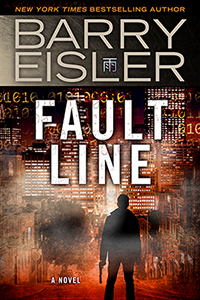
Just got back to Tokyo after another week on the road for Fault Line promotion. No time to write while I was traveling, but I did have a chance to read a number of establishment opinion pieces about torture. They were so alike in various respects that they could have have been churned out by the same government press office. The most glaring similarity was an omission of any discussion or even acknowledgment of the role of the law. Reading these opinions and knowing nothing else, you could be forgiven for believing that no law on torture or other cruel, inhumane, or other degrading treatment even exists, let alone that such laws might matter.

A sampling:

David Broder in The Washington Post: "But now Obama is being lobbied by politicians and voters who want something more -- the humiliation and/or punishment of those responsible for the policies of the past." That's one way of looking at it. Another way would be that this is simply about prosecuting criminals. But if you refuse to recognize that the law should even a part of the discussion -- that applicable law even exists -- I can see where you might look at things in the stunted, distorted way Broder does.

Ross Douthat in the New York Times: "We need to hear more: What was done and who approved it, and what intelligence we really gleaned from it. Not so that we can prosecute – unless the Democratic Party has taken leave of its senses – but so that we can learn, and pass judgment, and struggle toward consensus." Yes, if you think people who break the law should be prosecuted and punished, you have taken leave of your senses. You'd have to be crazy to argue something like that.

Tom Friedman in the New York Times: Friedman acknowledges that up to 27 prisoners were tortured to death in US custody (i.e., murdered), but then goes on to argue against any prosecutions because "bringing George W. Bush, Donald Rumsfeld and other senior officials to trial... would rip our country apart." I'd be more comfortable with this argument if Friedman also favored a constitutional amendment making de jure his de facto grant of immunity to high government officials. Why are establishment pundits always afraid to make explicit arguments for what they're calling for?

Garrison Keillor in Salon: Keillor actually entitles his piece, "Let War Crimes Be Bygones." Substitute "Rape," "Murder," or the other crime of your choice in his chosen title and see how the concept works for you that way.

Lexington in The Economist: "The most important comment on Mr Obama’s approach to counter-terrorism so far came on April 20th, from the CIA agents who cheered him to the rafters." Is cheering at the CIA really the most important comment on Obama and counter-terror? More important, then, say, an analysis of, even a reference to, the law? The spooks must have done a wave or something. Damn lawyers, it's their fault -- obviously they're not cheering sufficiently loudly for the application of the law. Maybe we who believe, as Thomas Paine did, that in America the law is king, should cheer more loudly for the law's application so the law can get favorable mention in Lexington, too.

Jon Meacham in Newsweek: Meacham argues, "And to pursue criminal charges against officials at the highest levels—including the former president and the former vice president—would set a terrible precedent." As opposed to the precedent of de facto immunity from criminal prosecution for our political class? Pretty nice perk Meacham, Friedman et al are suggesting there. I wish novelists could get get out of jail free cards, too, but alas, it seems the hoi polloi are ineligible.

But surely Meacham isn't arguing that politicians are actually above the law? Yes, he is, explicitly, and the only kind thing you can say about it as that at least he's more honest about what he's calling for than Friedman et al: "That is not to say presidents and vice presidents are always above the law; there could be instances in which such a prosecution is appropriate, but based on what we know, this is not such a case." Holy when the president does it, that means its not illegal, Batman! Although again, it would be nice if Meacham could propose some guidelines for which politicians are in fact above the law (is it just the President and VP? What about the Secretary of State and Defense? Treasury? Leaders in Congress? Only federal officials, or state, too? Any lobbyists out there who would be willing to go to bat for novelists? Seriously, we want proactive immunity for lawbreaking, too) and under what circumstances (do sexual peccadilloes count, or is the immunity only for war crimes?). Then we could codify it (maybe as the "Get Out of Jail Free Act") and wouldn't have to rely on pseudo-journalists like Meacham to make up the law as we go along.


Peggy Noonan in the Wall Street Journal: Noonan argues, "A problem with the release of the [torture memos] is that it opens the way—it probably forces the way—to congressional hearings, or a commission, or an independent prosecutor. It is hard at this point to imagine that what will follow will not prove destructive to—old-fashioned phrase coming—the good of the country." Like Friedman, Noonan shies away from saying aloud what she is really arguing: that America is better off when ruled under secret laws, with immunity for government officials who violate the non-secret ones.

Think about that concept for a moment. Secret laws. In America. And we have "journalists" telling us the secret laws are good for the country. War is peace, baby. Dig it.

Even Jon Stewart seems to have momentarily forgotten that there's such a thing as the law, suggesting instead immunity for anyone willing to admit, "My bad." Apply that thinking to criminality generally and see where it takes you.

If you want to stay in denial, avoid clicking on this link (h/t Andrew Sullivan). Especially avoid The UN Convention Against Torture and Other Cruel, Inhumane, and Degrading Treatment or Punishment, which President Reagan signed in 1988 and the Senate ratified in 1994, and which Article VI of the Constitution makes the supreme law of the land. Definitely don't read the following excerpts from the UNCAT, which provides that:

Article 1. For the purposes of this Convention, the term "torture" means any act by which severe pain or suffering, whether physical or mental, is intentionally inflicted on a person for such purposes as obtaining from him or a third person information or a confession, punishing him for an act he or a third person has committed or is suspected of having committed, or intimidating or coercing him or a third person, or for any reason based on discrimination of any kind, when such pain or suffering is inflicted by or at the instigation of or with the consent or acquiescence of a public official or other person acting in an official capacity. It does not include pain or suffering arising only from, inherent in or incidental to lawful sanctions.


And:

Article 16. Each State Party shall undertake to prevent in any territory under its jurisdiction other acts of cruel, inhuman or degrading treatment or punishment which do not amount to torture as defined in article I, when such acts are committed by or at the instigation of or with the consent or acquiescence of a public official or other person acting in an official capacity. In particular, the obligations contained in articles 10, 11, 12 and 13 shall apply with the substitution for references to torture of references to other forms of cruel, inhuman or degrading treatment or punishment.


How is it that none of the opinion pieces linked above sees fit even to mention these laws?

For the record: I also failed to include a discussion of applicable law in November 2007, when responding to an interview Vince Flynn did with the Washington Post in which Vince argued for torture. But I've taken the trouble to educate myself in the interim. Vince, you didn't mention it before except by omission, so I'll ask now: do you think the law is irrelevant to a discussion of torture? And what do you make of the news that Kalid Sheik Mohamed was waterboarded not once, but 183 times in a month? Not exactly the "rarest of circumstances," or the "clinical precision" you claimed at the time. And if you have to do it 183 times -- over the course of a month -- can you really claim it's effective, or even appropriate for the Ticking Bomb Scenario? (well, maybe the bomb was ticking really slowly). Especially because all the facts that have come to light since the former administration and its cheerleaders began their "torture works and is necessary" campaign belie both claims.

For a nice summary debunking the myths various establishment figures are still peddling about torture, here's Scott Horton.

Opponents of prosecuting the architects of Amerca's torture regime argue that prosecutions would be about "criminalizing policy differences." No. Failing to prosecute would be to politicize criminality, and proponents of de facto immunity for our political class are doing exactly that.


By the time we prosecute them, crimes are by definition past. That the crime has already been committed is never an argument for failing to prosecute it ("Your honor, it's true my client raped the victim, but that's part of the past and we need to look forward. This is a time for reflection, not retribution"). But the Bush administration's torture policies are not even part of the past. The fact that President Obama has banned the practices in question implicitly ratifies his or the next president's right to re-invoke them. Only investigation and prosecution can restore the proper place of the law in our country and ensure, insofar as possible, that the law is not treated as a sad joke in the future.

But don't take my word on all this. Take President Bush's:


You'd think Republicans, who purport to be the party of law and order, might be concerned about law-breaking. Well, I thought the GOP was about small government, balanced budgets, and a modest foreign policy, too. To the extent Republicans still bother making such claims, they've become the world's emptiest brand. Republicans have no principles, Democrats have no balls, and our pseudo journalistic class enables the worst and weakest elements of both. Imagine where we'd be without the blogosphere.

Wednesday, April 01, 2009

Privileging the Posterior

As Ian Fleming's Auric Goldfinger said, "Once is happenstance, twice is coincidence, three times is enemy action." So when I heard Rush Limbaugh's recent comments about British Prime Minister Gordon Brown getting "anal poisoning" from slobbering over President Obama, I couldn't help wondering whether something was going on.


And indeed, here's Rush again, claiming "we're being told... we have to bend over and grab the ankles" (mind you, Rush would never assume such a position voluntarily).

The Daily Show With Jon StewartM - Th 11p / 10c
Fox News Fear Imbalance
comedycentral.com
Daily Show Full EpisodesEconomic CrisisPolitical Humor


And here's Tucker Carlson, opining that Jim Cramer's wife must have been ashamed of "the butt sniffing he gave Jon Stewart."

And Carlson again, asking why Jon Stewart wanted to be John Kerry's "butt boy."


I don't want to make too much of this. Maybe there are examples of prominent left-wingers who share Limbaugh's and Carlson's apparent fixation. But after a while, given the richness of English and the variety of colorful references available to suggest subservience, one does start to feel that happenstance and coincidence might not be sufficient to explain things here.

Regardless, I'm sure that conservatives, who care deeply about maintaining standards of decency on the airwaves, will rise up to protect society by insisting that Limbaugh and Carlson find a way to exclude from public discourse their taste for anal idiom.

Criticize Govt = Hate America?

Back in Tokyo after three weeks on the road promoting Fault Line, drained as usual after these things but happy. Not much of a break this time, either, with the Japanese version and the Rain Fall movie coming out this month, but these are quality problems and no complaints.

Got a whole lot to write about and not much time, so today, just one thought. I've been surprised by the amount of mail and reviews of Fault Line dismissing the book (and me) as anti-American, far left, etc. I don't want to give away anything essential to the plot here, but I think it's okay to say that in the book the US government is involved in a number of illegal activities, including assassinations. At which point, two questions present themselves.

First, is it not true that the USG is involved in illegal activities, including assassinations?

Second, why would pointing out that the government behaves illegally make one anti-American? At a minimum, such an argument would have to equate the government with America. Is this true? America = the government, no more, no less?

This is a worldview I find difficult to understand. When did the government come not just to represent America, but actually to *be* America, in the minds of people who think criticism of the government and hatred of America are the same thing? Adding to my befuddlement is my sense that the people advancing this line of argument typically call themselves conservative. Among their rank, of course, is Grover Norquist, a fellow who famously declared his desire to shrink the government to a size where he could "drown it in the bathtub." I don't understand -- how could someone hate America so? Where's the outrage?

Tell you what: I love my country, but frequently can't stand the government. Trivial example: one night just last week, heading to a bookstore in Tyson's Corner, VA, from one in Reston, I pulled into the toll booth to the Dulles toll road. There were two booths: one labeled Exact Change, the other, Full Service. Lacking change, I chose the latter. But -- surprise! There was no attendant. I couldn't back up, so I had to drive through, past the camera and the alarm bells. Five minutes later, I repeated the process at the exit ramp. I'm sure I'll be getting a stiff set of tickets in the mail later this month. I'm equally sure the people who designed this system did so with full knowledge of how it would work, just to collect revenue. I think they're all a bunch of government squeegee men. Does criticizing them mean I hate the entire polity, society, and culture of Northern Virginia?

It's easy for me to criticize and sometimes even loathe the government while at the same time loving the country because it's so obvious to me that the two are distinct. For others, apparently... not so much.

Other news: Fault Line is big in the blogosphere! The novel's been covered in The Huffington Post, in Glenn Greenwald's Unclaimed Territory on Salon, in Andrew Sullivan's Daily Dish, in Scott Horton's No Comment on Harper's, and in Obsidian Wings. It's an honor to be mentioned in these blogs, all of which feature prominently in the novel, all of which I regularly read. Give 'em a try -- they're well worth reading.

Saturday, March 14, 2009

Detainees and Prisoners

Yesterday the Obama administration announced a new policy to govern the holding of terror suspects. Here's what Attorney General Eric Holder announced:

"As we work towards developing a new policy to govern detainees, it is essential that we operate in a manner that strengthens our national security, is consistent with our values, and is governed by law."

Followers of HOTM know I put a lot of stock in words. So two things struck me about Holder's statement.

First, what does it mean to "work towards developing" something? It seems that not only does the Obama administration lack a policy, not only is it not developing a policy, it is merely working toward developing a policy. Is this like being engaged to be engaged? Maybe. Maybe there will eventually be a marriage. But if you really plan to get hitched, why not just get engaged? If you really want a new policy, why not actually develop one? I mean, if a house painter told you he was working towards developing a way to paint your house, how confident would you be that the job would ever get done?

Second, why is the administration (and just about everyone else, including the liberal blogosphere, including even the excellent Scott Horton, who expresses his own doubts here) continuing to call people held at Guantanamo and other prisons "detainees"? For me, "detention" is something that happens to you at a place you first arrived at of your own volition. For example, if I mail a letter at the post office and government agents show up and hold me there for an hour, I think it's fair to say I've been detained. If the same agents hood me, drug me, manacle me, fly me to Guantanamo and hold me there for five years, I think it's fair to say I've been imprisoned.

So why the squeamishness about calling people in the second hypothetical (actually, it's not at all hypothetical) prisoners? Simple: the people in question have received neither a trial nor traditional notions of due process. It would be uncomfortable to acknowledge that America imprisons people without trial or other due process. Suggesting that we're merely detaining them is a way of sanitizing the whole business.

The use of language for political sanitization makes me uncomfortable. It's like calling torture "aggressive interrogation." If we really need to torture prisoners, for example, let's make a case for it. But if proponents instead feel the need to try to sell me on the notion by reassuring me that all that's going on is the "aggressive interrogation of "detainees," I sense these proponents lack the courage of their own supposed convictions. And if they themselves are insufficiently confident in the necessity of imprisoning people without due process to make a clear case for the policy, how can they expect anyone else to be persuaded?

As long as the government calls prisoners detainees, I'll wager any policy changes will be mostly cosmetic.

P.S. For an example of life imitating art -- in this case, the covert operations group at the heart of the plot of Fault Line -- last week Investigative reporter Seymour Hersh reported on an "executive assassination ring" that reported directly to the Vice President. Amazingly close match to the setup in Fault Line.

Monday, March 09, 2009

Fault Line is Here!

Fault Line, my first standalone thriller, launches today, so I thought it would be appropriate to include some thoughts from a recent interview on the book’s origins and its political milieu. The tour is taking me to Phoenix/Scottsdale, Los Angeles (Pasadena, Thousand Oaks, LA), San Diego, Sacramento, the San Francisco Bay Area (Menlo Park and San Mateo), Houston, Indianapolis (Carmel), Milwaukee, Minneapolis, Washington DC (Bethesda and Baileys Crossroads), and New York City. Details and the full schedule here. Enjoy the book—subject of a nice recent write-up in the Wall Street Journal—and hope to see you on the road!

Ben Treven, one of the three main characters in Fault Line, is also an assassin. Based on your own CIA experience, is there a certain personality type that makes an effective assassin? What draws you to these characters as a writer?

I’d say there are a number of necessary elements: intelligence, adaptability, patience, the ability to role-play, game things out, think like the opposition. But probably the most important element is an ability to dissociate. Snipers will tell you they don’t see a man; they see a target. That there’s no difference between hunting a man and hunting a deer. So you have to be able to separate yourself from what you’re doing, separate the target from his own humanity. Either you have to deny the humanity in the target, or deny it in yourself—anything else produces empathy, and as Dox, the former Marine sniper of the Rain books, points out, “If it inhabits your mind, it’ll inhibit your trigger finger.”

What draws me to these characters? I’m not sure, exactly. I think it’s that, on the one hand, they’re like you and me. They’re not sociopaths; they’re normal. And yet they’re not normal, because they can do—and live with—acts that would crush a normal psyche. I guess I’m drawn to the idea that a person can transcend—commit the ultimate transgression, in fact—without being punished for it. An ability like that would be an almost godlike kind of power, wouldn’t it? Raskolnikov without the guilt. Ahab without the catastrophe.

And yet these men aren’t free of consequences—there is a “cost of it,” as a Vietnam vet friend who’s taught me a lot puts it. That cost, and the way these men shoulder it, is something else that fascinates me.

Like many of the Rain books, Fault Line includes some surprisingly graphic sex. Why do you write so much sex?

I’m tempted to paraphrase Blazing Saddles here and just answer, “I like sex.” But let me see if I do better than that…

There are three general ways to get to know someone’s character: time, stress, and sex. In a novel, you don’t have time, meaning you need an accelerant, and that leaves you with sex or stress. Violence is one of the most stressful experiences we humans can face, which is why violence can be such a powerful tool in stories. But sex is also enormously revealing, which is why the biblical euphemism that Abraham “knew” Sarah is so apt. Also, sex can be an incredibly powerful pivot. Sex changes everything. Remember when John Cusack and Ione Skye finally make love in Say Anything? Cusack then tries to pretend that it doesn’t matter that much, and Lili Taylor says to him something like, “Yes it does! It changes everything. Decades could go by without you seeing each other... and then, when you’re in your sixties, you might bump into each other, and you’ll say, ‘Hi, how are you?’ and she’ll say, ‘Fine, how are you?’, but what you’ll really be thinking is, ‘We had sex!’”

Which is why I had so much of a blast with the buildup to what happens in Fault Line and with its culmination. These are characters caught for a variety of reasons between powerfully conflicting feelings of antagonism and attraction. They know they shouldn’t, they even tell themselves they don’t want to… and yet of course they do. What would happen to two people with feelings like that, pressurized by shared danger, enhanced by distrust, catalyzed by violence? Not going to tell you here… you’ll have to read the book to find out.

I’ve heard about how the idea for your first novel came to you as a series of images that led you to ask questions about what you were seeing and why. Did Fault Line have a similar origin, or did you set out to write this novel as a conscious change of pace from your novels featuring the assassin John Rain?

It’s funny, unlike the case with Rain Fall, I can’t identify the actual moment Fault Line came to me. But the story certainly has its origins in an interesting pair of jobs I held: first, a covert position with the CIA’s Directorate of Operations; second, as an attorney with a high-powered Silicon Valley law firm (and as an executive with a high-tech startup thereafter). Somewhere along the line I started thinking about a pair of brothers, radically different in personality, temperament, and worldview. One would be an undercover soldier, the other a hotshot lawyer… yeah, I could draw on my own experiences in those two worlds. It felt right, so I kept thinking about it. They’d have to be alienated from each other for some reason. They’re not even on speaking terms… but then one of them, the lawyer, gets into a kind of trouble his otherwise considerable experience and expertise can’t get him out of. The only guy who could help him would be his brother, but they hate each other… but okay, blood is thicker than water, and the older brother reluctantly agrees to help. And what if there were something cranking up the tension between them, bringing their painful, buried history closer to the surface? Maybe a love triangle? Yeah, with a beautiful Iranian-American lawyer, Sarah Hosseini, who the older brother would instantly distrust even as he was drawn to her…

And on and on like that, questions leading to answers that lead to more questions, and eventually you have a story like Fault Line.

I’m curious about how long the typical assassin—if there even is such a thing—can be effective in the field, either before his or her identity is blown or the psychological effects of the work begin to degrade performance.

This will vary with the individual, but dissociation is hard psychological work, and over time the framework a killer uses to stay functional will start to deteriorate. For more on this fascinating topic, I recommend two books: first, David Grossman’s On Killing: The Psychological Costs of Learning to Kill in War and Society; second, Jonathan Shay’s Achilles in Vietnam: Combat Trauma and the Undoing of Character.

How did the covert world of spies and assassins change after 9/11? I recall former Vice President Cheney talking about the need to “work the dark side,” and it does seem that in many cases “the gloves came off,” to use another phrase that frequently crops up in these kinds of discussions.

Ah, the dark side, the same place Darth Vadar went. And what did Yoda tell Luke about that? The dark side of the force is seductive because it promises a shortcut… but in the end, delivers nothing. I guess former Vice President Cheney didn’t see the movie, or if he did, he drew the wrong lesson from it.

Yes, post 9/11, we took the gloves off and went to the dark side or whatever other metaphor we might use to describe the abandonment of intelligent tactics and the embrace of primitive emotion instead. Because what else could “the dark side” be if not a more primitive, id-focused, emotionally-based way of reacting to the world? Diplomacy isn’t the dark side. Dale Carnegie isn’t the dark side. Clausewitz, Machiavelli, and Sun Tsu aren’t the dark side. Rationality, empiricism, logic… these are all concepts we associate with the light. You don’t go to the dark side because it makes sense to go there. You go because going feels good. You go because you don’t know any better.

Torture, kidnapping, warrantless surveillance… it’s well documented that these policies originated in the White House. And now the purveyors of the policies find themselves trapped by a kind of double vision. We have to take the gloves off… but we don’t torture. Telecoms didn’t break the law in turning over confidential customer data to the government… but they need retroactive immunity anyway.

It would be refreshing if dark side proponents would speak a little more clearly. Yes, we torture—forget all that “aggressive questioning” nonsense—and here’s why. Yes, the telecoms broke the law, that’s why we’re trying to get them off the hook. But I guess the nature of the dark side is that spending time there impedes clarity of vision. It certainly impedes clarity of speech.

In your opinion, how have these changes impacted the security of the United States?

They’ve made us less safe. The U.S. brand, often called our “soft power,” has been badly damaged. When foreigners think of America today, do they think of the Statue of Liberty, or of Abu Ghraib and Guantanamo? Soft power matters because it creates political conditions that foster cooperation. If popular hostility causes a European politician to distance herself from America, that distance trickles down to the levels of intelligence, security, and law enforcement cooperation, all of which are critical in combating international terrorism.

Leave aside questions of morality for the moment, and analyze the issue in cold-blooded cost/benefit terms. Torture isn’t worth it. Sure, it might lead to actual intelligence, but it also leads to false confessions. How do you separate the wheat from the chaff? And torture inhibits the local population from cooperating. People who believe suspects will be tortured are less likely to inform on them. So an authority that becomes known for torture cuts itself off from the source of intelligence it most needs: the local population.

Worst of all, the French experience in Algeria suggests that nothing creates new insurgents faster than torture. Death in open battle is more forgivable than the complete powerlessness, pain, and humiliation of being tortured. People don’t forget it, and the need for revenge after is extreme.

The dark side has also made us lazy. Training interrogators and linguists is expensive and labor intensive. Why bother with all that if you believe you can just do what cavemen did ten thousand years ago? Or perhaps the problem is denial, because what else besides denial could explain how the Defense Department fired some of its few Arabic linguists for being gay? It’s enough to make you wonder what our priorities really are…

So for the sake of some occasional theoretical benefit, we’ve adopted a course highly likely to produce false information, that cuts us off from intelligence produced by local populations, and that is maximally efficient at creating new enemies. I guess Cheney called it the dark side because its more accurate name—the dumb side—would have been a tougher sell.

Ben, the Fault Line assassin, believes, at least initially, that the gloves haven’t come off enough, and the threat to America justifies going beyond the law or even the Constitution. Is this mindset prevalent in the CIA? How does a democracy like America balance its historic respect for individual liberties and its suspicion of government power with its obligation to defend itself and its citizens against those who wish us harm? Don’t we need men and women like Ben—even if we publicly disavow their actions and even their existence?

One of the things I like about Ben is that although his views can be pretty primitive, they’re also refreshingly honest. He doesn’t dress up his behavior in high-minded notions of honor and principle; he thinks America is in a fight, and he knows there’s an advantage to fighting dirty. So hell yeah, he’s going to fight dirty… don’t you want to win?

I don’t know how prevalent this mindset is in the CIA, but it’s clear from the Yoo torture memos, records of meetings among White House and Justice Department officials, and other evidence, that the philosophy was embraced by the Bush White House. I’m concerned it’s now being embraced by Obama, as well.

How do we balance security and civil liberties? I think the Constitution does a pretty good job of it: the government can exercise certain extraordinarily intrusive powers, including not only the power to search and seize but to imprison and even execute citizens, as well, but only with appropriate oversight and only upon a proper showing of evidence. What’s chiefly disturbing about the powers claimed by the Bush administration isn’t that they’re new; it’s that the Bush administration has exercised these powers in secret and in violation of the Fourth Amendment and statutory law. It’s as though the White House has unilaterally determined that oversight is just too burdensome and decided to eschew it. But democracy itself is burdensome—after all, freedom isn’t free.


Do we need men and women like Ben? Ben certainly thinks so. I’m not so sure. When you look at the history of CIA clandestine activities—regime change in Iran, assassination plots against Castro, skullduggery in Latin America—and of their intelligence calls—the condition of the pre-collapse Soviet Union, Pakistani nuclear efforts, Iraqi WMDs—it’s fair to ask how different things might be if the CIA hadn’t existed to begin with. A public corporation would look at all the money we spend on intelligence and ask what we’re getting for it—and whether we can get the same for less. But because in place of an animating profit motive, the government is propelled instead by bureaucratic self-interest, these cost-benefit questions aren’t seriously asked. Or if they are, the answers are ignored.

Alex Treven, Ben’s younger brother, is in many ways Ben’s opposite. As a high-tech patent lawyer, Alex is wary of the government and respectful of the legal, constitutional framework. Yet when his client is murdered and his possession of the cutting-edge Obsidian encryption program puts him at risk from unknown assailants, Alex turns to Ben despite their longstanding differences—just as the United States, post-9/11, turned to “the dark side.” I almost felt as if Ben and Alex stood for a country dangerously split in two: perhaps the “fault line” of your title.

Yes, Alex does work as a bit of a metaphor there, doesn’t he? He would never think of getting mixed up in Ben’s world—until he really needs to. And even then, he tells himself (to Ben’s disgust) that he doesn’t really want to get involved. He wants the benefits without the costs, which, as Ben puts it, is like trying to pick up a turd from the clean end. It can’t be done.

Sarah Hosseini is a young associate at the law firm where Alex works. Why did you make her Iranian?

I wanted her to be something that would create instant conflict with Ben. Here’s a guy who kills Iranians for a living, so what could be more stressful than suddenly having to work with a woman who looks, sounds like, and comes from a culture Ben thinks of as the enemy? And Sarah, who is both political and idealistic, has her own issues with Ben: she recognizes him as the embodiment of the dark forces she abhors. And yet—of course—there’s an overwhelming physical chemistry between them. Placing characters in conflict like that and seeing what they do is always a blast.

I’ve never worked for the CIA, but I have worked in law firms, and I have to say, you really nail the atmosphere of surface bonhomie masking cut-throat competition. I guess every world has its own assassins.

Yeah, the politics of big firm life can get pretty tough. You’re talking about a collection of people with out-sized analytical skills and ambition, with a lot of money and prestige at stake and a pyramid structure where only a small percentage can hope to make partner. Which is part of the reason I enjoyed making Alex a player in such an environment. True, he’s a civilian, and out of his element in Ben’s world, but on the other hand, he’s survived in the shark tank of big firm life. It was interesting for me (and for Ben) to see the way some of Alex’s skills wound up translating from one arena to another.

I’ve read a lot of thrillers in which the characters are simply mouthpieces for the author, but you step back and allow your characters to possess their own opinions. Nonetheless, I couldn’t help wondering whether you identified more with Ben or Alex… or even Sarah.

Writing political characters can be dangerous because many readers feel so strongly politically that if they disagree with a character’s views, they’ll immediately impute those views to the author, get angry, and get pulled out of the story. But politics and political stories interest me, so I’m willing to take the chance.

As for whom I identify with, the answer is all three. I don’t know how it is for other writers, but when I’m creating a character, I try to identify some element of my own personality or worldview, distill it out, and then culture it in a new person, where it expresses itself differently than it does in myself because it’s growing in a different medium. There are idealistic aspects of my worldview, so I sympathize with Sarah. I have my ruthless, amoral elements, also, so I can understand a guy like Ben. And there are parts of me that don’t want to bother with any of it, that just want to be left alone… so then there’s Alex. But I’m not interested in creating mouthpieces—mouthpiecing is what my blog is for. My characters are people. Their purpose isn’t to express viewpoints or change opinions; it’s to evoke an emotional reaction in readers, to illuminate some aspect of being human, to make my readers care. They’re real to me: sympathetic, complex and three-dimensional. Their opinions are secondary to all that.

What makes Obsidian so dangerous . . . and valuable? Is there real-world technology similar to Obsidian?

I don’t want to give away too much here, so I’ll just say this: the United States is the most networked country in the world. Our computer-intensive economy and society are strengths, but also represent a potential vulnerability for anyone seeking to do America harm. And yes, there are definitely technologies out there like Obsidian. For more, here’s an excellent book: Adam Young and Moti Yung’s Malicious Cryptography: Exposing Cryptovirology.

I couldn’t help noticing that certain peripheral characters in Fault Line bear the names of well-known bloggers. Were you tipping your hat to their work?

You caught me. I’m a huge admirer of various bloggers: Glenn Greenwald, Scott Horton, Hilzoy, Andrew Sullivan, and quite a few others. Even if you don’t agree with them (and I should say I do tend to agree with them), the quality of their argument is peerless.

Remember the end of Three Days of the Condor, when Robert Redford has spilled his story to the New York Times? Or the end of Stephen King’s book Firestarter, when the little girl sneaks past the big newspapers because they’re being watched by government agents and goes to Rolling Stone instead? In Fault Line, the protagonists don’t even pause to consider a newspaper—they recognize that if they go to anyone, it’s going to be a blog. Times have changed.

With your website and blog, The Heart of the Matter, you have a substantial online presence yourself. How has the Internet affected your work as a writer? How do you think it’s changing the nature of the publishing business—and will those changes help aspiring writers?


The most obvious effect of the Internet for a writer like me is in enabling nonstop promotion. It used to be that an author’s promotion efforts were clustered mostly around the launch of a new book, but blogs and social networking sites like FaceBook and MySpace make it possible to reach new readers anywhere, anytime… which in fact typically means everywhere, all the time. I have a background in business and law and enjoy interacting with fans, real and potential, so you might say that the rise of the Internet favors my style of play. But it’s also a challenge, because for me creating a story requires a degree of cushioning from the world that promotion doesn’t permit.

So the big change is of a “because you can, you should” variety: you can promote all the time, so you should. Certainly authors are doing an unprecedented amount of promotion themselves. Is this a good thing or a bad thing? Either way, it’s a necessary thing, given various aspects of the state of the publishing world, so I don’t think that much about it, I just do what needs to be done. I think aspiring writers should treat the changes the same way published writers should: with realism. Because once you’re selling your art, you’re in business, and to succeed in business you have to be realistic.

What about the political potential of blogs and the Internet? Can they serve as checks on government power and advocates of policy in the way that the Fourth Estate was meant to do, and sometimes did . . . before succumbing to corporate ownership?

I hope so. The mainstream media has become so lazy and complicit there’s often no difference between the function of television news coverage in America and the role of Pravda in the Soviet Union. Most mainstream journalists depend on politicians for access, and access depends on favorable coverage. This dynamic means our most celebrated “journalists”—the real Washington insiders, the media establishment—function primarily as spokesmen issuing press releases, not as any kind of Fourth Estate “comforting the afflicted and afflicting the comfortable.” So if you get your news primarily from television, for the most part you’re being spoon-fed the official government line.

Can blogs remedy this imbalance? I’m not sure, although I must be optimistic, or I wouldn’t be blogging myself. I will say that I don’t know anyone writing for the mainstream media—and I read widely—who is producing the kind of quality opinion pieces turned out every day by Glenn Greenwald and the other bloggers I mention in Fault Line. So hopefully, over time, more people will stumble across Glenn and the others and realize that today’s preeminent journalism exists primarily in the blogosphere.

The name of your blog is also the title of a novel by Graham Greene. I take it that you’re an admirer of his work. If he were alive today, how do you think he’d respond to the post-9/11 world?

I am indeed an admirer, and although I don’t want to presume to speak for the man, I can’t imagine him being anything other than disgusted about the way Republicans cynically exploited 9/11 and the way Democrats cravenly capitulated to their opponents. But maybe I’m just projecting.

The movie version of your first novel, Rain Fall, is coming out in 2009. Were you involved in writing the screenplay?

I adapted the book and Sony Pictures bought my screenplay, which was nice, but the director they brought on board, Max Mannix, had his own vision for the movie and decided to write his own. Max’s version is certainly different from mine, but that’s to be expected when two people are repurposing a story for the screen.

Will you be writing more about Sarah Hosseini and the Treven brothers? What about John Rain?

The next book is a sequel centering on Ben. I’m not sure how much Sarah and Alex will be in it, though I find Sarah fascinating and love spend timing her, so I could see her in another book, as well. As for Rain, I see several possibilities there. One is an origin-of-Rain story, because the story of how Rain became who and what he is has so far only been told in fragments. Another is a Dox- or Delilah-centric story, with Rain as a supporting character. I’ll get there… but one book at a time!

Saturday, March 07, 2009

Still Winnable, Give or Take Five Years

Today I read the always-insightful Andrew Bacevich's review of David Kilcullen's "The Accidental Guerilla: Fighting Small Wars in the Midst of a Big One" (h/t Andrew Sullivan). Kilcullen is certainly an expert on the subject and the book sounds well worth reading. But one thing disturbed me. Actually, two.

First, Kilcullen maintains that Afghanistan "remains winnable," and when I read the phrase, I couldn't help but wonder what percentage of conflicts described in their eighth year as still winnable or the like go on to actually be won. I would guess there aren't many such instances, but I'm no expert and I could certainly be wrong. If anyone can offer examples one way or the other, I'd be grateful.

The other verbalism I noticed was Kilcullen's insistence that winning in Afghanistan would require an effort lasting another "five or ten years at least." I found myself thinking about that predicted timeline. Will the effort take at least five years, or will it take at least ten? It can't take both. Why not just say the effort will take at least five years?

I can think of a few possibilities. First, because if the war goes on for much longer than five years, people might in retrospect regard the original estimate as clearly mistaken or even as misleading. But then why not just say the effort will take at least ten years? Because ten years -- especially "at least" ten years -- sounds too long. People might not buy it. But if you say something as vague and logically incoherent as "at least five to ten years," optimistic buyers can focus on the five, and cynical sellers can point to the ten when the five fails to materialize.

Another possibility is that the person making the prediction in fact has no clear idea how long something is going to take and is trying to hide his uncertainty behind a facade of precision. Or it might be that his true timeline is so far out -- say, fifty years or more -- that from the distance of his actual perspective, a difference of five years one way or the other looks inconsequential.

I don't know what accounts for Kilcullen's odd construction. I do know that we're so used to precise-sounding imprecision that often it glides right past us. I remember working at a Silicon Valley startup where executives talked comfortably about product launches in the "Q2 or Q3 timeframe." Q2 and Q3 together already represent six months, but even six months was apparently too narrow for the team to be willing to commit, and they insisted on creating even more wiggle room by reference to that precise-sounding but substantively meaningless word, "timeframe." I suppose the board might have shown its displeasure had management instead said, "We're hoping to get the product out sometime this year, but we're not really sure." On the other hand, the board should have had the sense to know the "timeframe" estimate amounted to the same thing.

Probably not a coincidence that the company in question has long since died.

Of less likely significance, but still odd, is the message from Hawaiian governor Linda Lingle in the program booklet at Left Coast Crime, where I'm spending a few days before the Fault Line launch on Tuesday. Governor Lingle sends her "personal greetings" to the conference goers. But what could this mean? First, Ms. Lingle is identified as the governor, and the seal of the State of Hawaii appears next to her picture, so if anything, this was an official greeting. But even without the official references, how do you personally offer greetings from a pamphlet? Why can't people just send their greetings, unsullied by silly sleight of hand? I wouldn't put Governor Lingle's puffery in quite the same category as something like "sincere condolences," which at least is a logical construction despite its unfortunate implication that condolences unadorned by the adjective might be less than heartfelt. But still.

Obviously, some of the sort of bullshit noted above is innocuous and some of it is dangerous. It's important to distinguish, but I think it's also important to not let it slide. Fixing a problem, even an inconsequential one, without focus and realism takes an awful lot of luck. If we need to be in Afghanistan for half a century, or if experts are so unsure how long we'll need to be there that they offer estimates as incoherent as Kilcullen's, let's get those facts on the table and decide accordingly.

Friday, February 06, 2009

Secrecy and Lies

Since Wednesday, I've been following the story of how the United States has apparently threatened to stop sharing intelligence with Britain should a British court release details of the torture of British resident Binyam Mohamed by American guards at Guantanamo Bay prison.

I tend to hold a relatively cynical view of human nature (which is why I'm big on the US system of checks and balances -- I don't trust those in power to check themselves). So when I immediately sensed that the USG made its threat not in the interests of national security, but rather to cover up evidence of war crimes, I had to acknowledge that perhaps my take was at least in part the result of my own biases.

And then I read an article by Garry Wills in the February 12 New York Review of Books called "Why the Government Can Legally Lie." You'll need a subscription to read the online version, but in summary, when a B-29 crashed in 1948, the widows of the crash victims sued the Air Force for compensation. The Air Force cited the imperative of national security in refusing to share information about the plane's maintenance and related matters relevant to the causes of the crash. Eventually, the Supreme Court, reversing two lower court opinions, sided with the government, and the crash information stayed secret in accordance with the government's claim that its release would harm national security.

Then, in 1996, the Air Force records were declassified, and the 220-page Air Force report, including fifteen photos of the wreckage, was finally available to the public. As Wills writes, "[Relatives of the crash victims] read the report carefully, looking for details of any secret project the plane was involved in. There were none. Instead, the report told a horror story of incompetence, bungling, and tragic error," which Wills goes on to enumerate in horrifying detail. But the Supreme Court case that found for the Air Force and against the widows, US v. Reynolds, is still valid, and has been used by the government repeatedly to withhold evidence.

Does the government's previous cover-up prove that its national security claims in the current imbroglio with Britain are without merit? No. But certainly the previous case is powerful evidence of a reflex among those in power to confuse their national security prerogatives with the imperatives of their individual reputations, to claim non-existent interests of the nation in pursuit of personal desires.

Moreover, it's hard to imagine what legitimate national security interests could be at stake in the Binyam Mohamed case. The British court seeks to publicize its own summary of Mohamed's treatment while in captivity. So many books and articles have been written on the way the United States captured, held, and treated war on terror prisoners, so many television programs and documentary films have been made, it strains credulity to suggest the British court has some previously uncovered nugget of information the revelation of which might harm US national security. It seems much more likely that the real concern is that the British court's summary was based on documents provided by US officials, and that unlike reports by third parties, those underlying documents might function as confessions in a potential war crimes trial.

We all have our biases. But the ability to ignore the history of the government's abuse of its secrecy power in the Reynolds case, and the willingness to overlook the absence of a compelling rationale for government secrecy claims in the Mohamed case, suggests a mindset possessed of a powerful internal need to believe in authority, a mindset that exists not just independent of, but also in contradiction to, the available facts.

Miscellaneous:

From a Lexus ad on Salon's home page:

"Realistically, what is your ultimate vision for this country as it relates to sustainable mobility? Tell us what you think for a chance at a cash prize."

I think the prize should go to person who responds, "I think you should find a way to ask your question -- whatever it is -- in plain English."

What's with the recorded greetings in drug stores and gas stations? The muzak is bad enough, but now when a motion sensor detects your presence, a television screen starts blaring advertisements (loudly enough to be audible to even the most significantly hearing-impaired, naturally). The Shell screens are the worst: the recorded video actually shouts, "Good to see you today!"

Deep thought: how many millions did Shell fork over to the consulting geniuses who persuaded the company that customers could be won over by a motion-activated video of a guy claiming it's "good to see" people who when he was talking to the camera weren't even there and who he'll never actually meet?

Michael Phelps' bong hits: You might have seen that Michael Phelps, who won eight gold medals in as many swimming events at the 2008 Beijing Olympics, was photographed recently doing bong hits. Phelps apologized, but at least one of his corporate sponsors, Kellogg, dropped him anyway. I feel a little bad for the guy. Not because he got caught using marijuana, not because he's losing millions of dollars of corporate sponsorship as a result, but because it seems his focus on trying to keep the money blinded him to something more important.

Instead of apologizing, Phelps could have said, "Yes, I used marijuana. I like to get high from time to time and obviously my choice of drug hasn't inhibited my discipline or prevented my success. I'm 23, more than old enough to drink, to drive, to kill and die in war. For some reason, the country's establishment has decided to permit alcohol, tobacco, caffeine, and oxytocin, while prohibiting cannabis. Well, I don't share the establishment's hypocrisy. Rather than hypocritically condemning my choice of drug while enjoying their own, the establishment might consider the costs of its smug insistence on continued prohibition: the diversion of precious judicial, security, intelligence, military, and border control assets from the war on terror, and the undermining of democratically-elected governments throughout Latin American and elsewhere. If publicity surrounding my occasional recreational use of this relatively harmless drug does anything to bring America to its senses about drug prohibition, I will be very glad."

Instead, Phelps kow-towed, no doubt hoping to keep his lucrative sponsorships. If others beside Kellogg now desert him, the swimmer will have lost not just his sponsors, but his integrity, as well.

Saturday, January 24, 2009

Gaza, the Inauguration, Etc.

Thanks for all the mail, everyone, and I miss you too. As I mentioned in my first post-election post, I've been trying to blog less so I can focus more on the next novel. The election was hugely distracting and now I'm trying to make up for lost time.

Some of you have written to me to ask why I had nothing to say on Gaza. Part of the answer can be found in this paragraph from a leader in the January 17th Economist:

"Israel’s ruthless offensive has already cost it dear in world opinion. The remorseless demolition of wretched homes and lives by a mighty high-tech war machine cannot but cause grief and outrage in any decent onlooker. Israel asks how else it was supposed to respond to the rocket fire directed for years into its farms and cities, but such questions do absolutely nothing to blunt the emotional impact of this sort of war, whose heart-wrenching images are going to widen an already fearful chasm between the Jewish state and the peoples of the region in which it has yet to win acceptance. For its own sake as well as for the sake of the people of Gaza, it must stop."


That paragraph could have been written (and probably was written) about any Israeli/Arab clash of the last quarter century. I'm sure it'll be written again in the next one. I wrote about some of this in September 2006, and though my view has evolved on a few items I think those earlier posts have held up well. If you're curious, you can read more here, here, and here. Two years from now, I'll probably be linking to them again.

The inauguration: yes, I got up at 1:30 am Tokyo time to watch it. Despite how galactically stage-managed these things are, I found it moving. Former president Bush managed to include a last, characteristic parting shot, saying, "Good speech, Mr. President," following President Obama's speech. I'm sure in Bush's conscious mind, he was being gracious by calling the Obama Mr. President. In fact, he was indulging himself by implying that he was qualified to opine on the merits of the speech he'd just listened to. In Japan, it's considered rudely presumptuous for a student to complement a professor on the quality of a lecture. Instead, one merely says, "Thank you, I learned a lot." "Godspeed, Mr. President" would have been the equivalent for a man given to mangling English as ruthlessly as the former president. Regardless, Bush's last self-indulgence was redeemed by the sight of his helicopter, mercifully extracting him from the capital of the nation he's done so much to damage.

Off politics for a moment: on Friday, I got to see a screening of the Rain Fall movie, out on April 25 in Japan. It was a lot of fun; more thoughts and information here. And if you'd like to say hello in person while I'm on the road promoting Fault Line, out on March 10, here's the tour schedule, which includes Phoenix, Los Angeles (Pasadena, Thousand Oaks, LA), San Diego, Sacramento, San Francisco Bay Area (Menlo Park and San Mateo), Houston, Indianapolis (Carmel), Milwaukee, Minneapolis, Washington DC (Bethesda and Baileys Crossroads), New York City. Hope to see you at one of the events.

Finally, in case you missed it, here's your Jon Stewart fix. Without Fox news, comedy would be much the poorer.

Wednesday, December 17, 2008

Czar Kudzu

Recently I've noticed a trend where the government, apparently dissatisfied with normal channels, insists on coming up with some special means for accomplishing what the normal channels were always intended to do. I first started ruminating on this when various pundits and politicians began calling for a bailout and restructuring of Detroit's Big Three, a process that sounded to me remarkably like Chapter 11 bankruptcy proceedings. Restructuring and refocusing a company while eliminating unsustainable obligations is the purpose of Chapter 11. So why reinvent the wheel? Why isn't the existing system adequate?

Then I started thinking about the Military Commissions Act, which created special tribunals to try accused terrorists. Did this mean existing courts were no longer adequate to protect society and dispense justice? And if they were adequate, why invent a new system of parallel courts?

(Actually, that last question might be a tad naive).

And we're always appointing someone "special envoy" to the Middle East or somewhere. Why do we need a special envoy? Isn't diplomacy, even (especially?) the most difficult diplomacy, why we have a State Department?

Remember when a year and a half ago, President Bush created a "War Czar?" The guy, Lt. General Douglas Lute, seems to have disappeared, but what was he supposed to do in the first place? If the Defense Department can't manage a war, what exactly is its purpose?

Then I read this excellent article in the Wall Street Journal on all our different "czars." President-Elect Obama is going to have (in addition to the usual Secretary of Energy) an energy czar; in addition to the usual Secretary of Housing and Urban Development, an urban affairs czar; in addition to the Secretary of the Treasury and a Council of Economic Advisers and a National Economic Council, an economy czar. And of course we have a drug czar and a Drug Enforcement Agency, the FBI apparently being inadequate to the task of fighting drug crime.

All the war on drugs duplication and the war's concomitant ongoing success (insert sarcasm emoticon here) makes me wonder: how high is the correlation between the severity of a policy failure and the amount of governmental duplication dedicated to it? Pretty high, I'll bet. Whether the correlation is also causal is debatable, but I have a theory: the more certain a policy is to fail, the more politically imperative it is for politicians to appear to assault the underlying problem with czars and commissions and special overseers. Then, when the inevitable failure occurs, the politician can say, "But look how much I was doing! No one could have done more."

In a sane world, we would simply end drug prohibition the way we sanely ended alcohol prohibition (after insanely criminalizing it). But because that route apparently is politically untenable, politicians have to do something to pretend they're really trying. So they create new positions and new departments. In politics, I suppose, the appearance of trying is almost as good as actual success.

Drug Czars, Special Envoys to the Middle East, War Czars... if duplication is predictive of failure, Obama's emerging org chart is less than comforting.

P.S. Here's some follow-up to my previous post, The True Price of the Dark Side.

First, here's the bipartisan "Senate Armed Services Committee Inquiry into the Treatment of Detainees in U.S. Custody." Anyone still clinging to the fiction that Abu Ghraib was just a "few bad apples" should read this report, which makes plain that what happened at AG was ordered by the Bush Administration. You'd think a bipartisan Senate report proving the White House guilty of war crimes would be heavily covered in the mainstream media. You'd be wrong.

Second, here's some information on various flaming leftists -- such as 40+ retired Generals and Flag Admirals -- who are opposed to torture.

Third, here's a recent Washington Post op-ed by an Air Force interrogator, whose new book, "How to Break a Terrorist: The U.S. Interrogators Who Used Brains, Not Brutality, to Take Down the Deadliest Man in Iraq," is available at your local bookstore. The article, which condemns torture on moral and practical grounds and is based on searing experience, is well worth reading.

Finally, a common thread I've noticed in many of the pro-torture arguments I've been receiving is a focus on the exception to the exclusion of the rule. I've noticed this tendency before in other contexts and it's always struck me as poor reasoning. A couple examples:

"I'm thinking about taking up judo. But who would win between a judo master and a karate master?"

I don't know that the question is wholly irrelevant to what art you might want to pursue. But are you planning on becoming a master? Do you think you might face unarmed combat against another master? If the answers are no and no, why is this question the foundation of the inquiry?

"I've written a manuscript. Can't I just send it directly to a publisher without an agent representing me?"

I know of at least one such success story (Judith Guest's "Ordinary People"), which proves that the un-agented route is at least possible. But is it *likely* to work? Does it make sense to try to get published in a way that almost never works, while ignoring the route that is proven most likely to work?

Similarly, when it comes to torture, proponents have a tendency to focus on the Ticking Suitcase Nuke in Manhattan scenario, something that so far as I know has never happened and the necessary facts of which are highly unlikely, while simultaneously ignoring the actual, demonstrated costs on torture, including false intel and a propaganda bonanza for our enemies.

In all cases, the thinking at issue strikes me as so tendentious that I suspect something subterranean is motivating it. As Dox might say (for those of you have read "The Last Assassin"): "This isn't really about hunting, is it?"

Saturday, November 29, 2008

The True Price of the "Dark Side"

In the course of researching my next novel, I just binged on three excellent documentaries: "Standard Operating Procedure," which examines the events at Abu Ghraib through photos, video, and interviews with many of the soldiers convicted of torturing prisoners there; Best Documentary Oscar-winning "Taxi to the Dark Side," which examines America's move to what Vice President Cheney called "the dark side" through the imprisonment, torture, and murder at Bagram Airbase of Dilawar, an Afghan taxi driver; and "Torturing Democracy," which examines the Bush administration's embrace of "alternative interrogation techniques" and the effect of that embrace on our democracy (available on the TD website either by DVD or as a free download).

Several things came to mind while I watched these documentaries.

First, what will be the continuing impact of these photos and videos--of Arab men being shackled, beaten, set upon by dogs, stripped, forced to masturbate, forced to mime homosexual acts--on jihadist recruitment? I'm not talking only about how many new suicide bombers these photos and videos will create; I'm talking also about the size and depth of the pool of sympathizers without whose support or at least acquiescence the bombers would be unable to function effectively. Whatever good might be accomplished by our overall efforts at counterterror, it's hard to imagine it'll outweigh the effect of what came out of Abu Ghraib, Bagram, and elsewhere.

Second, I was struck by how, in almost every photo and video of abuse, humiliation, and torture, the prisoners were hooded. It's well understood that covering a person's face is a highly effective way of denying his humanity (prisoners ascending the gallows or facing death by firing squad are hooded not as a mercy to the condemned, but as enablement to the executioner). Whatever "softening up" or security benefits the government believes might be accrued through hooding, the costs of the practice, in terms of increasing the likelihood of prisoner abuse, must be far greater.

Third, a thought experiment. If instead of American soldiers and Arab detainees, the photos and videos from Abu Ghraib were of American POWs and, say, Iranian guards, what would be the American reaction? Note the linguistic choices in the previous sentence, which would be automatic: Arabs are denied the dignity of being designated Prisoners of War. They're not even prisoners. They're merely "detainees" (I'm half-surprised we haven't started calling them "guests"). The Americans holding them are "soldiers"; were the shoe on the other foot, the enemy captors would doubtless receive the less exalted term, "guards." Would there be any debate about whether the practices revealed in the photos were "outrages upon human dignity," as prohibited by the Geneva Conventions and US law? Would we describe the practices as "abuse?" Or would they obviously, and rightly, be called "torture?" If Americans were taken against their will and spirited away by Iranian government forces, would we call the practice "rendering," or would we recognize it as "kidnapping?" Would we call the places to which Americans were secreted and where they were held without acknowledgment to their families or even to the Red Cross "detention centers?" Or would we call such a system a gulag?

Fourth, I marveled at the logical fallacy at the heart of our decision to "take the gloves off" and employ practices pioneered by the Spanish Inquisition (where waterboarding was known as the "tortura del agua," and sleep deprivation as the "tormentum insomnia"), and followed by the KGB, Communist Chinese, and North Koreans. All these illustrious forebears of ours employed the practices in question to elicit false *confessions,* yet we decided to employ them to elicit accurate *intelligence.* These are completely different goals, and I'm amazed that advocates of an embrace of such techniques could miss a point so fundamental. Call it your tax dollars at work.

It's common for rightists to justify America's embrace of the "dark side" by claiming that President Bush has kept the country safe. The claim strikes me as remarkably simplistic. If the temporal frame of reference begins on 9/11, and we ignore the unsolved anthrax attacks that came shortly after, and the geographical frame of reference is the territorial United States alone, then one might accurately claim America has been safe *up until now.* Whether the correlation between "the dark side" and our safety up until this point has a causal connection is far more debatable. Regardless, to me, "has kept us safe up until this point" has far too much the ring of Neville Chamberlain's "peace in our time." It also makes me think of a parent who seems to be an excellent provider because he's financing all those provisions on a dozen maxed-out credit cards. The temporary comfort he's afforded his family will inevitably be wiped out by the unpayable bill they're all soon to receive. Watching these documentaries, you can't help but feel that bill is out there, and that soon enough, it will be horrifically presented to us. Even if you believe "the dark side" offers benefits, and you're willing to ignore what the dark side has cost us in terms of our own ideals and our image in the world, that bill, when it comes, will represent the dark side's true price.

Thursday, November 06, 2008

America's Victory; California's Shame

I went out last night for a celebration dinner here in Tokyo and it was gratifying to hear so many Japanese at the tables around me talking about Obama (the name is easy to pronounce in Japanese -- there's a Japanese village called Obama in Fukui prefecture, and they were partying hard yesterday).

My greatest pride as an American has to do with our ideals: that we are all created equal, that America is the land of opportunity, that anyone can achieve anything in America if he or she is willing to work hard enough. Obviously the nation has frequently fallen short of that ideal. But yesterday we lived it, and damn, does it feel good.

But my pride in America was leavened by shame for my adopted state, California. There, by a margin of about two percent, citizens voted to amend the state constitution to prohibit gays from marrying. I wrote about this issue a few days ago and don't have much to add here. I'll just say that the discrimination Californians institutionalized today will prove brief -- no more than a single generation, because young people seem not to share their elders' antiquated views on homosexuality -- and that a decade or two from now, we'll look back at what happened in California today the same way we look back at the internment of Japanese-Americans after the attack on Pearl Harbor, with the important difference that post-Pearl Harbor hysteria is relatively easy to understand, while the sources of the anti-gay hysteria that in the early 21st century motivated a prosperous and otherwise normal state to send a whole class of its citizens to the back of the bus will forever remain a mystery.

Back to the national election. No one can say for sure what kind of president Obama will be, but his judgment, temperament, and ability to put together a formidable campaign augur well. So does his refusal to deflect nonstop slurs without responding in kind. I hope that in defeat, Republicans will reflect on what cost them this election: a wholesale abandonment of principle, and the uselessness of baseless character attacks in obscuring that abandonment in the minds of a majority of voters. If Republicans can return to the arena once again confident enough of their principles to avoid campaigns based on demagoguery, America will be much the stronger for it, and so will the GOP.

But first the party has to emerge from denial. Here are a few items that might help.

First, as manifestly unqualified as I thought Sarah Palin was for national office, it seems things were even worse than I suspected. Yes, some of the news coming out now is score-settling. But not all of it. A party that tolerates this kind of candidate on its ticket cannot be taken seriously. One way by which we'll know how well Republicans are emerging from denial is whether Sarah Palin can make a serious run at the 2012 nomination.


During the last six weeks of the campaign, I received a fair amount of email from McCain backers who claimed the polls were wrong and McCain would be elected. I hope the people who made these claims will now reflect on the possibility that if they were mistaken about the polls, they might be mistaken on other matters, as well. And for anyone tempted to attribute Obama's landslide win to the ACORN bogeyman, you'd first have to explain how pre-election polls and the actual votes cast could track so closely. Surely ACORN is not quite so all-powerful as to have found a way to match up polling and actual votes.

Listening to President Bush's remarks after the election, I was struck -- not for the first time -- by the president's argument that "the most important responsibility of the US government is protecting the American people... this commitment will remain steadfast under our next commander-in-chief." I hope Bush's retirement will mean the end of this kind of inaccurate, dangerous, and hypocritical rhetoric. Inaccurate, because the Constitution doesn't provide for the importance of Bush's claimed "most important responsibility." In fact, what the Constitution requires the president to swear an oath to protect is the Constitution: "I do solemnly swear (or affirm) that I will faithfully execute the Office of President of the United States, and will to the best of my Ability, preserve, protect and defend the Constitution of the United States." Dangerous, because in implying that the government might have to choose between protecting the people and protecting the Constitution, this kind of rhetoric creates an unnecessary temptation and a a possible excuse. Hypocritical, because the party of rugged individualism and personal responsibility ought not to demean itself by suggesting people are so in need of its protection that the Constitution comes second.


As for the ridiculous, militaristic, and unconstitutional notion of "our commander-in-chief," President Obama would do the country a service by telling America that he is not "our" commander-in-chief. America doesn't need a caudillo, pseudo or real, and the commander-in-chief fetish could very usefully be retired along with our outgoing president.

I'll spend the next four years rooting for the return of a principled Republican party, and, while, wishing our new president very well indeed, doing what I can to help keep him honest. He's demonstrated great promise, and, on FISA, also a willingness to break his promises. He'll need not just our support, but also our honest criticism.

But for the moment... what a day. And what a country.

P.S. With the election done and another novel deadline approaching, I'm going to try hard to get my blogging addiction a little more under control. We'll see if my efforts are successful. If you miss me, stop by my discussion forum and say hello. It's also a good place to find out the latest on Fault Line, including excerpts and contests, and on the Rain Fall movie, premiering in Tokyo on April 27th. Hope to see you there.

Thursday, October 30, 2008

No on Prop 8

If you don't know already, there's a ballot initiative in California, to be voted on this Tuesday, November 4, that would amend the California Constitution to eliminate the right of same-sex couples to marry. Here's the text:

ELIMINATES RIGHT OF SAME-SEX COUPLES TO MARRY. INITIATIVE CONSTITUTIONAL AMENDMENT

Changes California Constitution to eliminate right of same-sex couples to marry. Provides that only a marriage between a man and a woman is valid or recognized in California.

Fiscal Impact: Over the next few years, potential revenue loss, mainly sales taxes, totaling in the several tens of millions of dollars, to state and local governments. In the long run, likely little fiscal impact to state and local governments.


I've written about this issue several times before. For anyone who wants more background, here are a few links: "Cynical or Clinical?," "Those Crazy Conservative Activists Again," "Homosexual Acts are Immoral?," "Activist Courts...?," and "Gay Marriage, Flag Burning, and Congress Again."

What's fascinating about opposition to gay-marriage is how unprincipled it is. I've heard every argument against preventing gays from marrying, and none of them, not even the ones based on the bible, holds up to logical scrutiny. Opposition to gay marriage is based on fear and ignorance, precisely the same kind of fear and ignorance that once led people to oppose interracial marriage -- indeed, the same kind of fear and ignorance that once led people to oppose integration generally.


If you oppose gay marriage, try to imagine that as strongly as you feel, that's just how strongly backers of Jim Crow felt in the 1950's and 1960's. Segregationists, who are now recognized as the racists they were, felt just as strongly about blacks marrying whites as you feel about two men or two women marrying each other. They had their arguments, as you have yours. And yet, looking back, we know they were wrong. When people look back at supporters of Prop 8, they'll recognize that Prop 8 supporters were wrong, too.

Here are some examples of the arguments and tactics put forth by pro-Prop 8 forces:


Eventually, gays will win the right to marry, just as blacks won the right to sit anywhere they wanted on a bus. Marriage equality will be both a consequence and a cause of society's increasing acceptance that homosexuality is exactly as abnormal, evil, destructive, wrong, and immoral as left-handedness. It's just a question of how long it'll take, and how much pain will be suffered in the meantime by gays who want nothing other than to share the basic human right to make a lifelong, legally recognized, publicly sanctioned, monogamous commitment to the person they love.

Here's something else to imagine: how you would feel if society denied you this basic right? Or if society told you you could have a few parts of it, but that you couldn't call it a marriage, because that word is special and reserved for people who are different from you?

A generation from now, your children or grandchildren will ask you how you voted on the current initiative to exclude gays from this fundamental right. You have a chance today to tell them you voted against it -- that you voted against fear and ignorance and discrimination and hate.

A handful of votes is going to make the difference on this one. Be one of those votes. And don't just make the right decision to vote "No" on Prop 8. Call a friend. Talk to a family member. Help them make the right decision, too. And, if you want to feel especially good about being on the right side of history, donate to the No on Prop 8 campaign. You don't need to live in California to donate (the Mormon Church has given about $20 million to pro-Prop 8 forces) and there are no limits on how much you can give. I've donated twice already, and just donated my next Tokyo speaking fee, as well. Why not do the same? You'll be proud you did, and your children and grandchildren will be proud of you, too.