Readers of HOTM know that as interested as I am in the branding of politicians, I'm also interested in the psychology and mechanics of branding generally. Which is why I was struck by an ad I saw recently for British Airways, which has decided to ditch it's current slogan, "The World's Favourite Airline," in favor of something it was using 90 years ago:
The ad I saw described the change this way: "It's not a slogan. It's a promise."
Well… let's be fair. It's actually both. And what makes this such a very poor slogan is precisely the minimalism of its promise. I mean, what does an airline absolutely have to do to be an airline? It has to fly customers. That's really it. It has to fly. It has to serve. If it doesn't do those things, it's not an airline. So it's no coincidence that every single airline in the history of the world has, at a bare minimum, flown. And served.
"So what?" you might ask. "It's true, isn't it? They fly and they serve. Just telling it like it is."
Yes, it is true, and alongside something like Fox's "Fair and Balanced," truth is much to be admired. There's also something to be said for under-promising and over-delivering. But a slogan, ideally, should do at least two things: (1) promise something more than the minimum customers already assume; and (2) promise something that distinguishes you from your competitors. Being memorable is also nice, so let's make memorable a #3.
Back in my Jersey days, I used to come across a radio news station called Ten-Ten WINS (1010 on the AM dial). Their slogan was, "You give us 22 minutes, we'll give you the world." That's a good slogan! Big promise, distinguishes you from the competition, and memorable. The British Airways equivalent would be, "Ten-Ten WINS… we tell you news."
So I hope it's now clear that AT&T, for example, shouldn't use a slogan like, "We let you talk on the phone." McDonald's should steer clear of, "We serve people hamburgers." The New York Times would probably be ill-served by, "We print news" (actually, "All the news that's fit to print" is a nice slogan -- big promise, distinguishing, and memorable, too. Not terribly accurate, IMO, but accuracy is a lot to ask of a corporation, and anyway I expect the Times' management believes it's true).
Now, none of this is terribly important, but the principles I discuss here are so fundamental and so obvious that sometimes I'm quietly in awe of not just at what these giant companies come up with, but also at the thought of what they must have invested in the exercise. How many employees and outside consultants, how many millions of dollars went into coming up with such a patently bad corporate slogan? I assume these companies understand how important branding is and how crucial a slogan can be to any branding effort. I assume that when they work to come up with a new corporate slogan, they bring their A game and their A dollars. And this is the best they can do?
I'm not sure if this qualifies as good news for British Airways, but they're hardly alone. Delta once thought it would be useful to promise customers, "Delta gets you there." In fact, one handy way of knowing if a corporate slogan is terrible is to ask of it, "Is anything else even possible? Delta leaves you stranded on the tarmac? Delta goes down in the ocean? Delta *doesn't* get you there?"
And look at MSNBC: "Lean Forward." Come on, what happens when you're leaning forward (or in any other direction)? Well, the first thing that happens is, you're not moving. You might even be in danger of falling, if you lean too far. So MSNBC paid millions of dollars to a bunch of branding consultants, who then came up with the equivalent of, "MSNBC. We're not going anywhere. And we might even fall down."
I think even MSNBC knows how weak this is, because, like those restroom electric hand dryers that come with their own propaganda ("This slow and noisy hand dryer is saving lots of paper!"), MSNBC wants you to know that, "To Lean Forward is to think bigger, listen closer, fight smarter, and act faster. To celebrate the best ideas no matter where they come from. To dare to dream of a nation that's better tomorrow than it is today."
Well, maybe that's what Lean Forward means to MSNBC, the executives of which have had lots of time and substantial motivation to convince themselves. But I think most people who come across the slogan will just imagine MSNBC leaning there, immobilized. And who even really cares in which direction you're leaning? I guess forward is minimally better than backward, because the latter is more tiring and more likely to make you lose your balance, but really, MSNBC… your identify, your value to your customers, it's all built on the fact that you lean?
Hey British Airways and MSNBC, if you're reading this: I know my shit and I work cheap (that's a promise, and also a slogan). Call me. And if anyone has examples of other particularly good or particularly bad corporate slogans, I'd be curious. Post 'em here -- thanks.
P.S. Forgot to mention earlier, for anyone interested in the question of why many authors fear a future Amazon publishing monopoly but are sanguine about the existing New York publishing monopoly, here's a guest post I did with novelist and blogger J.A. Konrath, The Bogeyman and The Axe Murderer.
First, the notion that the movement doesn't know or can't articulate what it wants is nonsense. As I think the photos in this post (I had trouble uploading the videos; will try again later) will make clear, the fundamental grievance that has motivated people to interrupt their lives and endure ridicule, discomfort, and attacks by the police, is their understanding that America's political processes have been captured by oligarchic interests, and that politicians serve not the people, but the powerful.
This is not a movement against capitalism; it is a movement against America's current version of capitalism, which we might loosely label with the oxymoron "crony capitalism," which, by definition, isn't capitalism at all.
I was impressed by the determination and organization I witnessed. There were people engaged primarily in occupying the park; people holding signs; people running services -- information, food, sanitation, trash disposal, medical. My sense was of a collection of citizens who had come to realize that America's political system is so broken, that our democracy has become so inverted and perverted, that they had to do something, had to do whatever they could, even if that something was just to deploy their bodies and their voices and to declare together, Enough.
Where will it all lead? I don't know. But I have a feeling that all such protests against inequality, corruption, and repression must initially seem doomed to failure. Who could have believed in 1980, when Solidarity was formed in Poland, that ten years later Lech Walesa would be president? Who would have predicted when Tahrir Square in Egypt was first occupied that Mubarak would soon be forced to step down? And I'll bet that even as Thomas Jefferson penned The Declaration of Independence, he had moments of, "What the hell am I doing? We've really got a chance against Britain?!"
It must always seem hopeless at the outset. Except sometimes it turns out not to be.
P.S. If you're around on Friday, October 21, come by the Palo Alto Four Seasons for the Detachment launch party, generously hosted by the Four Seasons with legendary local independent bookseller Kepler's Books. Come by at 6:00 pm for wine and light bites, after which, at 7:00, I'll say a few words about the book and take questions. I'll then sign books, which Kepler's will be selling on the premises (autographed copies make great gifts, you know… ;)). After the signing, I'm going to hit the bar -- and hope you'll join me! If you like gin, order a Purple Rain (it's not on the menu). Buy a book from Kepler's, and have dinner after at the wonderful hotel restaurant, Quattro -- what could be better?
Friday, October 21, 6:00 pm Four Seasons Palo Alto 2050 University Avenue East Palo Alto, CA 94303 (650) 566-1200
Update: Okay, I couldn't get the video to upload directly here, so posted it on YouTube and will now embed. Here you go:
First, apologies for my long blogging hiatus. I made a number of significant decisions and changes in my writing business, then wrote two short stories, a political essay, and co-authored a (free) short book on what's going on in the publishing industry, then had to finish the new novel, The Detachment… all of which kept me from posting here as often as I'd like. I'll try to be more regular now, and to that end, I think I'll post more shorter pieces, in addition to the longer essays to which I seem naturally to gravitate. This post will be one of those shorter ones.
Last week, I gave a talk at my alma mater, Cornell Law. Before the talk got started, I was chatting with a few people, including a retired judge who likes my books and who asked me why I take such a dim view of establishments (he described himself as an establishmentarian). We didn't have time to talk about it much, so I thought I'd use the question, which is an interesting one, as the basis for this post.
For me, it comes down to this: who does the establishment serve?
If you're a member of the establishment (which I think is better understood as an oligarchy), naturally you'll believe it primarily serves society. But I believe establishments are like bureaucracies, and therefore subject to Jerry Pournelle's Iron Law of Bureaucracy, which suggests:
...in any bureaucratic organization there will be two kinds of people: those who work to further the actual goals of the organization, and those who work for the organization itself. Examples in education would be teachers who work and sacrifice to teach children, vs. union representatives who work to protect any teacher including the most incompetent. The Iron Law states that in all cases, the second type of person will always gain control of the organization, and will always write the rules under which the organization functions.
There might have been some period in the golden past when the American establishment primarily served the interests of the wider society (I doubt this, but am willing to concede for the sake of argument). Regardless, over time, the establishment has inevitably come primarily to serve its own interests, probably through the psychological mechanism of equating society's interests with its own. L'etat, c'est moi.
It's all about human nature. Having achieved, or having been handed, a position of power, profit, and privilege in society, people will naturally seek to preserve that position, even at the expense of society's other members. To argue otherwise requires a view of human nature for which I see scant evidence. And in the behavior of politicians, bankers, corporate media organs, corporations -- and particularly up close and personal in the business practices and articulated worldview of members of the New York publishing establishment -- I see overwhelming evidence in support of my less sanguine view.
I therefore look at Amerca's oligarchy -- yes, more politely and generously known in some quarters as America's establishment -- as primarily parasitical, not as primarily beneficial. And naturally, I try to reflect this view in my books.
P.S. One other thing that's been keeping me from blogging here is that I've been guest blogging elsewhere. Here's a new piece I did with novelist J.A. Konrath on his blog, debunking some foolish and pernicious thinking about self-publishing from a reasonably well known literary agent.
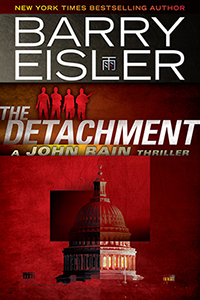
I'm delighted to announce that the digital and audio versions of the new Rain novel, The Detachment, are available now, exclusively through the Amazon Kindle Store and through Amazon's affiliates, Brilliance and Audible (I did the audio version, and you can listen to a sample here). The paper and CD audio versions will be available wherever books are sold on October 18 (and can be preordered now through Amazon). Tour dates—which will coincide with the paper release—will be up on my website soon. Here's more:
John Rain is back. And "the most charismatic assassin since James Bond" (San Francisco Chronicle) is up against his most formidable enemy yet: the nexus of political, military, media, and corporate factions known only as the Oligarchy.
When legendary black ops veteran Colonel Scott "Hort" Horton tracks Rain down in Tokyo, Rain can't resist the offer: a multi-million dollar payday for the "natural causes" demise of three ultra-high-profile targets who are dangerously close to launching a coup in America.
But the opposition on this job is going to be too much for even Rain to pull it off alone. He'll need a detachment of other deniable irregulars: his partner, the former Marine sniper, Dox. Ben Treven, a covert operator with ambivalent motives and conflicted loyalties. And Larison, a man with a hair trigger and a secret he'll kill to protect.
From the shadowy backstreets of Tokyo and Vienna, to the deceptive glitz and glamour of Los Angeles and Las Vegas, and finally to a Washington, D.C. in a permanent state of war, these four lone-wolf killers will have to survive presidential hit teams, secret CIA prisons, and a national security state as obsessed with guarding its own secrets as it is with invading the privacy of the populace.
But first, they'll have to survive each other.
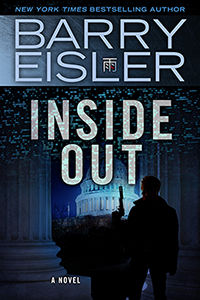
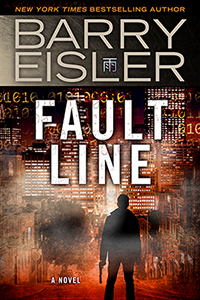
The Detachment is what fans of Eisler, "one of the most talented and literary writers in the thriller genre" (Chicago Sun-Times), have been waiting for: the worlds of the award-winning Rain series, and of the bestselling Fault Line and Inside Out, colliding in one explosive thriller as real as today's headlines and as frightening as tomorrow's.
Want to read Q&A on various aspects of the book, along with the first five chapters? I'm a guest today at five excellent blogs. Here's where to go:
For more on digital books, please see the Digital FAQ on my website. There's also a program called Kindle for PC that will allow you to download the book from the Kindle Store and read it on your PC, a program called Kindle for Android that will allow you to download it from the Kindle Store and read it on your Android device, and a program called Kindle for Mac (available from Amazon and Apple's App Store) that will allow you to download it from the Kindle Store and read it on your Mac computer, iPad, or iPhone.
If you're wondering why the digital edition of The Detachment is available before the paper edition, the reason is that paper takes longer to prepare and ship (glue, boxes, trucks, warehouses) than digital. My goal, and Amazon's, is to get all editions to readers as quickly as possible, and because, by its nature, digital can be readied for publication more quickly, the digital edition of The Detachment is being released first. Syncing up the release of the digital and paper versions would mean sitting on the digital edition until October 18th, and that doesn't strike me as a fair or sensible approach. This way, all readers can get the edition they want as soon as it's ready.
Thanks for all your support, and I hope you enjoy reading The Detachment as much as I enjoyed writing it!
Barry
Update: Nook and other ePub reader users, the book was mistakenly DRMed. The problem is now fixed, and if you had a problem converting, please just follow the instructions below and you should be good to go. My apologies for the mistake and the inconvenience.
"All they need to do is delete the file from their local application/device (Kindle for the PC, Kindle for the Mac, etc) and then re-download the book from their Amazon account to get the DRM free version. If people have questions – they can call Amazon Kindle CS team at 866-321-8851. We posted an article about it so that our CS reps are aware of the situation and how to fix the problem."
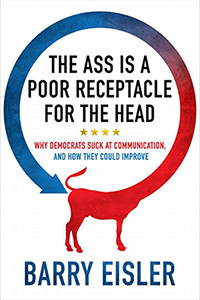
Hi all, my new political essay, The Ass Is A Poor Receptacle For The Head: Why Democrats Suck At Communication, And How They Could Improve, is available now. If you read this blog (and I think that might be a fair assumption since you're reading this right now), you know I'm interested in language as it influences politics, and in politics as an exercise in branding and marketing. The Ass Is A Poor Receptacle is both primer and manifesto on these topics, and includes references from Shakespeare to Schwarzenegger and from Orwell to Animal House to illustrate its many points. Here's a bit more:
Regardless of what you think of their policies, the sad truth is that Democrats suck at selling their ideas to the public.In this hilarious and hard-hitting essay, best-selling novelist and political blogger Barry Eisler draws on his expertise in narrative, his CIA training in persuasion, his time as an international intellectual property lawyer, and his background in technology marketing to offer Democrats some sound advice on how to improve their communications strategy.Borrowing principles from judo and boxing; using examples from advertising, movies, plays, speeches, and debates; and offering case studies of actual policy rollout successes and disasters, Eisler encourages Democrats to force Republicans to fight on Democratic terms, to use Republicans' own moves against them, and to not just slip a punch, but to hammer their opponents into a rhetorical corner and knock them the hell out.
The Ass Is A Poor Receptacle is about 10,000 words, or about 50 pages in paper. You can download it to your Amazon Kindle, your B&N Nook, or via Smashwords directly to your computer as a PDF. There's also a program called Kindle for Mac, available from Amazon and Apple's App Store, that will allow you to download it from the Kindle store and read it on your Mac computer, iPad, or iPhone.
Thanks for reading, and please help spread the word to Democrats who might want to get their heads out, if only someone would show them how.
Hi all, my new John Rain/Delilah short story, Paris Is A Bitch, is available now. It covers an important event that occurs sometime between the end of Requiem for an Assassin and the start of The Detachment, the new Rain book that'll be out this summer. You can download it to your Amazon Kindle, your B&N Nook, or via Smashwords directly to your computer as a PDF. There's also a program called Kindle for Mac, available from Amazon and Apple's App Store, that will allow you to download it from the Kindle store and read it on your Mac computer, iPad, or iPhone.
For most couples, a quiet dinner for two at Auberge de la Reine Blanche on the Ile Saint Louis would be just the thing to smooth out the complications in a romance. But for gorgeous Mossad operative Delilah and trying-to-retire contract killer John Rain, nothing is ever easy, and when Rain sees a crew of hard-looking men setting up outside the restaurant, he realizes someone has been bringing her work home with her. Is it a hit—or something even worse? When it comes to killing, business and pleasure are the most dangerous mix of all.
This short story is about 8500 words, or a little under 40 pages in paper. The download comes with the first three chapters of the new John Rain novel, The Detachment (available soon), plus an essay called Personal Safety Tips from Assassin John Rain, which includes information that will be at least as valuable to civilians as it has been to Rain.
Even as the aftershocks of the March 11 Touhoku quake continued to rock Japan, a group of people came together and determined to do something in response. The Wall Street Journal chronicled their efforts, and the result is a remarkable book, called "2:46: Aftershocks: Stories from the Japan Earthquake." Recorded, written, and published in just over one week, and available as of this morning, it's a stunning collection of firsthand accounts, photographs, art, and essays (including an original by cyberpunk science fiction legend William Gibson), 100% of the proceeds of which go to the Japanese Red Cross and its critical work of aiding the quake's victims. I'm very proud to have contributed the foreword, which I'm posting here in hopes it will entice more people to get involved. Please, buy a copy of the book, share on Facebook, like Quakebook on Facebook, post something about it on your blog, follow Quakebook on Twitter, tweet about it with the hashtag #Quakebook-- whatever you can do to help get out the word and help a nation and people that desperately need it. Thank you.
****************
For me, Tokyo was metropolitan love at first sight.
It was 1992, and the government sent me for a language homestay. I got off the Skyliner at Ueno Station from Narita and that was it, I was done for. I could try to tell you why -- the energy of the place, its strangeness, the feeling of method to the madness -- but really, you might as well try to explain your first crush, your first love, the attraction of a lifelong romance. Whatever you can explain in words won't quite be it. The real connection is always too deep, too elusive, too mysterious ever to be corralled by language. The words will never get it right.
Still, if you're in love and you're a writer, you have to try. You might even create a character, say, a half-Japanese, half-American assassin, to help you:
Tokyo is so vast, and can be so cruelly impersonal, that the succor provided by its occasional oasis is sweeter than that of any other place I've known. There is the quiet of shrines like Hikawa, inducing a somber sort of reflection that for me has always been the same pitch as the reverberation of a temple chime; the solace of tiny nomiya, neighborhood watering holes, with only two or perhaps four seats facing a bar less than half the length of a door, presided over by an ageless mama-san, who can be soothing or stern, depending on the needs of her customer, an arrangement that dispenses more comfort and understanding than any psychiatrist’s couch; the strangely anonymous camaraderie of yatai and tachinomi, the outdoor eating stalls that serve beer in large mugs and grilled food on skewers, stalls that sprout like wild mushrooms on dark corners and in the shadows of elevated train tracks, the laughter of their patrons diffusing into the night air like little pockets of light against the darkness without.
And:
At first light, the whole of Shibuya feels like a giant sleeping off a hangover. You can still sense the merriment, the heedless laughter of the night before, you can hear it echoed in the strange silences and deserted spaces of the area’s twisting backstreets. The drunken voices of karaoke revelers, the unctuous pitches of the club touts, the secret whispers of lovers walking arm in arm, all are departed, but somehow, for just a few evanescent hours in the quiet of early morning, their shadows linger, like ghosts who refuse to believe the night has ended, that there are no more parties to attend.
If my books have been love letters to Japan, this one is more an SOS. I'm both proud and humbled to be part of it, to be in a position to reach others who love Japan and long for Japan so together we can give back some of what we've received, and do something to help Japan back to her feet.
This post is in response to a post by Juan Cole, a blogger and expert on the Arab and Muslim worlds from whom I've learned a great deal and who I greatly respect, arguing that America has a moral obligation to assist its NATO allies in the war against Libya.
Hi Juan, I'm no expert on NATO and the UN, but Article 5 of the NATO Charter seems entirely clear:
The Parties agree that an armed attack against one or more of them in Europe or North America shall be considered an attack against them all and consequently they agree that, if such an armed attack occurs, each of them, in exercise of the right of individual or collective self-defence recognised by Article 51 of the Charter of the United Nations, will assist the Party or Parties so attacked by taking forthwith, individually and in concert with the other Parties, such action as it deems necessary, including the use of armed force, to restore and maintain the security of the North Atlantic area.
So Article 5 applies only to attacks in Europe and North America, which would seem to exclude events in North Africa. And even if we read the phrase, "to restore and maintain the security of the North Atlantic area" as broadly as possible, it's hard to see how it could be stretched to an African country on the Mediterranean.
But I think your argument might find some support in Article 6, which provides:
For the purpose of Article 5, an armed attack on one or more of the Parties is deemed to include an armed attack:
on the territory of any of the Parties in Europe or North America, on the Algerian Departments of France (2), on the territory of or on the Islands under the jurisdiction of any of the Parties in the North Atlantic area north of the Tropic of Cancer;
on the forces, vessels, or aircraft of any of the Parties, when in or over these territories or any other area in Europe in which occupation forces of any of the Parties were stationed on the date when the Treaty entered into force or the Mediterranean Sea or the North Atlantic area north of the Tropic of Cancer.
Again, I know little about the NATO Charter and am unfamiliar with other attempts to interpret it, but on its face, Article 6 seems to provide that if NATO forces are attacked in the Mediterranean, the attack will be deemed to be an Article 5 attack. That said, as a former lawyer, I'm struck by the sloppy drafting of Article 6. As drafted, it seems to have the effect of dramatically expanding the geographical ambit of Article 5, making me wonder why, if such an expansion was the intent of the drafters, they didn't just forthrightly provide for the proper geographical scope of the treaty in one place. Another drafting anomaly in Article 6 is the repetition of the notion that an armed attack on Europe means an armed attack on Europe. Finally, we should mindful of what NATO stands for: North Atlantic Treaty Organization. Legal documents are often construed without regard to their titles and headings, but still, it's fair to wonder why the drafters would have called the organization and the treaty NATO if they intended the alliance to apply equally to the Mediterranean. NAMTO would have worked as an acronym, too.
These anomalies are why I hesitate to opine too strongly in the absence of familiarity with something equivalent to case law (I couldn't find any, BTW). My guess is that the drafters intended that limiting phrase, "in which occupation forces of any of the Parties were stationed on the date when the Treaty entered into force" to apply not just to Europe, but to the Mediterranean and other areas mentioned in Article 6, too. Regardless, on its face, Article 6 does seem to provide support for the notion that if NATO forces are attacked in the Mediterranean, the alliance will treat such attacks as an attack against all, in which case each NATO party is obligated to assist the parties that have been attacked.
All that said, you wrote, "So my question is, does that decision not lay a moral obligation on the US to lend support to the effort of its allies?" As you can see from my attempts to parse the NATO Charter, I think the better question is, "Does that decision create a legal obligation for the United States?" Because, after all, if the NATO Council decided to pick a fight outside the treaty's ambit and then tried to invoke the treaty as a way of forcing America to join in that fight, I would argue that no, America certainly has no moral obligation to join in the fight, and I would only be concerned with whether America would be legally obligated to join. As a matter of common sense, it seems dubious that NATO could launch a war not authorized by the treaty and then invoke the treaty to force a member to join that war, but still, the Charter says what it says and regardless of common sense the document of course needs to be addressed.
You ask: Had Washington demurred, "would not the allies have had a legitimate grounds for absolute fury?" I think this is the wrong question. America shouldn't be pressured into war by fear of third party emotions. If America has a legal obligation to join, America should honor that obligation. If no such obligation exists, the potential emotional reaction in foreign capitals ought to be a matter of diplomacy, but ought not to be a basis for America's participation in a war.
You mention that NATO invoked Article 5 following the September 11 attacks. But this was entirely proper, as the territory of a member state had been attacked. Libya has attacked no member state, and your argument would seem to imply that when NATO acts properly in situation x, member states are therefore obligated to act improperly in situation y. Such a tit for tat interpretation of the treaty makes no sense, either legally or common sensically. Moreover, the treaty makes no mention of public support for or opposition to responses by member states, so the foreign public opposition you mention to NATO's assistance to America in Afghanistan again seems relevant only to matters of diplomacy, not to whether an alliance member is legally or even morally obligated to assist another alliance member.
Similarly, your concern that an American demurral would mean the end of NATO is a matter of diplomacy only. Why would America want to be part of an organization that could force America into a war just by threatening the organization's dissolution if America failed to join in? If America really wanted to stay out and believed it had no legal obligation to join in, presumably it could head off such a crisis by early diplomatic intervention. If it couldn't, it might be worth discussing the value of an organization that no longer has a Soviet Union to deter and that seeks to force America to participate in actions outside the ambit of the treaty America has signed.
Granted, Resolution 1973 authorizes UN member states to attack Libya. But I don't see how it follows that America or any other NATO member is then legally obligated to participate in a war launched pursuant to the UN's resolution. Resolution 1973 authorized military action in Libya; it did not require it. Allowing a UN authorization to act as a legal trigger for a NATO requirement would greatly expand the potential applicability of the treaty. France's and Britain's actions in Libya make sense to you, but their next ones might not, and you might regret the creation of a principle that winds up obligating America to participate in every UN-authorized war that a NATO member decides to engage in. I know I would.
You close by asking again whether America has a moral obligation to assist its NATO allies in Libya. Again, I respond by saying respectfully that this is the wrong question. The right question is, Is America legally obligated to assist? Though the ambiguities in Article 6 leave room for argument, on balance I would say that no, America has no such legal obligation, and that in the absence of a legal obligation to act under a treaty, there is no moral basis to act under a treaty. If it were otherwise, we could dispense with treaties entirely and choose our wars case by case on a purely "moral" basis.
Since before I was born (at least that's how it seems), my friend, novelist Joe Konrath, has been urging me to write a short story. Just to get him to stop, I finally listened. And man, am I glad I did! The result is The Lost Coast, one of the darkest things I've ever written, and, I think, one of the best.
If you've read Inside Out, you know Larison, a twisted, off-the-reservation black ops soldier who has picked a fight with the entire US governing establishment. And if you know Larison, you're probably betting on him to win.
Well, now you can see him on his own, sometime before, or maybe after, the events of Inside Out. You don't need to have read the earlier book to enjoy The Lost Coast. It's a complete standalone. Here's the description:
For Larison, a man off the grid and on the run, the sleepy northern California town of Arcata, gateway to the state's fabled Lost Coast, seems like a perfect place to disappear for a while. But Arcata isn't nearly as sleepy as it seems, and when three locals decide Larison would make a perfect target for their twisted sport, Larison exacts a lifetime of vengeance in one explosive evening.
Warning: this story is intended for mature audiences, and contains depictions of sexual activity, though perhaps not in the way you're expecting. 6600 words. Includes an excerpt from the new John Rain novel, The Detachment (available soon), featuring Larison, Rain, Dox, Treven, and others. Also includes a fun interview with novelist J.A. Konrath.
What is that interview, you ask? I've decided to reprint it here. Joe is running it on his blog, too, and I expect he'll get a lot of interesting comments as always. I'll be answering questions there as well as here, so if you're curious about where The Lost Coast comes from, how it feeds into the new Rain novel, The Detachment (coming soon), or anything else, stop by Joe's blog and say hi.
Joe: Correct me if I’m wrong, but I believe The Lost Coast is your very first short story. Why haven’t you visited this form before?
Barry: Because you’ve never suggested it to me, you bastard.
Kidding, obviously — my reluctance has been despite your frequent blandishments, and I’m glad you finally got through to me. I think there were a number of factors. The thought of appearing in an anthology or magazine never really excited me that much, even though an anthology or magazine placement could be a good advertisement for a novel. And probably I was a little afraid to try my hand at the new form (though now that I have, I think I must have been crazy. Short stories are a blast to write). In the end, I think it was the combination of knowing I could reach the huge new audience digital publishing has made possible and make money doing it. Plus you just wore me down.
Joe: I really liked the Larison character in Inside Out. Though he’s one of the antagonists in that book, I wouldn’t actually label him a villain. He’s more of an anti-hero, sort of a darker, scarier version of John Rain. Why did you decide to write a short about him?
Barry: As usual, it wasn’t a conscious plan; more something influenced by my interests, travel, and reading habits. Anyone who reads my blog, Heart of the Matter, knows I’m passionate about equal rights for gays. At some point, I was reading something about gay-bashing, and I had this idea… what if a few of these twisted, self-loathing shitbags picked the absolutely wrongest guy in the world to jump outside a bar? That was the story idea that led to The Lost Coast.
Joe: The ending of Lost Coast is pretty ballsy (in more ways than one.) You could have gone a more conservative route, but you didn’t wimp out and shy away from what I feel is a laudable climax. Are you purposely inviting controversy? Was this the story you intended to tell from the onset?
Barry: I imagined it from the beginning as a pretty rough story — a little about redemption, a lot about revenge. But midway through it got darker than I’d originally envisioned. Thanks for saying I didn’t wimp out because for me, the story was being driven by Larison, who while being a fascinating guy is also a nasty piece of work. When I’m writing a character like Larison, there’s always a temptation to soften him a little to make him more palatable to more readers, but in the end I’ve always managed to resist that (misguided) impulse. For the story to come to life, you have to trust the character as you’ve conceived him and as he presents himself to you. For better or worse (I’d say better), that’s what I’ve done with Larison.
Joe: After this interview, there’s an excerpt from the upcoming seventh John Rain novel, The Detachment. This is also a sequel to Fault Line and Inside Out, featuring your hero Ben Treven. It also showcases Larison, Dox, and a few other characters from your past novels. Was it your intention all along to bring both of your series together?
Barry: I’m afraid that “all along” and related concepts will probably always elude me. Usually I get an idea for the next book while I’m working on the current one, and that’s what happened while I was working on Inside Out. I thought, “With what Hort’s up to, what he really needs is an off-the-books, totally deniable, awesomely capable natural causes specialist. So what has Rain been doing since Requiem for an Assassin? And how would Hort get to him? Through Treven and Larison, naturally… and the next thing I knew, I was working on The Detachment. It’s like the Dirty Dozen, but deadlier. Plus there’s sex.
Joe: Your sex scenes tend to err toward the aggressive side. That isn’t a question. It’s an understatement. The question is, why do you think the US is so repressed when it comes to sex in the media, especially homosexuality, and at the same time so tolerant of violence?
Barry: George Carlin had some typically wonderful insights on this subject in his book, Brain Droppings. When you look at not just our laws on drugs and prostitution, but the whole approach to those laws (unlike just about any other regulated area, drugs and prostitution are dealt with without any weighing of costs and benefits), it becomes obvious America has some hangups about pleasure. With regard to homosexuality specifically, some of the craziness is probably driven by self-hatred; some by the need for an Other to denigrate (Orwell was all over this); some just by inertia. As for the relative comfort with depictions of violence as opposed to sex, I’ve never understood that, either, because in fiction I obviously enjoy them both.
Joe: Will we be seeing more short stories from Barry Eisler?
Barry: Yes! Got a great idea for a Rain/Delilah short set in Paris in the period between the end of Requiem for an Assassin and the kickoff of The Detachment (the research, the research), and a Dox short, too.
Here's what I thought when I heard the Conservative Political Action Conference has decided to honor former Secretary of Defense Donald Rumsfeld with something CPAC calls the "Defender of the Constitution Award."
As I imagine CPAC is aware, Rumsfeld is the man who signed the very first memo authorizing the torture techniques that later became infamous with the revelations of photos from Abu Ghraib prison. Philippe Sands wrote the definitive book on the subject; it's called "Torture Team: Rumsfeld's Memo and the Betrayal of American Values." The topic is also thoroughly covered in the bipartisan report of the Senate Armed Services Committee, "Inquiry into the Treatment of Detainees in U.S. Custody," which concluded:
The abuse of detainees at Abu Ghraib in late 2003 was not simply the result of a few soldiers acting on their own. Interrogation techniques such as stripping detainees of their clothes, placing them in stress positions, and using military working dogs to intimidate them appeared in Iraq only after they had been approved for use in Afghanistan and at GTMO. Secretary of Defense Donald Rumsfeld's December 2, 2002 authorization of aggressive interrogation techniques and subsequent interrogation policies and plans approved by senior military and civilian officials conveyed the message that physical pressures and degradation were appropriate treatment for detainees in U.S. military custody. What followed was an erosion in standards dictating that detainees be treated humanely.
I thought about how different things might be today if, instead of Rumsfeld, America had been blessed with a Defense Secretary who really was a defender of the Constitution, and who therefore would have refused to partake in its violation. Someone who valued the Constitution's prohibition on cruel and unusual punishment, who understood that the Constitution elevates to the Supreme Law of the Land treaties like the Geneva Conventions and the United Nations Convention Against Torture. Certainly we'd be safer. Our standing in the world, and in our own eyes, would be undiminished. And of course the Constitution itself would be stronger, having been spared a withering assault.
I thought about people like Alberto Mora, who fought Rumsfeld's torture memos as the Navy's General Counsel, and Major General Antonio Taguba, who was forced to retire for his critical report on torture at Abu Ghraib, and Air Force interrogators like Major Matthew Alexander and Col. Steve Kleinman, who have fought heroically against torture (Alexander's most recent book, "Kill or Capture," comes out today). I thought again of the Constitution, and of the condition it might be in today if these men had won and Rumsfeld had lost.
And then I thought about what kind of person, in the face of all this, would choose to honor a key architect and enabler of America's torture regime as a "Defender of the Constitution." You'd have to be an unfortunate combination: partisan, cynical, intellectually empty. You'd have to perceive of the Constitution primarily as a cheap prop in a public relations campaign, and be willing to exploit it that way. You'd have to be ignorant of irony and oblivious to Orwell.
All of which is a pretty fair description of what today in America passes for conservatism. It's a movement that doesn't know the difference between a defense and a desecration, and celebrates them as one and the same.
The strangest thing about the low quality of Internet argument is that effective argument isn't really so difficult. Sure, not everyone can be Clarence Darrow, but anyone who wants to be at least competent at argument can do it. Here are a few guidelines.
I'll start with a hint: note the qualifier in the preceding paragraph: "anyone who wants to be." I have a feeling most people who suck at argument believe they're actually good at it. They're not, and in fact they're not even arguing -- they're masturbating. Good argument is intended to persuade another. Masturbation is intended to pleasure the self. It's the people who can't tell the difference who mistakenly think they're good at argument. I hope this article will improve the effectiveness of people who are interested in good argument. And I hope it will help people who until now have been masturbating to recognize what they've been doing, and to stop doing it in public.
Also, please note that word, "guideline," which is not the same thing as a rule. The points I make in this essay are primarily applicable to comments in blog posts and other one-to-one exchanges. A blog post itself, which isn't typically addressed to a single person, offers more latitude for, say, the use of ridicule or sarcasm or other techniques that, deployed against an individual, would inhibit that individual from coming around to your point of view. It's a matter of audience, and of intent. There are plenty of other exceptions, too -- but before worrying too much about what they might be, we'd do well to understand the general principles.
1. Insults and the Golden Rule. The most important guideline when it comes to argument is the golden rule. If someone were addressing your point, what tone, what overall approach would you find persuasive and want her to use? Whatever that is, do it yourself.
Let's get a little more specific. When someone addresses you with sarcasm, or otherwise insults you, has it ever -- even once -- changed your mind? I doubt it. Now, it's possible you're uniquely impervious to having your mind changed via insult, while, for everyone else, insults happen to be an excellent means of persuasion. But it seems more likely that your personal experience is representative of the way people work generally, and if you extrapolate just a bit, or if you take a moment to consider whether your own insults have ever persuaded someone else, you should be able to realize that an insult is a useless tool of persuasion. In fact, it's been my experience and observation that insults not only fail to persuade, but have the opposite effect, because they engage the recipient's ego and consequently cause him to cling more tightly to his position (see the section below on Your Ego is Your Enemy).
Let's use a non-Internet example for a moment. Ever see an irate driver flip someone off and yell, "Hey buddy, learn to drive!" or the like? Probably. Now, do you think the recipient of the advice has ever reflected, "You know, that fellow does have a point. What I did was careless and I should probably enroll in a remedial driver education course." So what was the irate driver hoping to accomplish with his insult? If your answer is, "He just wanted to insult the other guy!", you might be right, and if the irate driver was clear about his real goal, at least he's using well-tailored means (though, I would argue, his behavior is still pathetic and childish). But if the irate driver really believes he's doing something persuasive, he's obviously deluded.
Because even the most elementary common sense demonstrates the futility and counterproductivity of insults as tools of persuasion, we have to ask why so many people choose to employ them. I see two possibilities: (i) the people who are doing so are shockingly stupid; (ii) the people who are doing so aren't actually interested in persuasion, but instead insult others primarily to pleasure themselves. Neither of these possibilities is attractive.
Here are a few common insults I see on the Internet. I think the people using them aren't aware these comments are insulting. Their ignorance is likely the result of: (i) a failure of golden rule imagination (unless they feel respected when people offer them equivalent advice); or (ii) such blind certainty that they're right that on some level they honestly expect the other person to respond, "Oh, good point! I really was being stupid there, and I'm grateful to you for pointing it out."
Wake up and smell the coffee. Stop drinking the cool-aid. Well, duh. Um... (Seems innocent enough, right? But does it pass the golden rule test? No -- because the subtext is, "You just said something so stupid that I'm hesitant to bring this up in response, but...".)
But how can you you resist the temptation to respond to an insult in kind? Well, you can find strength in the knowledge that people who ignore Internet insults and respond substantively appear mature, self-confident, and sane, and are therefore almost always more persuasive to people following the conversation, for one. You can find a way to take pride in following a personal code, for another. Third, you can recognize the danger of the Fundamental Misattribution Error, and know that the person who just insulted you thinks he's a great guy, and that therefore, if you insult him back, he won't find it justified the way you do. Finally, you can ponder what Ghandi meant when he said, "Be the change you want to see in the world."
Here's a little tactical trick. When someone insults you, try to rephrase in your mind what the person would have said if he'd been trying to be polite, and respond to that instead.
And then there's sarcasm. I'll tell you what I hate about sarcasm. First, it's self-indulgent. Its intent is to make the user feel superior. Second, it's unproductive. Its effect is to irritate the recipient, after which things tend to get less substantive and more personal (see the section below on Your Ego is Your Enemy). Finally, it's chickenshit. The people who employ it from the safety of their keyboards wouldn't dream of doing it in circumstances where there could be consequences.
Also see the section below on Sham Arguments, which, in addition to their other shortcomings, are almost always insulting.
A hint: adjectives and adverbs, while not necessarily automatically insulting, are usually not your friends in argument because they tend to make you sound bombastic while adding nothing of substance. Include them in the first draft, and then take another look to see if your argument will be stronger and more dispassionate, and therefore more persuasive to your listener, without them.
2. No One Cares About Your Opinion. It might be painful to admit it, but no one cares about your opinion (or mine, for that matter). It would be awesome to be so impressive that we could sway people to our way of thinking just by declaiming our thoughts, but probably most of us lack such gravitas. Luckily, there's something even better: evidence, logic, and argument. Think about it: when was the last time someone persuaded you of the rightness of his opinion just by declaring what it was? Probably it was the same time someone changed your mind with an insult, right? And like insults, naked declarations of opinion, because they can't persuade, are masturbatory. And masturbation, again, is not a very polite thing to do on a blog.
If you think about it, believing a statement of your opinion alone to be persuasive is fundamentally narcissistic. Now, maybe a hotshot celebrity with a million Twitter followers can sway some people to her opinion just by uttering it. Doing so is still narcissistic because it depends for its effect on who is talking rather than on what is being said, but at least the celebrity has a basis for her narcissistic belief. For those of us more ordinary types, though, remember -- the sin of narcissism is worse when committed by someone lacking even the underlying beauty to justify it.
The most egregious example of this kind of useless narcissism I can remember was from one of those old American Express ads, where Annie Leibowitz would photograph a celebrity and the facing page would do a quick Q&A. There was one with writer/director M. Night Shyamalan. The question was, "Favorite movie?" Shyamalan's response: "The Godfather. Period. End of conversation." I remember thinking, "End of conversation? That should be the beginning of conversation! Who cares what movie you like? I want to know why you like it!" Unfortunately, Shyamalan thought what he liked was more significant than why he liked it. This outlook is childish and self-indulgent, of course, but but more importantly for our purposes, it's useless. Disagree? Then ask yourself this: have you ever found yourself persuaded by a bumper sticker?
Here's a simple exercise. Try to get in the habit of using the word "because" after a statement of an opinion. "I like The Godfather because....". "I think M. Night Shyamalan is a good/bad writer and director because...". Using "because" will naturally encourage you to provide evidence and reasoning, the objective underpinnings that turn subjective opinions into effective tools of persuasion. And not incidentally, the offering of evidence is an inherently modest, respectful, and therefore persuasive tactic. Someone who tries to persuade you with no more than an opinion is necessarily implying that he's tremendously important and you're in thrall to his awesomeness. Conversely, someone who takes the time and trouble to offer you evidence and reasoning is implying that you are a logical being worth the effort of attempting to persuade.
To put it another way: First comes your opinion. Next comes the word "because." After the "because" is your evidence -- the facts on which your opinion is based. In writing, an opinion is often known as a topic sentence. Here's a simple example -- note how useless it would be without the evidence that follows it.
Where can you find evidence? Well, if you don't have any to begin with, you might usefully ask yourself what your opinion is based on and why you hold it. Regardless, in the age of Google and Wikipedia, there's just no reasonable excuse for failing to minimally research your position. The only explanations are laziness, an onanistic objective, and narcissism, none of which I'd want to cop to if I could just do the research instead.
3. Your Ego Is Your Enemy. One of the primary causes of ineffective argument is the emotional attachment people develop to their opinions. A Martian might expect that humans would only develop opinions in the presence of supporting facts, and that the strength of opinions would correlate with the strength of supporting facts. But we all know the Martian would be wrong. Most people develop opinions for all sorts of reasons that have nothing to do with facts: I'm a Republican, I'm a Democrat, I live in a certain city, I was born of a certain race or religion, my parents taught me this, etc. And once we've taken a position, we don't want to modify it, lest we implicitly acknowledge that the opinion had no sound basis in the first place. If your opinion is based on facts, new facts can easily change your opinion. If your opinion is based on other than facts, you'll be motivated to maintain that opinion no matter what the facts.
So how do you stay out of ego trouble? First, by not getting into it. If you have an opinion, ask yourself why you have that opinion. What's it based on? And whatever factors it might be based on, how much do you really know about them? In intelligence, you're taught to distinguish between what you know, what you don't know, and what you think you know. Do this as honestly as you can with your opinions and the evidence behind them.
Second, and at least as important: don't get personally engaged. If you insult someone (see the section above on Insults and The Golden Rule), either in the first instance or in response, your ego is engaged. Once your ego is engaged, your primary motivation shifts from persuasion to ego protection. This is a waste of time. If you hadn't put your ego at risk in the first place, you wouldn't be forced to protect it now.
4. Good Argument is Good Conversation. A few years ago, I read a terrific Russell Baker review of a book called, "Conversation: A History of a Declining Art," by Stephen Miller, in the New York Review of Books. I'll quote three paragraphs from the review here because they're applicable to effective argument, too.
Both participants listen attentively to each other; neither tries to promote himself by pleasing the other; both are obviously enjoying an intellectual workout; neither spoils the evening's peaceable air by making a speech or letting disagreement flare into anger; they do not make tedious attempts to be witty. They observe classic conversational etiquette with a self-discipline that would have pleased Michel de Montaigne, Samuel Johnson, or any of a dozen other old masters of good talk whom Miller cites as authorities.
This etiquette, Miller says, is essential if conversation is to rise to the level of -- well, "good conversation." The etiquette is hard on hotheads, egomaniacs, windbags, clowns, politicians, and zealots. The good conversationalist must never go purple with rage, like people on talk radio; never tell a long-winded story, like Joseph Conrad; and never boast that his views enjoy divine approval, like a former neighbor of mine whose car bumper declared, "God Said It, I Believe It, That Settles It."
Underlying this code of good manners is the assumption that good conversation is not a lecture, a performance, a diatribe, a sermon, a negotiation, a cross-examination, a confession, a challenge, a display of learning, an oral history, or a proclamation of personal opinion.
Regarding "God Said It, I Believe It, That Settles It," see the section above on No One Cares About Your Opinion -- specifically, the part about narcissism.
5. False Binaries. A false binary is a false either/or. Examples would be, "Either we wage war on Islam or we're all be forced to convert!" "We have to fight communism in Vietnam or we'll be fighting it here at home!" "We have to keep drugs illegal or America will become a nation of addicts!" And my personal favorite: "What are we supposed to do if we can't torture prisoners for information, feed them tea and crumpets?"
False binaries are the result either of sloppy thinking or of deliberate attempts to mislead, neither of which is well calculated to persuade. They're usually caused by a conflation of means and ends. If you look at war as a tool, for example, you'll understand it's just one way (and usually not a very good one) for dealing with an enemy, or of otherwise getting what you want. If you conceive of war as the end and not the means, on the other hand, you'll have a hard time seeing other ways of achieving whatever it is you tell yourself you're after. Similarly, if you feel drug prohibition is itself the goal, you won't be able to see past it. If you realize instead that the goal is to keep usage and addiction rates at levels society can manage (as we do for alcohol), possibilities other than prohibition will become apparent.
Watch out for the weasel words in false binaries, too. "We have to fight militant Islam," for example. Okay, but... is there really no way to fight an ideology other than with, say, invasions and drone strikes?
As for the torture vs tea and crumpets argument, my usual response is, "Really? Those are the only two ways of acquiring information from a prisoner that you can imagine?" Because so many other possibilities are obvious -- what do police do? What did World War II interrogators do? -- it's pretty clear that people who try to narrow things down to torture on the one hand, tea and crumpets on the other are more interested in torture than they are in information.
False binaries are worth avoiding because they make you look stupid, and, aside from the indignity inherent in looking stupid, stupidity isn't usually persuasive (though I admit that in politics there are lots of exceptions). If someone offers you a false binary, the best counter is to politely expose how silly it is, chiefly by pointing out how many alternatives are in fact available.
Above all, remember: you're either with us, or you're with the terrorists.
6. Sham Arguments. A sham argument, in the guise of straw men, platitudes, cliches, and what a website I like calls glittering generalities, is a truism trotted out in arguments' clothing. Here are a few examples, all taken from the real live Internet:
"The president can't just wave a magic wand and fix everything." "America has real enemies." "In politics, sometimes you have to compromise." "Freedom isn't free." "You can't make an omelet without cracking a few eggs." "It's as simple as that." (I actually like this one. I always read it as "I'm as simple as that.")
Anytime you argue a truism, your implication is insulting because you're suggesting the other person can't see something blindingly obvious and requires some sort of remedial lesson from you. Ask yourself, why are you making such axiomatic observations? Because you really believe the other person doesn't know these things or that he would argue the opposite? Or because you're trying to insult the other person by implying that he doesn't realize something any child would understand?
The key to recognizing a sham argument is knowing no one would ever take the contrary position. Look at the examples above and restate them as their opposites. No one would ever take such positions. "The president has a magic wand." "America has no real enemies." In politics, you never have to compromise. "Freedom is free." Etc. You might as wall try to persuade someone that "sometimes it's sunny, sometimes there are clouds." The person's already persuaded -- so what's your point? Making such obvious, unimpeachable points just makes you sound stupid and/or condescending. Indulging stupidity and condescension never feels respectful, and what's perceived as disrespectful almost always fails to persuade.
7. Cliches. I mentioned cliches above, but decided to give the topic its own heading here because although cliches are a species of sham argument, they're pernicious too because of how effectively they block actual thought. Sunlight is the best disinfectant... better tried by twelve than carried by six (which is also a false binary, BTW)... If you argue with cliches, you'll come across as a thoughtless, unoriginal automaton. I could be wrong about this, but I've never seen anyone persuaded by a thoughtless, unoriginal automaton, so why would you want to act like one?
8. Digressions. If you want to be listened to, it's best to keep your comments on point. Using a post about Obama's broken habeas corpus promises as a jumping-off point for your thoughts on why you don't like Obama's environmental policies is apt to be unproductive (see the Russell Baker excerpt in the section above on Good Conversation). Someone else's post isn't just a grand excuse for you to offer up whatever else happens to be on your mind, and overriding the topic at hand with your own priorities isn't spam, exactly, but it has a similar flavor.
Look at it this way (and this is advice is applicable more generally, too). In the real world, would you walk up to several people you see engaged in conversation, listen for a moment, learn that they're talking about baseball, and join in by offering your thoughts on the benefits of the Paleo Diet? Of course not, because you know this would be boorish and would encourage polite society to shun you (I hope you know this). Well, look, if it's rude in the real world, chances are it's rude on the Internet, too.
If someone asks you a question, answer it. If someone makes a point, respond to it. A great way to keep yourself honest is to quote the other person's exact words. I know how obvious this sounds, but so many of the comments in blog comment sections are contrary to this elementary advice. Ignoring the other person's attempts to engage you makes you come across as wormlike and gelatinous, leads to unproductive exchanges, and is never persuasive.
9. Separate the Subjective from the Objective. Remember the exchange in the movie version of Nick Hornby's High Fidelity, where Todd Louiso says, "Well, I like the new Belle & Sebastion album," Jack Black cries out, "Bullshit!", and John Cusack then says, "How can it be bullshit to express a preference?"
Exactly. "I like the new Belle & Sebastian" is subjective -- that is, not subject to persuasion or proof. It's neither right nor wrong and no one will be able to persuade the speaker that it isn't so. Similarly, "I love America!" is subjective. "America is the best country!", on the other hand, is an objective statement because it's (at least theoretically) amenable to persuasion and proof. Presumably there is some basket of criteria for what makes a country good, and the country that has the most such criteria could be declared the best (though is there a sillier argument than an argument about America's bestness?). For more on this critical difference, here's an exchange on my Facebook page about whether America is the best country to live in. It's also a good example of what happens when ego, in this case, nationalism, is driving an argument and has pushed reason into the back seat.
10. My Tenth Point. Why do I feel the need for ten entries in this post? I blame George Carlin.
To sum up: if you agree that good argument should persuade, you'll argue with intent to persuade. "Intent to persuade" (sounds almost like a legal definition, doesn't it?) means: (i) providing not just an opinion, but evidence in support of the opinion; (ii) attempting to separate subjective and objective factors; (iii) a respectful tone; and (iv) generally speaking, an approach that you would find persuasive if someone else were using it and you disagreed with that person's underlying point.
I think this list is a good start, but I'm sure it's incomplete. Please feel free to add your own thoughts on how to argue effectively, and then help make this advice go viral through Facebook, Twitter, your own blog, and whatever other means are available to you. Together we can improve Internet discourse, and who knows where that might lead? Thanks.
Earlier this month, the Washington Post published an op-ed by Jack Devine, former CIA deputy director of operations and chief of the CIA Afghan Task Force. When I read it, I thought it was perhaps the most insane op-ed I'd ever come across. But leave it to David Broder, "Dean of the Washington Press Corps," to try to one-up it just three weeks later.
Let's take Devine's piece first. Devine argues that our top priority in Afghanistan must be capturing or killing bin Laden. Devine asks, "We have entered into two problematic wars and have expended a great deal of blood and treasure since Sept. 11. What was it all about, if not capturing bin Laden?"
I think I know now why invading Iraq was "problematic." You see, bin Laden wasn't in Iraq. No wonder we can't find the guy.
But wait a minute... back in 2002, when the Bush administration was selling America on the benefits of invading Iraq, it was all about WMDs, and mushroom clouds as smoking guns. When it turned out there were no WMDs, the Bush administration realized the war was actually about building a stable democracy in the middle east. Now that the new, improved rationale has itself turned to ashes, Devine offers the silliest and most ahistorical yet: we invaded Iraq to capture bin Laden. The good news -- for Devine -- is that, if you accept his premise, capturing or killing bin Laden will mean we've won in Iraq.
If only that meant we'd be leaving Iraq, it might redeem Devine's bizarre claim. But it doesn't.
Devine's reasoning degenerates further as he plows on. He argues that if "elements within the Pakistani government [are] an impediment to [bin Laden's] capture, we should forget about nation-building in Afghanistan and, like Sherman marching across Georgia during the Civil War, march our army across eastern Afghanistan, pressing forward even into Pakistan's Northwest Frontier, and continue the march until we capture him."
Let's put this a little more plainly. Devine is proposing that if Pakistan thwarts us, we should destroy Afghanistan.
(I gave that restatement its own paragraph because Devine's proposal is so breathtaking it really needs to be set apart and observed for a moment, unadorned.)
If we were talking about individuals, I believe Devine's approach would be known as executing a hostage. At the national level, I don't know how to describe a threat to destroy Country A in order to punish Country B other than to call it state terrorism. Sherman's March, after all, otherwise known as a "scorched earth" campaign, otherwise known as "total war," was a campaign of infrastructure destruction intended to break the south's will to fight. It involved the annihilation of railroads, bridges, farms, and manufacturing infrastructure. Sherman's army provided for itself by taking whatever it needed from the southern farms it pillaged and destroyed. This was called "foraging."
This is what Devine urges we do to Afghanistan. To punish Pakistan. At least when Sherman did it, he was destroying the territory of the population whose will the North sought to break.
But wait, as the Ginsu commercial used to say -- there's still more! Devine doesn't want the US army to do a Sherman's March across Afghanistan only. He wants the army to "press forward" into Pakistan and "continue the march" until we capture bin Laden. I'd like to think that, if bin Laden doesn't turn up during the march (maybe he's in Iraq after all?), our armies would stop marching before they invaded India or China. But Devine doesn't say, and because he seems enamored of the notion of destroying one country to punish another, one is left to wonder.
One of my favorite aspects of Devine's piece is his linguistic dexterity. Not once does he use the word "invade" or any derivation thereof. Instead, we will simply "march" and "press forward" and "continue." Euphemisms, Orwellian doublespeak, and other such mealymouthedness are hallmarks of this species of op-ed because they serve to conceal the naked brutality of the author's proposal. It would be much more difficult for the Devines of the world to call for "destroying" or "invading" Pakistan, or "burning it to the ground." Orwell wrote masterfully about this style of obfuscation in his essay Politics and the English Language:
In our time, political speech and writing are largely the defence of the indefensible. Things like the continuance of British rule in India, the Russian purges and deportations, the dropping of the atom bombs on Japan, can indeed be defended, but only by arguments which are too brutal for most people to face, and which do not square with the professed aims of the political parties. Thus political language has to consist largely of euphemism, question-begging and sheer cloudy vagueness. Defenceless villages are bombarded from the air, the inhabitants driven out into the countryside, the cattle machine-gunned, the huts set on fire with incendiary bullets: this is called pacification. Millions of peasants are robbed of their farms and sent trudging along the roads with no more than they can carry: this is called transfer of population or rectification of frontiers. People are imprisoned for years without trial, or shot in the back of the neck or sent to die of scurvy in Arctic lumber camps: this is called elimination of unreliable elements. Such phraseology is needed if one wants to name things without calling up mental pictures of them.
The Orwellianisms get thicker as Devine goes on, so thick that one senses the judgment they're most effectively suppressing is his own. "We should advise the Pakistani government of our intention in no uncertain terms" means we should threaten to invade and destroy the country. In response to this threat, Pakistani officials would "surely fuss," which doesn't sound like all that much (babies fuss, right? and they never hurt anyone) until you consider that Pakistan has nuclear weapons. Anyway, Devine soothes us, Pakistani officials also "fussed" in response to a recent uptick in Predator drone attacks. Which is extremely reassuring for anyone who believes Pakistan's reaction to covert drone strikes is a reliable predictor of how the country would respond to an overt invasion with the explicit aim of destroying it.
If any of this sounds worrisome to you, fear not; "it's a pretty good bet that we would have bin Laden's head on a platter before we got anywhere near the Pakistani border." It's good to know we would only be destroying Afghanistan and wouldn't have to "continue" any further, because for a moment, I had this nagging sense that our invasions of even non-nuclear-armed countries have sometimes gone not precisely in accordance with the predictions of invasion cheerleaders. And look, Devine isn't a complete madman. He acknowledges that "this is not traditionally how we deal with important allies, and it is not a formula for routine diplomatic discourse." Prudent of him to place a restraining hand on any hotheads out there who would argue for the efficacy of applying his model to other nuclear-armed allies, like Britain or France. He recognizes, after all, that these are "exceptional circumstances," but notes that, in exceptional circumstances, "hardball is called for," "hardball" being the traditionally favored nomenclature for threats to invade and destroy nuclear-armed, allied nations.
Finally, sensitive always that some nervous nelly might be reading his piece, he reassures readers that "I also suspect the fallout would be far less damaging and more ephemeral than many might suggest." Amusing use of the word "fallout" under the circumstances, though I'm reasonably confident Devine didn't intend the effect. The main thing to remember is that our threat to destroy Afghanistan and invade and destroy Pakistan, and the invasion and destruction itself, would be ephemeral, as such operations historically always are. Really, the worst that might happen from Pakistani fussing is that we could get our hair mussed.
Just in case you got overly giddy at the prospect of laying waste to two countries, Devine brings it all into focus again, reminding us that the whole thing is just about bin Laden, because "putting him to rest would provide a truly meaningful rationale for leaving" (I love that euphemism, "putting him to rest." It's almost kind). He even acknowledges that "the most recent publicly available intelligence reports show that there are few al-Qaeda terrorists remaining in the region; many have moved elsewhere, including to Yemen."
So Devine wants to lay waste to at least two countries, one of them an ally and nuclear-armed, not even in pursuit of al Qaeda, but merely in pursuit of a single man. Seems like a sensible, proportionate plan to me. Anyway, what could possibly go wrong?
And now, Broder.
There's less to say about Broder's piece, but only because he expresses his insanity more succinctly than does Devine. First, he lays out his premise: war and peace are the only forces influencing the economy that the president can control. Second, his evidence: World War II resolved the Great Depression. Finally, his slam dunk conclusion: Obama should take America to war with Iran (Congressional declarations of war are so pre 9/11) because war with Iran will improve America's economy.
There are several things I love about Broder's piece.
First, I love the euphemisms. Like Devine, Broder would never be so gauche and unsophisticated as to use a word like "invasion" to describe an invasion, and we should pause for a moment in recognition of the talent it takes to pen a whole op-ed about invading a country without once mentioning an actual invasion. Instead, Broder argues for "challenging Iran's ambition" and "orchestrating a showdown" and "confronting the threat" and "containing Iran's nuclear ambitions." None of that sounds so bad, does it? I admit I'd feel a little better if Broder could reassure me, as Devine does, that Iran wouldn't "fuss" overly much in response, and that it's a "good bet" the whole thing would never happen anyway, or, if it does, that the effects would be "ephemeral," but given that the chief effect of invading Iran would almost certainly be nothing more than an economic uptick, perhaps such reassurances would be redundant.
Another part I love is the traditional boilerplate disclaimer: "I am not suggesting, of course, that the president incite a war to get reelected." This is such a nimble dodge that I really think we should honor the mind behind it by calling such mealymouthedness "Broderian." You see, Broder doesn't suggest that the president "incite" a war only because Broder has already done such splendid work in inciting it himself.
Broder spends his whole article calculating the politics that will be in play in 2012, argues that "orchestrating a showdown with the mullahs... will help [Obama] politically," and concludes that an invasion of Iran will be good for the US economy. Then he assures us in his last paragraph, almost as a weird afterthought, that hey, it's not all about the economy and politics, that we should remember too that "Iran is the greatest threat to the world in the young century." Oh, and that if Obama invades Iran, he "will have made the world safer and may be regarded as one of the most successful presidents in history."
Is there a benefit an invasion of Iran wouldn't achieve? Broder seems to have covered everything he could think of: improve the economy, political gain to the president, good for national security, good for non-proliferation, historical icon status for the president. Incite? When food is as tasty, abundant, and nutritious as Broder promises, and he's done such fine work in stoking appetites, diners don't need to be incited. They'll be knocking down the restaurant doors.
Still, let no one suggest that Broder wants war to be "incited." That would be crass and unfair. After all, he explicitly says he is not calling for incitement, and in the complicated, sophisticated business of calling for war in an op-ed, it's understood that the one-line disclaimer trumps everything else in the op-ed itself. Or at least that's how it works on the TV shows the Broders of the world get invited on after the wars actually begin, at which point everyone (most of all, the op-ed writer himself) has forgotten everything else he wrote, and the writer gets to waive his disclaimer like a bank robber holding a bundle of loot in one hand and a get-out-jail-free card in the other.
But my favorite part of the whole thing is Broder's argument itself: war is good for the economy. You know what I'm going to say, right? It's so stunningly obvious, I know I don't need to. Still:
We've been at war in Afghanistan since 2001. In Iraq since 2003. Broder's own paper reports that we have covert forces operating in 75 countries. And in the midst of all this warfare, our economy plunged into what has become widely known as the Great Recession.
But in the mind of David Broder, none of this is relevant. Our trillion dollar deficit and 13 trillion dollar national debt don't even exist. Bloodshed and death don't even merit a casual mention. He skips past all of it, past the Cold War, Vietnam, and Korea, too, to locate a historically unique instance of a global recession meeting a global war, then uses it to argue that war is ipso facto good for the economy.
You could argue that all the wars we've been waging for the last decade didn't cause the recession. But even if all that war hasn't hurt the economy, it's a hell of a logical leap to suggest that one more war would cause economic improvement. And yet that's precisely what Broder argues.
No one wants to be called a warmonger, and certainly no one ever cops to the charge. But when someone demonstrates this much ability to ignore glaringly obvious evidence that utterly undercuts his rationale for war, when he blithely ticks off numerous imagined benefits of war and not once mentions blood -- not even the blood of his countrymen -- as part of his calculus, it's fair to ask if the person in question might be suffering from a morbid attachment to war itself.
What Broder is calling for is so insane, and so potentially destructive, that the personal disgrace he ought to feel for having suggested it is nearly beside the point. Still, I wish someone would take him gently by the arm and lead him into a quiet retirement before he embarrasses himself further, or, worse, gets someone to actually take him seriously. Given the lineup on the Post's op-ed page, however, and given that Broder's piece provides such a perfect companion to Devine's, I expect Broder will be around for as long as the lunatics are running the asylum.
Do you think my references to insanity are too much? I use them deliberately. Einstein said, "The definition of insanity is doing the same thing over and over and expecting different results." Have another look at Devine's and Broder's pieces, and tell me these men are other than by definition insane.
There are a lot of terrific blogs out there on the world of writing, but Heart of the Matter isn't one of them. HOTM primarily covers politics, language as it influences politics, and politics as an exercise in branding and marketing, with the occasional post on some miscellaneous subject that catches my attention.
HOTM has a comments section. Sounds simple enough, but as even a cursory glance at the comments of most political blogs will show, many people would benefit from some guidelines. Here are a few I hope will help.
1. The most important guideline when it comes to argument is the golden rule. If someone were addressing your point, what tone, what overall approach would you find persuasive and want her to use? Whatever that is, do it yourself. If you find this simple guideline difficult, I'll explain it slightly differently in #2.
2. Argue for persuasion, not masturbation. If you follow the golden rule above, it's because you're trying to persuade someone. If you instead choose sarcasm and other insults, you can't be trying to persuade (have you ever seen someone's opinion changed by an insult?). If you're not trying to persuade, what you're doing instead is stroking yourself. Now, stroking yourself is fine in private, but I think we can all agree it's a pretty pathetic to do so in public. So unless you like to come across as pathetic, argue to persuade.
3. Compared to the two above, this is just commentary, but: no one cares about your opinion (or mine, for that matter). It would be awesome to be so impressive that we could sway people to our way of thinking just by declaiming our thoughts, but probably most of us lack such gravitas. Luckily, there's something even better: evidence, logic, and argument. Think about it: when was the last time someone persuaded you of the rightness of his opinion just by declaring what it was? Probably it was the same time someone changed your mind with an insult, right? And like insults, naked declarations of opinion, because they can't persuade, are fundamentally masturbatory. And masturbation, again, is not a very polite thing to do on a blog.
Argue with others the way you'd like them to argue with you. Argue with intent to persuade. Argue with evidence and logic. That shouldn't be so hard, should it? Let's give it a try.