Thursday, August 30, 2012

The NYT, Eager to Serve the CIA

Another proud day for the Newspaper of Record.  Mazzetti is the NYT reporter the CIA selected in 2007 and 2009 to information-launder its "leaks" about the existence, nature, and size of its torture tapes.  I used the incident, and excerpts of Mazzetti's laundering, in Inside Out.  Not surprised to learn more about the extent to which the agency treats Mazzetti like an asset, or that he's comfortable in the role.

I imagine Mazzetti rationalizes by telling himself he's just doing favors for "access."  His masters at the spy agency will have no such illusions about the nature of the relationship.  I'm sure they're grateful for his service.


Update: In response to a question on Facebook, I had this to say:

Anyone who read Mazzetti's reporting would have known how he was being used as far back as five years ago, or longer. In Inside Out, I was just describing what was obvious.

Which is itself interesting:  I had, and needed, no special access to understand how the CIA was running Mazzetti.  Access is overrated.  Critical judgment in media production and media consumption matters much more.  Google I.F. Stone for more...

Friday, August 10, 2012

Everyone Wants To Be Me

Speaking at a campaign event in Colorado two days ago, President Obama, in the course of prattling on about all the things America's the best at (weirdly, he didn't mention income equality, social mobility, health care, poverty, basic education, longevity, or literacy, but never mind), also said this:


"And so no matter what the naysayers tell us, no matter how dark the other side tries to make things look, the fact is there is not another country on Earth that would not gladly trade places with the United States of America."  He concluded by saying that all the best things we're going to do will "remind the world why the United States of America is the greatest nation on Earth."

This reminded me of something.  It's called Narcissistic personality disorder.  Symptoms include:
• Reacting to criticism with anger, shame, or humiliation
• Taking advantage of others to reach their own goals
• Exaggerating their own importance, achievements, and talents
• Imagining unrealistic fantasies of success, beauty, power, intelligence, or romance
• Requiring constant attention and positive reinforcement from others
• Becoming jealous easily
• Lacking empathy and disregarding the feelings of others
• Being obsessed with oneself
• Pursuing mainly selfish goals
• Trouble keeping healthy relationships
• Becoming easily hurt and rejected
• Setting goals that are unrealistic
• Wanting "the best" of everything

Given a choice, would you spend time with someone who not only believed he was the best and the greatest, who not only believed that you and everyone else wanted to trade places with him, but who also loudly and frequently insisted on sharing such views with you?  Would you find such a person a good neighbor?  Trustworthy?  Psychologically stable?

On the other hand, Obama did remind his listeners that America is still a young nation, and maybe this is what he meant:  "In children, inflated self-views and grandiose feelings, which are characteristics of narcissism, are part of the normal self-development.  Children typically cannot understand the difference between their actual and their ideal self, which causes an unrealistic perception of the self."

I think America would be better off on every measure if we could focus more on being a good nation and less on being a great one.

Monday, August 06, 2012

You Will Be Assimilated

Recently, Glenn Greenwald interviewed Chris Hayes about Hayes's new book, Twilight of the Elites: America After Meritocracy.  I have the audiobook cued up in the car, and will start it as soon as I'm done with the one I'm listening to now (Charles Ferguson's Predator Nation: Corporate Criminals, Political Corruption, and the Hijacking of America, which is superb and might become the subject of a subsequent post here).


For me, the most thought-provoking part of the interview came at the end, when Greenwald asked Hayes about Hayes's assertion that even the most well-intentioned people will inevitably be corrupted -- what Hayes calls "cognitive capture" -- by entry into the American elite (aka the One Percent, aka the American Oligarchy).  Given that Hayes, who started out writing for The Nation, is now an establishment TV personality and employee of one of the world’s largest media corporations (Hayes hosts his own talk show, Up with Chris Hayes, on MSNBC), Greenwald wanted to know what steps Hayes is taking to prevent his own cognitive capture.

As someone who deals extensively with questions of subornment in fiction (and who once had some training on the subject, courtesy of Uncle Sam), I found the question itself extremely interesting.  I was also interested -- and, as admirer of Hayes and his work, concerned -- that Hayes really had no answer.  He said he would try to protect himself by continuing to practice what he recognized as good journalism, which he said consists at least in part of ensuring that a wide variety of voices are heard on his show.  But countless people have gone astray before Hayes, and surely all of them -- at least the ones who weren't corrupt to begin with -- promised themselves at least this much, that they would continue to practice good journalism.  And alas, the promise wasn't enough.

So I got to thinking.  What are the warning signs, the real metrics a well-intentioned and clear-eyed journalist should consider before her subornment begins, and by which she can judge whether her integrity is slowly being compromised, corroded, and lost?  It's important to think about these issues in advance.  Cops and soldiers, after all, use when/then thinking to prepare for physical danger.  The principles apply to the danger of subornment, too.

I've come up with a few general warning signs that I think represent a good start.  I hope Hayes, and others, will consider them, and I hope readers will add to them. 

1.  Probably the first compromise will take the form of a rationalization.  You'll be pressured to do something you know isn't quite right.  But you'll be scared not to do it -- if you don't, you'll alienate someone powerful, your career will suffer a setback, your ambitious goals will suddenly seem farther away.  At this point, your lesser self, driven by fear, greed, status-seeking, and other selfish emotions, will offer up a rationalization, and your greater self will grasp at it eagerly.  As Reinhold Neibuhr put it, "hypocrisy… is the tribute which morality pays to immorality; or rather the device by which the lesser self gains the consent of the larger self to indulge in impulses and ventures which the rational self can approve only when they are disguised."

For me, Hayes's first big test came after he said on his show that he was "uncomfortable" calling American war dead "heroes," and I wish Greenwald had asked about this specifically, as it was directly relevant to Greenwald's more general question.  There was a predictable Twitter and blogosphere outcry in response to Hayes comments, and Hayes quickly apologized.  I thought the apology was unfortunate.  Of course my heart goes out to every family that's ever lost a loved one in combat.  But whether it follows from this that every American soldier who dies in combat is automatically a hero is, at a minimum, not a topic that in a democracy should be taboo.

I don't know the extent to which Hayes's apology was heartfelt (personally, I find it incomprehensible).  But my guess is that he felt he had to make it -- perhaps because of pressure from corporate higher-ups; perhaps because he felt that his show wouldn't be properly heeded if he became a poster boy for rightist attacks.

The first compromise will likely be the hardest (and maybe this one was for Hayes), because you've never made one before, or at least not one of this magnitude, and the contrast with your relative purity will be strong. But they'll get easier over time, just as impurities are harder to notice when added to water that's already turbid.  The danger of this increasing ease is part of the reason I blurb so few books.  I won't claim absolute purity when it comes to the abysmally corrupt practice of blurbing; I've found myself (rarely, for what that's worth) in situations where I felt the cost of a no was too high, and I tried to square the circle by saying good things about a book that, while not exactly untrue, weren't exactly from the heart, either.  But I've also said no many times where the no was uncomfortable and a yes would have done me a lot of good.  From the beginning, I've sensed that once you start saying positive things about books you didn't really enjoy (or that you haven't even read), it gets easier and easier, and that the increased commercial success you might enjoy as a result of all those increasingly easy blurbs will be purchased with your own integrity.  The best way out of that trap is not to get into it in the first place.

2.  As the compromises accumulate, you'll need a larger, more all-purpose rationalization to explain them away.  I suspect the most common of these boils down to, "Okay, this isn't my proudest moment, but overall I do more good with my journalism than I do bad.  Plus, if I left this position, it would be filled by someone with (even) greater capacity for compromise, and less capacity for doing good.  So on balance, I have to do this small bad thing in the service of the larger good I do."

If you're especially adept with this rationalization, you should be a politician, where your talents can find their greatest expression.  As a journalist, you're just not being all you can be.

3.  As your career progresses, you can usefully ask yourself if you can name a compromise of which you're not proud.  If you can't… bad sign.

4.  And:  have you ever publicly copped to that compromise?  If not… bad sign (see: "You're only as sick as your secrets").

5.  Can you identify compromises you think have been made by any of your compatriots?  If not… bad sign.  It means you're not even capable of projection.  But if so, try to put yourself in that person's shoes and understand what led him to the compromise of which you're critical.  Are you sure you're so much stronger and virtuous than he is?

I'm sure Josh Marshall of Talking Points Memo, for example, started with the best of intentions, but is now attending the White House Correspondents Dinner, America's premier sleaze-fest celebration of government/media cooperation and collusion.  I'm sure Marshall tells himself that breaking bread and yucking it up with the powerful figures TPM purports to hold to account is necessary for "access" and will in no way affect his objectivity or his coverage.  I'm sure David Gregory tells himself the same.  And yet.

What's especially interesting is that Marshall and Talking Points Memo made merciless -- and deserved -- fun of journalists who went "swinging on the tire" at John McCain's Sedona estate during the last presidential election, and adopted the phrase as shorthand "to describe a reporter who has gotten way too cozy with a politician and has had their supposed objectivity affected."  I think this is an instance where a journalist is able to identify the flaws in the behavior of others without being able to apply the underlying principles to himself.  Because is there really a material difference between a barbecue at a politician's estate and a party at the White House?  Not if you think distance is critical to objectivity, but in all things it's easier to criticize the mote in another's eye than it is to come to grips with the beam in your own.

Actually, "Have you accepted an invitation to the White House Correspondents Dinner?" really deserves its own special category because when you get that invitation, and you start thinking about all the reasons you should accept it, warning klaxons should be sounding in your mind.  And I don't mean to single out Marshall.  Andrew Sullivan is another blogger who failed to lash himself sufficiently tightly to the masts of his integrity to resist this particular siren song.  I'm sure both these men are able to explain themselves, at least when they look in the mirror, but they really shouldn't be in a position where they have to do so.  If you purport to cover powerful figures, you can only -- at best -- impede your ability to do so by partying with your charges.  The notion that you have to cultivate these people in order to gain journalistic "access" is such a lie that it could be called out as its own distinct rationalization.


So an exercise:  Identify at least several journalists you once admired, or who you think once had integrity but who no longer do, and ask yourself what happened to them.  Accept that they didn't set out intending to become corrupt; in fact, you should accept that their ethics and intentions were, at the outset, as strong and noble as yours are right now.  To what did they succumb, and why will you be able to resist it when they couldn't?

6.  Do you find yourself identifying more with the public figures you're supposed to hold to account than with the readers and viewers you're supposed to serve?  This identification can take many forms.  Do you worry about whether they'll think you're a "good guy" or otherwise about their good opinion of you?  About whether they'll grant you various forms of access?  About whether they'll invite you to prestige events and speak well of you to their friends?

When Rolling Stone reporter Michael Hastings reported in his article The Runaway General on the kind of disrespect for the civilian chain of command he saw while spending time with General Stanley McChrystal and his entourage, he had to grapple with some of the questions raised in this post (he describes that process in his excellent book, The Operators: The Wild and Terrifying Inside Story of America's War in Afghanistan).  He made the right decision, and in so doing, exposed the true values and allegiances of many of his colleagues who think of themselves as journalists but in fact operate as government spokespeople.  The New York Times David Brooks, for example, criticized Hastings for being part of a "culture of exposure" (don't you hate when journalists expose things?).  Also, read CBS reporter's Lara Logan's complaints about Hastings and his article -- especially her obvious reverence for General McChrystal -- and again, you'll find a reporter who has come to identify with the powerful figures she should be holding to account.

And do you find yourself feeling special because of the kind of access you feel you have?  Do your government sources (who are playing you, and if you don't see that, that itself is a bad sign) share secret information with you on background that makes you feel you understand the real world better than do people who are not similarly in-the-know?  These are not good signs and you should watch out for them.  Here's NPR's national security reporter Dina Temple-Raston, who, irritated at a panel discussion at Greenwald's demand for evidence that Anwar al-Awlaki (an American citizen who President Obama had ordered executed) was guilty of the crimes the government accused him of, sought to win the argument by asking, "Isn't it possible that I've seen something you haven't seen?" and reminding Greenwald that "he doesn't do national security for a living."  This is a pristine example of the kind of "cognitive capture" Hayes warns about.

7.  Can you identify a personal or career cost to any of your decisions?  If not… bad sign.  Who will you be offending, and what retribution are you likely to suffer?  Who has the power to reward and punish you, and what are you willing to do to risk losing those rewards and incurring that punishment?

8.  Here's one you wouldn't think a journalist should even need to ask (but you'd be wrong):  are there any public figures you refuse to honestly, objectively, publicly criticize?  If yes… it's worse than bad.  You're already suborned.  You're not even a journalist.

9.  Can you identify any scenarios, any potential compromises, that you would not make under any circumstances, that you would resign over before ever embracing?  If not… bad sign.

10.  Can you put yourself in the shoes of the organization/establishment/oligarchy and imagine how you would go about suborning yourself to get past your defenses?  How would you obscure the true nature of those compromises to conceal them from the target's conscience, how would you package them to make them more easily swallowed and digested?  How would you, knowing yourself, attempt to suborn yourself if you were really determined to bring it off?  Because if you're not thinking like the opposition, you're surrounding yourself with talismans, not protecting yourself with real self defense.

I'm sure there are many more, of increasing specificity (do you print, without compelling reason, shit anonymous sources tell you?), but I think this is a good start.  And obviously, the principles we're dealing with here apply to professions and situations beyond just journalism.

I'm not a journalist, but I do know that when you enter an enormous, shifting system single-mindedly dedicated to beguiling you into surrendering your values and assimilating you, you have to do more than assure yourself you'll practice good journalism.  You have to take the threat seriously, consider how many people have succumbed to it before you, and armor up accordingly.  If you don't, you don't have a chance.  And if you don't think you need to take the threat seriously, you're even more vulnerable, and more likely doomed, than most.

Probably I've just spent more time thinking about these issues than most journalists.  From his response to Greenwald, I gather I've spent more time even than Hayes, who claims "cognitive capture" is a universal consequence to sufficiently prolonged exposure to temptation.  This isn't a good sign.  But I hope this article will prompt at least a few journalists to take more seriously the threat Hayes identifies, but has apparently not yet come to grips with.

Sunday, July 22, 2012

No Progress on Gun Violence

Sad these two posts I did after the Virginia Tech shooting are still so timely:

"If the shootings at Virginia Tech catalyzed a more rationale, respectful debate about access to firearms, perhaps some good might emerge from all the horror and loss. Sadly, from what I've seen, the debate remains as sterile as ever, and even more vociferous. Let's see if we can do better here.


"I think the reason gun ownership proponents and gun control proponents vilify each other so much is that each side is blind to the emotional bedrock on which the other side's position is built. If we can identify that bedrock, maybe some mutual respect will emerge. Out of that respect might even grow... sensible compromise?


"Gun control proponents (let's call them GCPs) are most comfortable in environments where there are no guns. Whether such environments can in fact be created is a separate issue; GCPs sense that a society without guns would be safer for everyone. In other words, the core value for GCPs is a safer society, and GCPs are willing to give up their individual right and ability to protect themselves and their family if doing so buys greater safety for society as a whole.


"Gun ownership proponents (let's call them GOPs, no Grand Old Party pun intended) are most comfortable in environments where they feel they can protect themselves. In other words, the core value to which GCPs adhere is..."


Thoughts on Guns


Thoughts on Guns Part 2

Thursday, July 19, 2012

Cody Lundin's Self Reliance Symposium

I just returned from a week in the Arizona desert at the Self Reliance Symposium, taught by badass survival guru Cody Lundin.  The course is based on Cody's superb book, "When All Hell Breaks Loose: Stuff You Need To Survive When Disaster Strikes."  (I also highly recommend Cody's excellent, "98.6 Degrees: The Art of Keeping Your Ass Alive.")  Cody's motto is, "The More You Know, The Less You Need."  He also likes to say, "Be prepared -- not scared."  Think about both and you'll find they're not just pithy -- they're profound.

Your humble correspondent, arriving at base camp.

It was pretty cool to be off the grid for a week.  I can't remember the last time I went that long without email, Internet, or phone access -- I think never.  It was a little surreal for a day or so, and then it was wonderful.  For a whole week, I didn't even think about (let alone discuss or write about) politics or publishing.  The experience made me aware of just how omnipresent communication has become in our mobile networked world.  The Information Age has its advantages, obviously, but my God, it was liberating and refreshing to get away from it for a while, too.  I think we pay a price for refusing to periodically hang a "Gone Fishin'" sign from our phones and laptops and letting the world do its thing without us until we're back.

Cody teaching in the "Ramada."  It was 101 degrees two days running (but a dry heat!), and the open roof, which let heat dissipate, was critical. By comparison, the space under a nearby tarp, which trapped the rising hot air, was stifling.


Typical lesson plan.

I took the course because I want to be more capable of handling a grid-down situation.  If you're suddenly deprived of electricity, heat, food, running water, and shelter, what do you do?  How do you prepare for such an eventuality, what decisions do you make, what actions do you take?  How do you deal with sanitation, how do you disinfect water, how do you thermoregulate, how do you keep your family and tribe functioning?  After a week of discussing, practicing, and living (albeit in a limited, controlled setting) all this and more, I feel much better prepared to deal with the real thing.  To find out more, read on...


My deluxe accommodations. Big Agnes Copper Spur UL2 -- awesome tent.  It was monsoon season, and in addition to the crushing heat, we also had torrential rain.  The Agnes stayed completely dry.


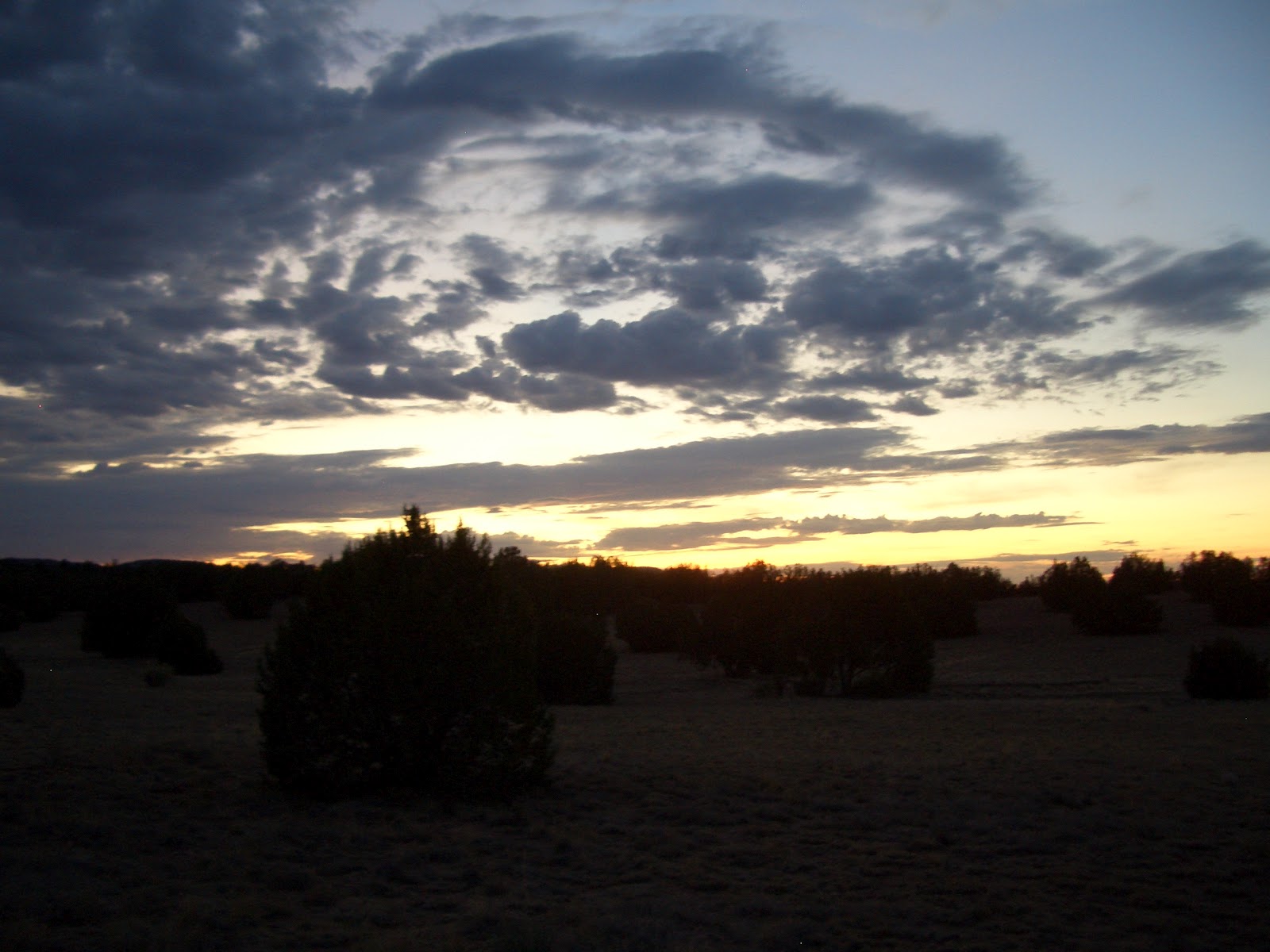
Sunset, day 1.

Cody has a knack for integrating theory and practice.  When the fourteen of us (twelve students plus Cody and his excellent teaching assistant, Mark Dorsten) arrived at the spot where we would set up our base camp, he noted that pretty soon, someone was going to need to take a shit.


The tribe.

As the fourteen of us were going to be there for a week, there would likely be others.  How should we handle that?  We thought and discussed and Cody pressure-checked our thinking as we went.  Now obviously, taking a shit in the woods is itself not rocket science.  But the subtleties weren't immediately obvious, at least not to me.  How do you design a spot that's comfortable, useable, and private?  If it's not all these things, people will hold it in, they'll get constipated, and then they'll get impacted -- and now you have crippled and ill tribe members on your hand, and no hospitals to go to for help.  And how do you keep the area sanitary and clean-smelling?  You don't want flies landing on shit and then finding their way over to the area where you'll be preparing food later.


Anyway, this is what we decided on and made -- known as a slit trench.  Ours was about a foot wide (wider than that and it becomes hard to squat over it); eighteen inches deep (deeper is fine, but at some point it becomes easier to dig a new one than to go deeper into the increasingly hard soil, and manual labor in the desert heat is something you want to be efficient about); and seven feet long (our estimate of how long it would need to be to last us all a week.  As it turned out, we were a little off and had to create a mini-version next to it on the next-to-last day).


Digging a slit trench. It's a dirty job, but someone's gotta do it.

To use the trench, you make a deposit, so to speak, and cover it up with just enough loose dirt to keep the flies off it and prevent odors.  In this fashion, the trench is gradually (you might even say organically) filled in.  You want to stop six inches from the top and, when the trench has been used end to end, you pack the last six inches end-to-end down with the remainder of the dirt you removed digging the trench to begin with.


Jealous?

Probably needless to say, we chose a spot behind some bushes so everyone could enjoy (if that's the right word for shitting in a trench) privacy, and we kept a roll of toilet paper in a coffee can in a location visible to everyone.  If the coffee can was missing, you knew someone was using the trench.  If it was in place, you picked it up and went off to take care of business.  Simple but effective.


By the way, with fourteen people and seven days, we used just a tad over two rolls of paper.  It's amazing how much less you can get by with when you need to.  Rocks and juniper branches work well, too.


I know, I know… TMI, Barry!  But the way I look at it, we're animals.  We eat, we sleep, we shit.  And if you don't have the normal infrastructure we take for granted to handle these things, they require some planning and practice.  Better to be practical about it all than squeamish.  But hey, if you were squeamish, you wouldn't be reading this blog anyway… :)


Okay, enough about shit... what about water?


Cody provided the water -- he captures rain water and has plenty, and you need plenty if you're going to live and work outside in 100+ degree heat.  There are ways of capturing water, but we played with them mostly so we would understand that they don't work well, and that you'll use more water via sweat than you'll actually gather.


A plant still.  It works, but no one got more than about a teaspoon in a bag.  Not very practical -- and that was the point of the exercise.

I wouldn't say anyone much wanted a fire (at least during the initial 100+ degree days -- we had heavy rains the last couple days, and it was chilly), but fire's about as important a tool as there is (light, heat, cooking, disinfection... the list goes on), so we learned a variety of methods of building 'em and keeping 'em going.


With the right tinder, you can get by with just half a match.


Mark, with typical good cheer, demonstrating the proper use of a magnesium fire starter on a homemade tinder bundle.


Typical tinder bundle, made with ground-up Juniper and Cottonwood bark


Cody demonstrating proper technique for getting a fire started using a bow drill -- basically, rubbing two sticks together.  Don't think I could have managed this from the description alone; the hands-on instruction in making and using the tools was critical.


Bow drill hearth, multiple uses.


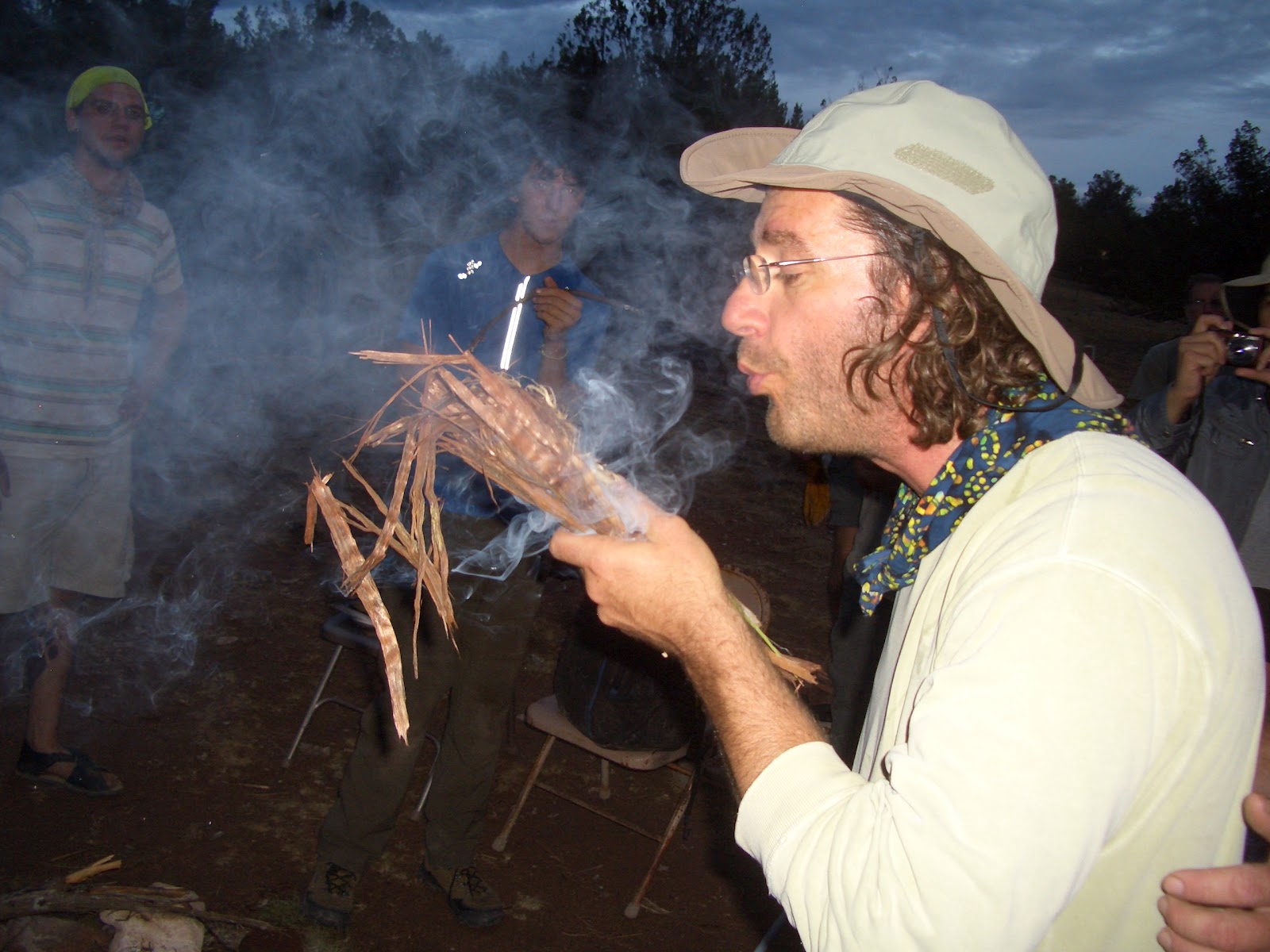
Getting my tinder bundle going after creating an ember with a bow drill, Cody alongside offering expert guidance and a helping hand.  Pretty cool to make fire with nothing but a knife, a length of paracord, and some sticks!


I'm blowing on it, not smoking it.  Really.


Looking good...


And... ignition!  Your basic super-match.  Blow it out and the embers stay hot and restartable for a long time.


A little woozy from blowing on that bad boy, teary eyed from the smoke, and with a few minor burns from flying sparks.  But feeling great!

Having successfully made a fire with no more than a knife, a length of paracord, and a few sticks I carved, I've concluded that if you don't include multiple modern means of fire-making in your bug-out kit (more on these below), you have seriously screwed up.  Making a fire with sticks is tiring, energy- and time-consuming, and uncertain.  It's good to know how as a form of absolute backup (all good defense is layered), but do yourself a favor and pack those lighters, wet-proof matches, and magnesium fire starters, too.


We also experimented with a variety of foods -- canned, freeze-dried, bulk (rice and beans, for example) -- discussing the relative merits and drawbacks of each (on this course, two meals a day are provided.  Cody teaches other courses on how to get your own).  
We cooked using a propane stove, an open fire, and a solar oven (more on that below).


Making a meal with professional poker player and travelin' man Joe -- canned food and a propane stove.


Cooking over an open fire, with one field-expedient pot.


Making ash cakes on coals.  Some call them ass cakes, but if you're hungry enough, they taste great.


Just add hot sauce.

Again, not all of this is rocket science, but it was useful to live it.  And the details are important.  For example, how do you manage a field kitchen?  Do you let people serve themselves?  If so, you risk sanitation problems from multiple people handling the serving utensils.  You also risk fights over some people taking what are perceived as unfairly large portions.  Much better on all counts to have the designated cooks also do the serving.


Sunrise from my tent.

The solar oven was extremely cool.  Solar radiation is shortwave, while radiated heat is longwave.  Shortwave radiation penetrates glass, longwave doesn't -- this is why your car can get so explosively hot in the sun.  A solar oven operates on the same principle, with commercial models getting up to 400 degrees.  We made our own using a cardboard box, a mylar emergency blanket, duct tape, and glue.  Tragically, the day was mostly overcast, but we still got temperatures of about 150 degrees.  A little more sun that day and we easily could have baked a cake (the commercial model baked the cake just fine despite the lack of sun).


Building the oven.

Fruits of our labors.


Setting it up in the field.  The other team's model only went to 10, but ours goes to 11.


Every great homemade solar oven needs a name -- this design courtesy of Brando, our resident awesome tattoo artist.

The sun has uses beyond cooking a cake, of course.  Did you know the sun alone can disinfect your water?  (We also learned a variety of other disinfection techniques -- boiling, iodine, bleach, filters, UV sterilization.  Obviously, potable water is critical to survival).  

The sun also makes a great dishwasher.

Setting our bowls out to be disinfected by solar radiation.

Oh, and the sun is a great washing machine, too.  We only had two sets of clothing with us, and it doesn't take long living and working outdoors in the desert for your clothes to start smelling pretty gamey.  Here's how to get them clean:  first, you shake out all the dead skins cells that have accumulated (which, in addition to making the clothes feel dirty, clogs the dead air spaces in the fabric and thereby reduces the clothes' ability to provide insulation).  Next, you just set them out in the sunlight.  I was amazed at how a shirt could stink of sweat in the morning and smell completely clean at night -- the sun just wipes out the bacteria that cause the odors.  Now, this is important for obvious reasons of hygiene, of course, but anything that makes you more comfortable in a grid-down situation will also be good for your morale.  As Cody is fond of pointing out, 90% of survival is psychological (and we spent a lot of time discussing and living psychology and group dynamics), and morale alone can be the difference between success or failure in the field.  If you don't believe me, ask a soldier.

We also had some instruction in solar home design and other ways of making your home more energy- and self-sufficient.

Cody's house.  No heat or air conditioning.  It was 100 degrees outside; the interior was a blessedly cool 75 degrees.


Pretty cozy, huh?  And totally off the grid.  Passive solar- and photovoltaic-powered, rain water collection system.  Amazing how much can be done with so little.

We spent a fair amount of time planning bug-out kits (AKA, go-kits).  If you had to leave the house in a hurry and for an uncertain duration because of approaching hurricane, floods, fallout, and/or zombies, and could carry only ten items on your back, what would those items be (your pack can count as #11)?

Brainstorming a limited bug-out kit.

What items would you need in your house if the grid were to go down for a day?  A week?  A month?  How about your office?  Your car?  And what do you want to have on your person at all times, to help you get from A to B if the shit hits the fan in-between?

On the last day, we visited Yavapai College, where they're doing amazing work on self-sustaining systems -- rain water collection, passive solar design, integrated hydroponics and fish farming.  It was thought-provoking and inspirational.  Our society wastes so much and it wouldn't be hard to make things more efficient -- and efficient is beautiful, too, no?

The hydroponics lab at Yavapai.


Corridor at the college, which is a converted barn.  Passive solar and photovoltaic.  Delightfully cool and beautiful, too.


The school's fish farm.  No sharks with lasers, alas.  If I ever have a fish farm, I'm getting friggin' sharks with friggin' lasers.

Some final thoughts.

First, and I think this should go without saying, I'm really just scratching the surface of what we covered in the course.  If you want greater breadth and depth, I highly recommend Cody's excellent books -- again, "When All Hell Breaks Loose: Stuff You Need To Survive When Disaster Strikes" and "98.6 Degrees: The Art of Keeping Your Ass Alive." And as good as the books are, they work better if you practice what's in them.

Second, on teachers.  Cody and Mark were superb, and I spent a little time considering what made them so.  Yes, they know their material cold because they live it.  But subject matter mastery is only necessary for being a great teacher; it isn't sufficient.  Cody and Mark had at least three other qualities (besides the obvious ones like enthusiasm and an ability to explain complex subjects to beginners) that I think are common to great teachers.  For people presuming to teach you a new skill -- particularly one that your life might depend on -- it might be worth asking whether they have these:

1.  They don't claim to have invented everything they know.  In fact, they freely share the sources of their knowledge -- "I learned this from Badass Bill, a mountain man from the Canadian Rockies...".  But they also always let you know what they've personally experienced.

2.  When they don't know something, they say so.  This demonstrates both confidence (they know so much they don't have to pretend to know everything) and integrity (pretending, and being wrong, could pass along misinformation that could get you killed).

3.  They don't just teach -- they seek to learn from their students.  We had a pretty eclectic group of students in the course -- a former Navy nuclear technician; a dealer in wild grass seeds; a professional poker player adept at reading people; a former army guy who was one of the first on the ground in the second Iraq war; a wine wholesaler; and some other people quite knowledgeable in their fields -- and Mark and Cody took full advantage, going deeper on certain subjects, pressure checking their own knowledge on others, always seeing what the students could add to the discussion based on their own diverse life experience.

Third, on survival situations generally.  It occurs to me that a common element among military/intelligence operations, criminal acts, and survival situations is the lack of do-overs (absent a lot of luck, anyway).  If you screw something up in ordinary circumstances, you can have another go at it.  Or call in backup.  If I'm hungry, I check the fridge.  Nothing to eat?  No problem, go to the supermarket.  Supermarket's closed?  On to an all-night 7/11.  If I get hurt, I can go to the doctor.  Or the emergency room.  If it's bad, I might get Medivaced to a specialty center.  When the grid is down... not so much.


Forgot to pack sunscreen on your trip to Bora Bora?  Buy some at the hotel.  Forgot to pack it in your bug-out kit, and now you're in the desert and it's 101 degrees?  That's a whole different level of problem.  The difference is roughly the difference between rock-climing belayed and free climbing, or between a trapeze act with or without a safety net.  The latter circumstances require a much less casual mindset and a much more squared-away attitude.  The week I spent at the Self-Reliance Symposium went a long way to helping me improve both.


A little graduation ceremony back at Cody's house in Prescott.

Not that the grid could ever go down, mind you.  Or, if it did, I'm sure the politicians would be all over it, like they were in New Orleans.  I mean, if you can't rely on the government, who can you rely on?


Two exceptional teachers -- it was a privilege to train with them.

Next up?  Maybe the Desert Drifter?  Or the Ultimate Abo…?


:)

Tuesday, July 03, 2012

The "Authors Guild" Jumps The Shark

Here's David Gaughran's takedown of the AG's latest, in which the AG gets that old-fashioned PublishAmerica religion.  It would be funny, but there are still writers who take the AG seriously.  The "Authors Guild"... it's amazing how much mischief you can cause when you get to choose your own name.

The whole thing puts me in mind of "Dogs and cats living together... mass hysteria!"  Over to you, Bill Murray...