Friday, September 08, 2017

The Dark Files: Tonight at 10:00

About a year ago, I was invited to co-host The Dark Files, a special the History Channel was planning that would focus on the Montauk legends--allegations about US government experiments on unwitting human subjects, carried out at Camp Hero, a now-abandoned military base on Montauk, Long Island.


It wasn't a topic I knew much about, and I doubted we'd be able to prove or disprove the legends, which range from the completely believable (mind-control experiments like MKUltra) to the way-out-there (time travel and aliens). But I was curious about what it would be like to make a television special, and intrigued by the opportunity to co-host with independent filmmaker Christoper Garentano, writer and director of The Montauk Chronicles, and with investigative reporter Steve Volk, author of Fringeology: How I Tried to Explain Away the Unexplainable--And Couldn't. Most of all, I was attracted by the opportunity to use the Montauk legends as a vehicle to explore the hidden history of human experimentation in America.

What's that, you say? Human experimentation? In America?

The question itself reveals the problem. Most Americans would have difficulty believing that our own government could behave in ways we exclusively associate with Nazi Germany and Imperial Japan's infamous Unit 731. But if we allow ourselves to be seduced by this comforting--and false--belief, we increase the likelihood that our own society could engage in such barbarities in the future, as we have in the past.

Because yes, the US government has allowed syphilis to proceed unchecked in hundreds of poor black men it told were receiving treatment, to see what happens when the disease is untreated. It has subjected prisoners to gruesome dermatological agents and hallucinogens, to study the effects chemical warfare agents. It has fed radioactive material to mentally handicapped children to learn about the impact of nuclear fallout.

And these are just a few examples. There is much, much more.

One of the things I find most disturbing about the history of human experimentation in America is that the experimenters are always the cream of American academia and science--people who doubtless look in the mirror and see only paragons of morality looking back. And their victims are always helpless and marginalized: Prisoners. Children in orphanages. The poorest minorities. The mentally ill.

So the question about Montauk isn't whether human experimentation happened. The question is whether human experimentation also happened there.

If America's dark chapters prove anything, they prove that when no one is looking, the wealthy and powerful will prey on the poor and powerless. These experiments were always conducted in secret, after all. Meaning whatever their own rationalizations, the people who carried them out understood intuitively that the wider society would not approve.

It follows that our best defense against a recrudescence of these horrors is to shine a light on the darker truths of our own history--and our own humanity. I hope The Dark Filespremiering tonight on the History Channel at 10:00 eastern time, will be an important contribution to that effort.

Tuesday, June 27, 2017

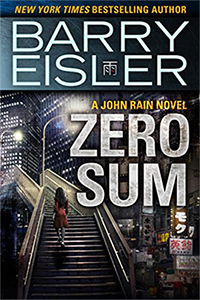
John Rain in Zero Sum!

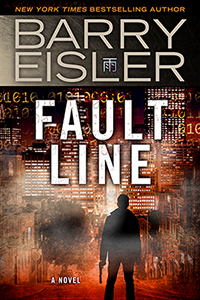
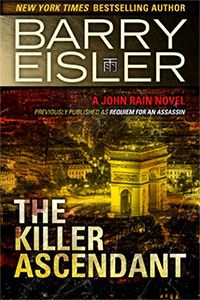
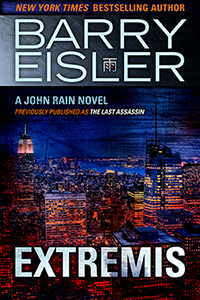
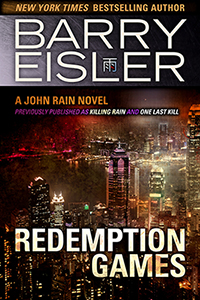
Hi all, I’m excited to announce that the new John Rain novel—ZERO SUM, is out today! This is another prequel, again set in Tokyo ten years following the events of Graveyard of Memories:
Returning to Tokyo in 1982 after a decade of mercenary work in the Philippines, a young John Rain learns that the killing business is now controlled by Victor, a half-Russian, half-Japanese sociopath who has ruthlessly eliminated all potential challengers. Victor gives Rain a choice: kill a government minister or die a grisly death. But the best route to the minister is through his gorgeous Italian wife, Maria, a route that puts Rain on a collision course not only with Victor but with the shadowy forces behind the Russian’s rise to dominance—and the longings of Rain’s own conflicted heart.
It’s a battle between kingpin and newcomer, master and apprentice, a zero-sum contest that can only end with one man dead and the other the world’s foremost assassin.

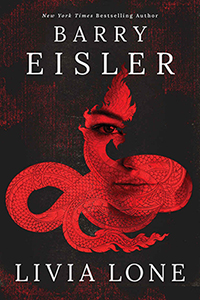
I’m already hard at work on the follow-up to Livia Lone, out in January 2018, so alas there wasn’t time to tour for Zero Sum. Just one signing—Thursday, June 29, 7:30 PM at Kepler’s in Menlo Park.

Thanks for all your support over the years, and I hope you enjoy Rain’s latest adventure.

Monday, January 30, 2017

Horseshoe Theory

Predictably, ISIS is cheering Trump's Muslim ban (actually, not just predictably. Predicted). Yes, I know, it's not really a Muslim ban. You don't have to convince me. Convince the people ISIS is recruiting with it.

It's not just that targeting refugees, immigrants, and green card holders based on their religion is capricious and cruel. It's that it's dangerous. Once again, the people wrapping themselves most ostentatiously in the flag of national security are the ones who create the most hazards--to the citizenry and to the republic.

When you're about to do the very thing your enemy most ardently hopes you'll do, it doesn't mean ipso facto your move is dumb. But it ought to give you pause, at least.

Friday, January 13, 2017

Defense Against Foreign Danger; Instruments of Tyranny at Home

Consider the way tools of national (in)security policy initially deployed abroad inevitably find their way home: bulk surveillance, black sites, torture, police militarization.

Now consider that one of the CIA’s long-practiced core competencies is undermining regimes it deems threatening or otherwise unfavorable.

James Madison said, The means of defense against foreign danger historically have become the instruments of tyranny at home. Is it possible he was on to something?

Nah, thats crazy. Only Putin could ever interfere with the sanctity of American democracy.

Friday, November 25, 2016

Another Chance to Get It Right

Anyone who knows the work of novelist Andrew Vachss will recognize his influence on my latest novel, Livia Lone (along with that of his wife, former sex crimes prosecutor Alice Vachss).


I've read most of Vachss's books, but there's one I missed, called Another Chance to Get It Right: A Children's Book for Adults, that was just reissued in a stunning new edition. It's a short read, with gorgeous illustrations, most of them graphic-novel style, and deals with Vachss's signature subject of child protection.


I've been getting a lot of good feedback about Livia Lone, including comparisons to Vachss's work, which is enormously flattering to me. Various people, moved by the story, have asked how they can fight human trafficking and child abuse. Well, unsurprisingly, the best child-protection initiative I’m aware of has been spearheaded by Vachss himself. It’s called The Legislative Drafting Institute for Child Protection, and anyone who wants to help protect children from the sorts of horrors I depict in Livia Lone can do simply by financing the work of the LDICP. I’ve done so myself and hope anyone reading this post will do so, too. For a few mouse clicks and whatever money you can spare, you can help accomplish a lot of good in the world.

Do it now, while it's on your mind. You can think of it as another chance to get it right.

Tuesday, November 22, 2016

Why Torture is Now De Facto a Policy Choice, Not a Crime

Absolutely not a surprise that Mike Pence refuses to rule out torture in a Trump administration.

I've been writing about this since 2009. Obama had a duty to prosecute torture; instead, he decided to "look forward as opposed to looking backward," rendering torture a de facto policy choice instead of a crime.

If President X has the power to prohibit torture, it follows that President Y has the power to permit it. Well, now we have President Y. This was not only predictable; it was predicted.

Thursday, October 13, 2016

Every 25 Seconds, Cops Arrest Someone for Drug Possession

I urge you to read this article by Alice Speri in the Intercept. 89,000 people jailed--no, not per year, per day.

The war on some drugs is fantastically cruel, counterproductive, self-inflicted insanity. If it were enforced across the board--rather than disproportionately against minorities--two thirds of America's adult population would be in prison.

People who support this madness: would you feel the same way if your kid decided to try a joint and wound up arrested, tried, imprisoned, permanently denied the right to vote even after released and with a permanent felon record afterward? Could you really support prohibition if you knew it would do all that to your own child, rather than assuming that kind of thing only happens to the children of others?

I wish someone would ask this of candidates for high office. But we can at least ask ourselves.

Tuesday, October 04, 2016

Prohibition Propaganda

Yes, the 1950's level of fear-mongering and bullshit is part of what makes this Diane Feinstein op-ed such an embarrassment. But the real propaganda lies in what's missing: zero consideration of the costs of the status quo the senator prefers--AKA, prohibition.

When rational people evaluate policies, they intuitively know to weigh the costs and benefits of the available alternatives. When someone insists on discussing only the (arguable) costs of only one of the alternatives, that person has abandoned rationality--or is a deliberate propagandist.

Californians, ignore the fear-mongering and the bullshit and the unreason. Rebuke the dinosaurs. Vote YES on Proposition 64 on Nov. 8.

Tuesday, September 20, 2016

Snowden, the Movie

Gripping drama, potent activism—guest blogging about Oliver Stone’s Snowden biopic over at BoingBoing today.


"The movie succeeded splendidly as popular entertainment. But there’s another level worth discussing, too.

"Logically, it shouldn’t particularly matter who Snowden is. His background, his formative experiences, his motivations, his life—none of these is relevant compared to what we’ve learned from him: that the US government developed and deployed an unprecedented and illegal system of mass surveillance, foreign and domestic; that the head of the US intelligence apparatus was lying about this system in sworn testimony before a Senate oversight committee; that the NSA has been subverting the very encryption standards upon which Internet security—banking, shopping, medical, everything—depends. And so much more. In the face of government actions as toxic to democracy as these, who brought the actions to our attention seems of distinctly secondary importance.

"And yet, I know as a novelist that we humans are wired to focus more on who than we are than what. If I can get you to care sufficiently deeply about my characters, for example, I can afflict them with only the most trivial travails and you’ll still be entertained. Conversely, if you don’t care about my characters, I can put in play the fate of all of civilization and you probably won’t even finish the book. There’s something about our species that makes us understand “what” at least partially through the prism of “who.” This is why so many people give the candidate of their preferred party so much latitude to violate their own party’s stated principles. When your party’s the one doing it, it just feels different.

"So it's no surprise that..."

Read the whole thing over at Boing Boing.

Sunday, September 18, 2016

Deep Web--Great Documentary

The other day, I stumbled across an excellent documentary called Deep Web, about the Ross Ulbricht/Silk Road prosecution. I'd followed the story somewhat at the time, but not closely, and the film illuminated a lot of aspects worth considering--including the societal and individual costs of drug prohibition; the dangers of prosecutorial overreach; and the ways people try to create communities beyond governmental intrusion and inanity. Fascinating and highly recommended.


Thursday, September 15, 2016

My Op-Ed in Time Magazine Urging Obama to Pardon Snowden

From my op-ed in Time Magazine urging Obama to pardon Snowden:

"In other words, Snowden followed his conscience. Authoritarians might condemn such a choice. Americans should celebrate it. After all, in his seminal essay “Civil Disobedience,” Henry David Thoreau wrote, “It is not desirable to cultivate a respect for the law, so much as for the right.” And indeed, if people were intended to only and always obey the law, why would we have been given the power—and burden—of conscience? Similarly, if the president were intended always to hew to the law even at the expense of justice, why would the founders have vested the office of the president with the power of pardon?"

Read the whole thing here. And please consider adding your name to this worthy effort.

Friday, September 02, 2016

We're Winning the War, But Will Never Actually Win

Guest-blogging today over at Boing Boing:

If you were the government and wanted to maintain a state of perpetual war, how would you go about it?

First, you'd need an enemy, of course, but that part would be pretty straightforward. After all, if the US government could convince the citizenry that Iraq was the 9/11 enemy but that Saudi Arabia was our friend when nineteen out of the twenty 9/11 highjackers were Saudi, it's fair to say that just about anything is possible.

But the next part would be harder. On the one hand, you'd have to claim progress in the war so that the citizenry would maintain its support for the war. On the other hand, you couldn't actually defeat the enemy, lest the war end.

That is to say, you'd have to maintain a longterm, delicate balance: we would always be winning in the war, but would never actually win the war.

With that balance in mind, your propaganda would likely be some version of, "Today, our military forces have achieved a significant victory. Of course, the enemy is insidious and resilient, and there is much hard work still ahead."

Which brings us to the latest in All The News That's Fit To Print...

Read the rest over at Boing Boing.

Friday, May 13, 2016

The Assassination Complex: A Long-Overdue Window into America's Vast Killing Machine

Based on dramatic revelations from a post-Snowden whistleblower and written by Jeremy Scahill and other Intercept writers, The Assassination Complex: Inside the Government's Secret Drone Warfare Program provides a long-overdue window into America's vast killing machine: who makes the decisions on who will be killed; how those decisions are made; how the strikes are carried out; most of all, in a thoughtful foreword by Edward Snowden and afterword by Glenn Greenwald, the implications for a democratic society of all this due-process-free, non-battlefield killing.


In addition to its substantive appeal, the book is beautifully laid out and includes numerous graphs, photographs, and text inserts that render some of the more complex aspects of the topic (such as the communications infrastructure and other logistics of drone strikes) easy to follow.

The inserts on the Orwellian language of drone strikes were particularly good. Did you know the military laments the difficulty of killing far-away people as "the tyranny of distance"? It takes a special sensibility to refer to obstacles to killing people as a form of "tyranny," but those are your tax dollars at work. Also, when an intended target is killed, that's called a "jackpot," but when an unintended target is killed, that's called an "EKIA," or Enemy Killed in Action. So no matter who is killed, the government always wins. It's both amusing and dispiriting to consider that the people behind this "heads I win, tails you lose" nomenclature also probably roll their eyes at the notion of children getting a "participant" ribbon just for entering a competition, with no need to actually win anything.

I'm a little surprised the book has received only four Amazon customer reviews since coming out ten days ago. I have a feeling the relative paucity might have something to do with Americans not wanting to know about the tyrannical powers our government has arrogated to itself and now exercises in secret, with no accountability or meaningful public debate. The attitude seems to be, "Do whatever you think you must to keep us safe; just don't tell us the disturbing details, lest we have to grapple with the legality, morality, and effectiveness of these far-reaching policies, and accept responsibility for them." There are a lot of things that might be said about such an attitude. "Consistent with the long-term health of a democracy" isn't one of them.

Friday, March 04, 2016

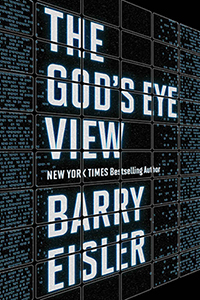
A Few More God's Eye Interviews and Appearances

Been a busy month promoting God's Eye. In case you missed these:

I did this "Five Questions on Publishing" interview with author Chris Jane at Jane Friedman's blog. We cover a lot of ground; here's just a sample:


By the way, another bit of establishment publishing propaganda is the notion that the publisher is losing money until the author earns out. This bit of bullshit is intended to make authors feel guilty and beholden about their advances. But it isn’t true, and here’s a quick logic experiment to prove it:

Imagine a scenario in which the author receives a 99 percent royalty. The author would earn out her advance very quickly, right? But the publisher would make almost no money and remain in the red long after the earn-out.

Conversely, imagine a scenario in which the author receives a 1 percent royalty. The author would probably never earn out the advance, but the publisher would quickly recoup its investment and make bank after that.

And in fact, superstar authors typically receive advances so large they’re designed not to be earned out, but function instead as a de facto higher-than-normal digital royalty rate (the technique is a way of evading the digital royalty “most favored customer” clauses that are common in publishing contracts). And even though these huge advances never earn out, the publisher still makes money.

So while there might be some loose correlation between the author earning out and the publisher making money, the notion that they’re one and the same is false and misleading. Publishers typically start to make money on a book before the author earns out, and even if the author never earns out at all.

Obviously, this is something the Guardians and Curators of Rich Literary Culture and Nurturers of Talent™ would rather we not know.

And an audio interview on God's Eye and more with Speaking of Mysteries:

And another audio interview with Author Link.

And now I better get back to writing the next book. :)

Thursday, March 03, 2016

Appearing On the Shows That Radicalized Me

Last week, while on tour promoting The God's Eye View, it was a thrill and an honor to appear on Democracy Now! and The Young Turks, two great shows that have had a huge influence on my political outlook. We talked about the Apple/FBI standoff; why abolishing the CIA isn't a radical position; why Clinton's rhetoric, votes, and policies qualify her as a Neocon; and why subsequent events so often prove my novels (depressingly) prescient. 


Tuesday, March 01, 2016

A Martian Tries to Understand Why Our Violence is Good


Yesterday, I gave a talk to the San Francisco chapter of the Former Intelligence Officers Association. In front of about a hundred former CIA, FBI, and NSA operatives, including former head of the CIA and NSA Michael Hayden, I talked about bulk surveillance, whistleblowing, and why intelligence professionals need to take especially great care not to let propaganda pervert their intelligence. I think the crowd was initially skeptical, but warmed as I went along. In the end, quite a few people came up afterward to thank me for my candor. The whole thing was fun and a little surreal, and if I got a few people to look at these issues in a somewhat different light, I’m glad. You can read the basis for my remarks at Freedom of the Press Foundation and Boing Boing.

Unfortunately, the format was such that no real debate with Hayden was possible. Which was frustrating, because, for example, at one point during his Q&A, Hayden opined that Iran is the world’s greatest purveyor of terrorism. If I could have responded, I would have wondered aloud, as I like to do from time to time, how I’d explain an assertion like that to a Martian:

Martian: We on Mars are confused by your General Hayden’s comment. He is speaking of Iran, is that correct? A country with the GDP of Finland?

Me: Uh, yes.

Martian: But didn’t your Martin Luther King say almost sixty years ago that the greatest purveyor of violence in the world today is America?


Me: He did say that, yes. In 1967, during the Vietnam war.

Martian: And hasn’t America had innumerable additional wars since then?

Me: It has, yes.

Martian: But then America’s wars must not be terrorism.

Me: Right.

Martian: That is fortunate, for our understanding on Mars is that America spends more on its military than the next eight nations on earth combined—five of which are American allies.


Me: Yes, we do have a large military.

Martian: Do you not maintain over 800 military bases—more than any other nation in your planet’s history?

Me: Yes, that’s true.

Martian: Watching from Mars, we have always associated overseas military bases with what you on earth call “empire.”

Me: Americans don’t want an empire.

Martian: Why then do you maintain so many overseas military bases, as empires do?

Me: We just want to keep the peace.

Martian: By making war?

Me: It’s...complicated. But really, America is a peace-loving culture.

Martian: But you have more wars than anyone. On Mars, this does not seem peaceful.

Me: Okay, but it’s not terrorism. Terrorism is when, you know, you terrorize people.

Martian: But did you not, alone among the peoples of your planet, use atomic weapons against your fellow humans, when you bombed Hiroshima and Nagasaki?

Me: Only to end the war.

Martian: Did you not kill at least 600,000 civilians in your war in Vietnam?

Me: We did.

Martian: Did you not kill at least 100,000 civilians in your latest war in Iraq, and turn four million people in that war into refugees?

Me: We did.

Martian: And did not your former Secretary of State Madeleine Albright declare that a half million Iraqi children starved to death because of American sanctions was “worth it”?

Me: She did say that, though she took it back afterward.

Martian: And is it not the case that—

Me: Okay, look, I get it. America does more wars and violence than anyone else. But it’s not about terrorizing people, okay?

Martian: But are not the people you kill terrorized? And what about the parents of dead children, the children of dead parents, and the burned, blinded, brain-damaged, crippled, maimed, and mutilated by your weapons? Our understanding of humans is that you are terrorized by such things.

Me: I guess so. But it’s not like we’re trying to terrorize.

Martian: But did you not call your own tactics in your second war in Iraq “Shock and Awe”?

Me: Well, yeah. We were trying to, you know, shock and awe them.

Martian: Perhaps the problem is our imperfect renderings of Earth languages. In Martian, we cannot distinguish between terrorizing with bombs, and shocking and awing with them.

Me: Look, I see where you’re trying to go with this, okay? But we’re not like ISIS and other terrorist groups. I mean, you know what ISIS does? ISIS burns people alive. That’s terrorism.

Martian: But in your war in Vietnam, did you not use an incendiary weapon called Napalm, a kind of jelly gasoline that sticks to human bodies and causes horrific burning?

Me: I guess, but that was a long time ago.

Martian: But do you not currently deploy what your refer to as thermobaric weapons?

Me: I don’t know that word.

Martian: It is derived from two Greek words meaning “heat” and “pressure.” In English, it refers to a type of explosive that produces an exceptionally hot and powerful blast. The lucky victims are obliterated. The less lucky suffer terrible agonies before they die.

Me: Well, I’m sure that isn’t our intent.

Martian: But you have named one such weapon the “Hellfire” missile. Does this not mean you are well aware that the missile burns your fellow humans with fire? Was it not in fact designed to do so?

Me: I guess it just comes down to that terrorists want to kill innocent people. But America doesn’t. When we kill innocent people, we call it “collateral damage.” Do you know that phrase?

Martian: We do, but our translators have struggled with it. For a long time, we failed to understand why a people who are ordinarily so plain-spoken would devise such a vague phrase. Then we realized, you Americans find such a phrase preferable to something like, “the burning to death of innocent human beings, the blowing into tiny scraps of meat and bone ordinary people just trying to live their lives, the ripping asunder of the limbs of children, the blinding and mutilation of baby humans—”

Me: Right, I get it. But, yes, it’s not like we want those things to happen. When we do them, they’re tragic accidents. That’s the difference.

Martian: This is interesting. You mean terrorists want to kill innocents, while you Americans are mere willing to kill innocents.

Me: Something like that, I think. Yes.

Martian: Perhaps we Martians are simply dense. It seems that terrorists have goals for which they will kill. Is that not also true for your country?

Me: Yes, but again, the terrorists want to kill innocent people.

Martian: It is difficult for we Martians to understand the difference. Presumably these people you call terrorists simply want to achieve certain geopolitical goals that they believe require killing innocent people. Presumably if they believed they had another way to achieve these goals, they would not feel the need to kill innocent people.

Me: I don’t understand.

Martian: I mean, perhaps terrorists are killing people pragmatically. In other words, for terrorists, killing people is a means, not an end.

Me: So what?

Martian: I am trying how to understand how it is different for you, given that you are the “good guys,” to use your Earth phrase. Do you not also, in all your wars, kill people as a means?

Me: But we don’t want to.

Martian: In such circumstances, it is sometimes difficult for we Martians to distinguish between the concept of “want” and the concept of “willing.” For in the service of the geopolitical goals you seek to achieve through the means of violence, is it not an empirical and historical fact that inevitably you will kill hundreds of thousands of innocent people, inflict the most horrific injuries on hundreds of thousands more, and turn millions of people into stateless refugees, with all the terrorizing that such events necessarily entail?

Me: I guess.

Martian: But this is not terrorism.

Me: No. Not when we do it.

Martian: I confess I am more perplexed now than when we started. I do not understand how the nation that commits the most violence and causes the most terror can claim other nations are the most terroristic. We Martians will have to study this question more closely.

Well, maybe they’ll invite General Hayden and me back. But we’d probably need a Martian to translate.

Tuesday, February 09, 2016

It's Not a War, Silly; It's Just an Intervention!

Should the west launch yet another war in Libya? You might think not, given how calamitous the last one turned out to be—given, in fact, that the results of the last war in Libya have become the basis for the new one!—but fear not, you can always count on The Economist to assure you of why we need yet another war. You see, what it all really comes down to is that, “In a situation where there are no good options, doing nothing may be the worst.”

This is the kind of thing I’m starting to think of as Peak Economist—when the magazine can’t come up with an argument even marginally new, insightful, or useful about one of the wars it’s constantly calling for, and so defaults to the kind of sober- and serious-sounding but substantively vapid bromides that have become the trademark of its warmongering.

So let’s pause for just a moment—longer, apparently, than the Economist allotted itself before publishing that marvelous bit of self-important onanism—to consider a bit of what’s so embarrassingly stupid about it.

First, why should “doing nothing” be inherently suspect—especially when the only alternatives The Economist seems able to imagine all involve war? Now, in fairness to The Economist, war is only called war with regard to the “Libyan Civil War.” Western bombings and invasions are instead understood to be mere “intervention.” Seriously—“war” is used three times in the article, and only about the Libyan civil war. Intervention is used four times, and only about a western attack. In fact, I just decided on the spot to make “intervention” one of my favorite war-mongering euphemisms ever, reserved only for the noble actions of the beneficent west and denied to our adversaries such as the Iranians, who can only “meddle” in countries adjacent to them after the west has “intervened” there.

(For some of the best war euphemisms ever, including wars that aren’t wars but are instead merely instances of “marching” and “pressing forward” and “continuing,” see former CIA clandestine service chief Jack Devine and former “dean of the Washington Press corps” David Broder in The Definition of Insanity.)

Sorry, I digress…we were talking about why “doing nothing” should be inherently suspect when all The Economist’s alternatives are so demonstrably awful. A question: is The Economist arguing that it would have been worse to have done nothing in Iraq rather than invading and occupying the country, killing well over 100,000 civilians and displacing another four million in the process?

(Think about those numbers for a moment. Even accounting for all our imperialistic privileges and American Exceptionalism and all that, you could argue that’s kind of a lot of human beings to slaughter and turn into stateless refugees, and that it might possibly have been better to “do nothing” instead.)

Or would “doing nothing” have been worse in Libya in 2011, when our war (sorry, “intervention”) destroyed the country and turned it into a breeding ground for ISIS? After all, if we’d “done nothing” last time, we probably wouldn’t need another war this time. Though in fairness to The Economist, which does seem excessively fond of war and frightened of what might happen if we were ever to Do Nothing instead, that last point might not be terribly persuasive.

We have a Hippocratic Oath in medicine. Why would the concept be applicable to medical interventions, but not to military ones?

I know, I know…they never really come out and definitively say “doing nothing” would be the worst option. Instead, it’s “doing nothing may be the worst option.” Sure, it might be! But it might be the best option, too. Or something in the middle. In the vacuum that passes for The Economist’s reasoning, who can really say? But for God’s sake, if you really don’t know, if something “may” be worse, or better, or whatever, what kind of sick mind would want war to be the default option?

Of course, this whole “war or nothing” framework is itself bullshit, driven either by ignorance or propaganda. Now, I don’t think the people who write these articles at The Economist are so dim-witted that they actually can’t imagine a way of conducting foreign policy other than War/Do Nothing. So either they’re so morbidly attracted to war that their desire for more of it is blunting their imagination and occluding their reason, or they know full well that a country as disproportionately powerful and influential as America has countless tools at its disposal—War and Nothing being only two of them—and are deliberately misleading their readers in the hope they’ll be able to gin up another of the wars they seem to crave.

Watch out, by the way, anytime someone tries to limit the discussion to only two crappy alternatives while positioning theirs as the marginally less worse one. I come across this with regard to torture fairly regularly—“Well, if we can’t torture them, what are we supposed to do, offer them tea and crumpets?”— because, right, no one has yet figured out a way to interrogate a criminal suspect or captured enemy that doesn’t involve either waterboarding, on the one hand, or finger sandwiches, on the other. Whether done cynically or clinically, the technique is just a way to pull you into the confines of the box that limits the other person’s thinking, and force a result that logic and reason would otherwise reject.

The final paragraph is like a microcosm of everything that’s wrong with the article itself. It quotes a couple of think tank people to create the appearance of balance and a modicum of thoughtfulness, and these people offer the kind of stunningly fresh insights that only a seasoned think tank denizen could come up with, such as that a western invasion of Libya might be “unwise and risky” (Really? Another western invasion of a Muslim country might entail some risks? Are you sure?), and even that the west might “need to proceed carefully” (Solid advice—thank you!). These “balanced” asides are served up not to persuade anyone that another war in Libya might not be such a great idea, but rather to steer readers to the gloriously sane, serious, sober, centrist option The Economist is hankering to make real—air strikes in support of small commando units.

Those are your only options, people: a full-scale invasion and occupation; the dreaded “do nothing” option; or some nice, sanitary air strikes and a handful of semi-secret troops. Which is it going to be—one of the two really shitty options, or the one that sounds a little less shitty by comparison?

If this all feels as manipulative as a game of Three-card Monte, it’s because it is. Pundits who want wars can’t get them unless they convince the public to go along for the ride. And if that involves subterfuge, well, it’s all for the greater good, right?

If The Economist gets its way and the west does another “intervention” in Libya, and the latest “intervention” produces results as horrifically counterproductive as the last one, and ISIS or an ISIS-successor bogeyman then pops up in Algeria or Egypt or wherever, there’s one thing I’m sure we can count on. The Economist will tell us yet again that “doing nothing” will be—sorry, “may” be—worse than yet another of their cherished “interventions.”