Tuesday, August 27, 2019

Republic vs Democracy and Other Drugs

The question of how much weight to give individual votes vs regional concerns is an important one on which reasonable people can differ. But the notion that America is either a democracy or a republic is irrelevant to that question (and to pretty much everything else). Worse, these labels, like so many others, while shedding virtually no light also shed a ton of heat.

Not asking for anyone to take my word for it. Just Google “America Democracy Republic” and see where it takes you.

A few examples:

“For all practical purposes, and in most contexts, ‘republic’ and ‘democracy’ are synonyms. The big difference is that the first comes from Latin and the latter from Greek. To say that the U.S. is a republic, not a democracy, is like claiming to eat beef and pork but not cows and pigs.”

“To say that the United States is not a democracy is correct if democracy is defined in a way that no government on Earth, past or present, qualifies as one. It is as useful to say, ‘The Vietnam War wasn’t a war, because Congress didn’t declare war.’”

“I often hear people argue that the United States is a republic, not a democracy. But that’s a false dichotomy. A common definition of ‘republic’ is, to quote the American Heritage Dictionary, ‘A political order in which the supreme power lies in a body of citizens who are entitled to vote for officers and representatives responsible to them’ — we are that. A common definition of ‘democracy’ is, ‘Government by the people, exercised either directly or through elected representatives’ — we are that, too.”

“If there’s substance behind ‘We’re a republic, not a democracy,’ it’s not as a description of American government. There’s really no difference, in the present, between a ‘republic’ and a ‘democracy’: Both connote systems of representation in which sovereignty and authority derive from the public at large.”

If the concern is over how much weight to give individual votes vs regional concerns, why not just talk about that?

There are tons of other topics poisoned by an addiction to nomenclature. For example, instead of a Manichean death match over capitalism vs socialism (as though there’s a single example of either/or anywhere on earth), why not discuss what services are best provided by the government, and what services are best left to the private sector? An important topic on which reasonable people can disagree, and probably one we could discuss with less shouting, if we could get past our love of labels.

So many labels shed more heat than light. I can’t decide if people are attached to them despite this, or because.

Monday, August 19, 2019

The Red Pill

At a party this past Saturday, I got to talking to a couple people about politics. They asked for my recommendations on what they ought to be reading, so I followed up with an email. And because the thoughts in the email might be useful to others, I thought I’d publish them here, as well.

************

Hi B&D, great talking the other night and I hope I didn’t rant too much…!

If you want to take the red pill, here’s what I’d recommend as a start:

1. Left/Right/Center. We’re constantly fed a framework of left/right/center. But how useful is that framework for understanding what’s going on in our society? I’d argue that powerful/disempowered; insider/outsider; 1%/99%; front-row/back-row (hat tip to Chris Arnade for that terminology); establishment (what we call in other countries “oligarchy,” but thankfully we don’t have oligarchs, at worst we have only billionaires)/everyone else) is a far more accurate and useful framework.

You mentioned Axios, for example. Beyond the curious notion that a self-declared cross between The Economist and Twitter could on balance offer anything beneficial, what does the site’s funding suggest about its ideology (hint: think corporate and establishment)? Not saying funding is necessarily dispositive (The Intercept, which I think is great, was founded by Pierre Omidyar, and does good work in bringing transparency to America’s powerful factions (we have factions, remember; only primitive, dark-skinned countries have tribes)). But I think it’s sensible to ponder what Axio’s (or anyone’s) funders, all of whom are presumably smart, sophisticated people, are hoping to get out of their investment.

Also note that Axios’s founders came out of Politico, the world’s premier media for insider baseball and vapid horserace coverage—what NYU media professor Jay Rosen calls “savvy” journalism. I’d argue that the “savvy” ideology is far more consequential in America than left/right. Certainly it’s more insidious. Listen to political conversations among citizens—how much do we discuss substance, such as “X program would be good or bad for society,” and how much have we been trained to focus on “Oh, X program was a smart/dumb move by Y candidate, it will fire up/disappoint the base, provide difficult/easy attacks for her opponents…”

But “savvy” is barely recognized as a journalistic style or means of political discourse, much less an ideology.

2. Bias. The notion of “bias” in media is bullshit and inherently propagandistic. Bias is just the bad word for worldview—that is, “worldview I don’t agree with.” But everyone has a worldview, so “X is biased” is a truism that conveys zero useful information. What we should be asking instead is, “Is this coverage coherent and defensible, is the journalist aware of and open about her biases, does she show her work?” Again, Jay Rosen, linked to above, is terrific on this.

More on the “bias” dodge in The Greatest Trick the Devil Ever Pulled. With some links to writers to follow if you’re curious.

3. American Violence Is Always A Force For Good. Of course we don’t call it “American violence.” We don’t even have wars anymore, with “military interventions” more the done thing. Here’s me trying to explain to a Martian why American violence is good and indeed exceptional (how could it not be, given American Exceptionalism? A phrase well worth pondering). I did my best, but I think the Martian was more persuasive.

I think it’s critical to remember that we’re all wired to cut ourselves (and, by extension, our in-groups) enormous slack. See, for example, the Fundamental Attribution Error. This is why Ken Burns could conclude that America’s war in Vietnam—where we killed as many as two million civilians and another million North Vietnamese and Viet Cong fighters was a “tragedy,” like a hurricane or cancer or other act of God that isn’t subject to human policymaking and deliberate decisions. And why no western journalist would ever describe, say, the Soviet Union’s war in Afghanistan in similar terms.

But what should we say about a country that goes all the way to the other side of the world and kills three million people to spread its ideology (I know, I know, all our wars are about defending, never about spreading, only Putin spreads;)) if we didn’t know the country in question was us? Would we say, “Oh, they meant well, and sure, maybe mistakes were made, but only with good intentions, and when they kill three million people in pursuit of their geopolitical objectives, on balance they’re always a force for good, thank God for that country and we should absolutely trust them with thousands of nuclear weapons, because on balance we’re all safer because of those weapons…?”

(Especially when you consider that the country in question is the only one to have used nuclear weapons in anger, ever. And that’s leaving aside the long and terrifying history of nuclear mistakes and terrifying current vulnerabilities. But I digress.)

Or would we reserve that narrative exclusively for ourselves?

4. Chomsky. The ultimate red pill is Chomsky. Here’s a five-minute cartoon primer on his seminal book, Manufacturing Consent. Note the need for an external enemy, which by amazing coincidence, we always seem to have.

5. Democracy Now! The Chomsky video above is narrated by Amy Goodman of Democracy Now! This is a great general news program. It’s easy to understand DN as leftist media, but again, consider whether left/right is the most useful and accurate framework for understanding what DN is doing, or whether there is something more relevant and important about their priorities.

6. Socialism. I know, I know, the bogeyman! Almost literally, in the sense that the bogeyman doesn’t exist and was invented as a means of scaring powerless children into compliance. America is so massively a corporatist society (but how often do you hear about corporatism in establishment media?) that the notion of socialism as something we should fear actually happening here would be hilarious if the demonization of this word hadn’t been so effective at shutting down conversation about what programs the government can and should sensibly provide, and which are better left to the private sector. Instead, anything America’s oligarchy doesn’t want, it can just label with the fear word “Socialism!” and the conversation is over. In fact, politicians have traditionally been so afraid of being branded socialist that the conversation never even gets started.

Thank Bernie for changing that, BTW. :)

And remember, it’s worth considering “But how can we afford that?” is only asked of social programs, never of our endless wars and trillion-dollar annual war budget. Medical insurance for all? How can we afford that? Space Force? No questions even asked!

Why would that be? Where does it come from?

“We can’t afford X” simply means “X is not a priority.” The same as, “I don’t have time for X” means “X is not a priority.” We’ve all had relatives die of cancer. I don’t know about you, but sometimes I wonder whether, if we diverted a bit of our annual near trillion-dollar war spending orgy—in which we spend more on the military than the next seven countries on earth, five of whom are our allies—to cancer research, whether it might have helped my mother. No way to know, of course. But it couldn’t have hurt.

Still, no matter how you cut it, there’s no way anyone can dispute that America cares more about maintaining a grotesquely bloated military than it does about curing cancer. And pretty much everything else. That’s not because we can’t afford those other things. It’s because we’ve decided spending money on war (oops, I meant to say defense!) is more important.

Anyway, given how effective America’s various power brokers have been in demonizing the S word, and given how marginalized the concept is in America, it stands to reason that an avowedly socialist magazine could be a useful antidote for the nonstop western self-congratulation and endless cheerleading for western wars (sorry, interventions) you’ll find in, say, The Economist. In this regard, I recommend Current Affairs.

The main thing is, whatever flavor of establishment media you might be consuming, you’re still consuming an establishment ideology. The Wall Street Journal isn’t a meaningful balance to the New York Times. Likewise MSNBC and Fox. If you want balance, you have to look beyond the obvious, which is what’s most readily available. And all we’re supposed to see.

A final thought:

As a species, we’re hardwired to pursue pleasure and avoid pain. It follows that we would tend to consume news that comforts us by supporting background assumptions rather than news that discomforts us by calling those cherished assumptions into question. If I’m right about this, it follows that we should probably discount the comforting news, knowing our attraction to it is probably more a function of our internal emotional and psychological longings than of its inherent accuracy or utility as anything more than a kind of security blanket.

If you’re still reading, thank you for listening. And of course feel free to disregard. There’s always the blue pill, and in fairness it is much easier to swallow.

:)

Tuesday, February 12, 2019

The Better Angels

If you read my books, you’ve heard of Gavin de Becker, because in my author notes I frequently cite his excellent book The Gift of Fear.

And if you read the news, you’ve heard of him because he’s working with Jeff Bezos in connection with the National Enquirer’s blackmail attempt.

This morning, I came across the following open letter de Becker wrote years ago to Hollywood talent agent Ari Emmanuel in connection with Mel Gibson’s infamous drunken tirade. It is so worthwhile—and so applicable to our toxic social media zeitgeist, in which the common default setting is to assume (and accuse) the worst of anyone we disagree with—that I’m posting it here. I hope it will be widely read. If you agree that it’s worth considering, please share it.

*********************

Dear Ari:

My comments here are not personal; I don’t know you, and Mel Gibson is not a client. Rather, I’m writing about ideas. I read your letter urging the industry to take action “by professionally shunning Mel Gibson and refusing to work with him.” I expect you will one day forgive him—at that moment, you’ll see firsthand that words spoken in the heat of one situation don’t always retain their meaning over time.

About his alleged anti-Semitism, you wrote, “Now we know the truth.”

I haven’t found a lot of truth in drunken tirades. A drunken spouse spits out the words, “I never loved you anyway!” Is that truth? A drunken idiot boasts that he can “take on the whole goddamn bunch of you, you bastards, come on, I’ll kick your asses.” Is that truth?

Mel also reportedly said, “I’ll f*ck you” to the Sheriff’s deputy and that he’d spend all his money to get even with the deputy, but you probably don’t believe he’ll retain those ideas over time. You see, we pick and choose which words to invest with credibility. We project motives onto people based upon what their words mean to us, because it’s very difficult to reliably know what their words meant to them at the moment they were spoken (particularly when they’re out of their minds drunk). And we’ve all learned that words don’t reliably represent beliefs. Some people have probably learned that on phone calls with agents, Ari (“You should be getting double what your agents have been getting you; you’re my most important client; I’d never suggest anyone else for that part!”).

After thirty years of predicting intent through assessing words and context, I can tell you if we start taking the things people say when very drunk or very high or very angry as their enduring truth, we’re all going to have to reassess many relationships. Not long ago, one of my sons told me, “I hate you, Man!” I decided he didn’t mean it. Under the Ari-rule, my forgiveness came too easy.

I recognize there is also some history in this situation. People had already speculated on Mel’s views about Jews, so words he might choose could be clues to those views—as we’ve seen on the news. (Do the rhymes represent flippancy about anti-Semitism? No, but it’s hard to tell what’s in someone’s heart, isn’t it?) If one honors the larger context of Mel’s words playing into a preconception some people had, then one must also honor the smaller context: This was crap he said while very drunk, while being arrested, while scared, upset, out of his mind. Is anybody really able to enter that mind and identify “the truth” within all the raw humanness?

You wrote that “alcoholism does not excuse anti-Semitism,” which is obvious. Also true is that alcoholism cannot be used to prove anti-Semitism. You describe your position as “standing up against bigotry.” I suggest that your position is bigotry, bigotry about alcoholism. And more than that, it’s bigotry about humanness itself, for every one of us has said terrible things.

I’ve heard (sober) agents say things so hateful and unkind that even Deputy Mee wouldn’t jot them down. Speaking of stenography during drunk driving arrests, that’s happened all of one time in the history of the planet earth, because cops don’t give much credence to the crap drunk people say. Even the man who was most abused, Deputy Mee himself, even he says, “That stuff is booze talking.” And he says, “I don’t want to ruin his career,” while you advocate ending Mel’s career outright. A list of people who can’t work in this town based on what someone assumes they believe—didn’t Hollywood already suffer that experience?

Your standard would be very tough to apply fairly. If there were suddenly a public transcript of all the thoughts that ran through our heads on our worst days, we’d have trouble finding anyone we’d want to work with—including ourselves.

You refer to “tragically inflammatory statements”—as if Mel had said this stuff while addressing the U.N. You take words that were sputtered in the back of a police car and link them to “escalating tensions in the world.” That’s inflammatory. And the phrases in your letter are the ones long used to inflame: “standing up against; times in history; how much is at stake; cannot stand idly by.”

There is anti-Semitic violence in the world—and there is Mel Gibson. They are two very different things.

For God’s sake, Ari, Mel hasn’t said, “Forget about it!” He’s owned what he did, called it reprehensible, apologized, said he wants to understand the dark places those words came from, has gone into rehab, and hit his saddest rock-bottom—right in front of the whole world. He’s hardly getting away with anything.

When you do forgive Mel, you’ll be in the good company of many Jewish leaders, and if you wonder why so many have been willing to forgive him, consider that Jews, having been profoundly victimized by intolerance, know the value of tolerance.

We all have our prejudices, our bigotry, and our zealotry. It’s all in all of us. We’re built of the same ingredients, just different recipes. Accepting that truth can help us feel compassion for Mel and his family, right now when they need it. But I understand you’re still angry. I truly do. The whole thing will pass, and I’m sure you won’t be going through your client list identifying the ones who’ve said hateful things, abusive things, racist things—and asking the industry to stop working with them too.

You’re the one who boldly said “standing up against bigotry and racism is more important than money.” It’s a position that would be heroic—except for the hypocrisy. We all fall down. How quickly do we get up and make amends? That’s what endures.

—Gavin de Becker
Author of Bestselling Books about Violence and Words
Bar Mitzvah 1968, Graduated Hebrew School 1969
Never Been Really Drunk
Said Plenty of Regrettable Things When Sober

Wednesday, January 16, 2019

The Economist: War Is Peace

Two op-eds in this week’s Economist that are doubly interesting side by side. In one, the magazine claims that “America is not at war.” The other castigates Pakistan for impoverishing its people through military spending.

I guess one way of pretending that western military spending doesn’t impoverish westerners is to suggest the phenomenon exists only in exotic, faraway places like Pakistan. And another way is to pretend that America isn’t at war. Not in Afghanistan, not in Iraq, not in Syria, not in Yemen, not in Africa or anywhere else.

I don’t think the term “fake news” has a favorable heat-to-light ratio. But if “America is not at war” isn’t fake news, it’s hard to imagine what would be.

If Pravda had written during the Russia’s war in Afghanistan that the country wasn’t at war, it’s a safe bet the Economist would have been quick to denounce the notion as Orwellian propaganda. What should we call it when the claim comes from a western publication?

Tuesday, January 01, 2019

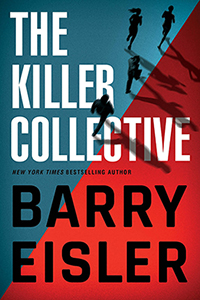
The Killer Collective, Available Today!

A lot of people have been asking, so here's how to get The Killer Collective TODAY!

If you’re an Amazon Prime member, you can sign up for free for Amazon First Reads. AFR gives you early access to The Killer Collective (and much more) all during this January, enabling you to download the Kindle version immediately for free and to order the hardback for one-day delivery at $9.99. Otherwise, the regular releasewith regular prices of $4.99 Kindle and $14.95 hardback—is February 1.


If you’re not a Prime member, you can still sign up for free for AFR, in which case you can download the Kindle version immediately for $1.99 and order the hardback for one-day delivery at $9.99. Again, otherwise, the regular release—with regular prices of $4.99 Kindle and $14.95 hardback—is February 1.

If you already preordered the Kindle version and you download it for free or for $1.99 this month, the preorder will be cancelled and you won't be charged. If you preordered the hardback and order the hardback this month at the reduced price, the preorder will be cancelled and you'll be charged only the reduced AFR price of $9.99.

The program is available in the US, the UK, and Australia. It's not yet available in Canada. Apologies for that; I don’t know why the lag for Canada.


If you were wondering... :)


THE LONE WOLVES OF BARRY EISLER’S BESTSELLING NOVELS COME TOGETHER IN A KILLER TEAM


When a joint FBI-Seattle Police investigation of an international child pornography ring gets too close to certain powerful people, sex-crimes detective Livia Lone becomes the target of a hit that barely goes awry—a hit that had been offered to John Rain, a retired specialist in “natural causes.”

Suspecting the FBI itself was behind the attack, Livia reaches out to former Marine sniper Dox. Together, they assemble an ad hoc group to identify and neutralize the threat. There's Rain. Rain’s estranged lover, Mossad agent and honeytrap specialist Delilah. And Black op soldiers Ben Treven and Daniel Larison, along with their former commander, SpecOps legend Colonel Scot “Hort” Horton.

Moving from Japan to Seattle to DC to Paris, the group fights a series of interlocking conspiracies, each edging closer and closer to the highest levels of the US government.

With uncertain loyalties, conflicting agendas, and smoldering romantic entanglements, these operators will have a hard time forming a team. But in a match as uneven as this one, a collective of killers might be even better.

Monday, December 10, 2018

Publisher's Weekly Interview On The Killer Collective

A few weeks ago Publisher’s Weekly interviewed me about The Killer Collective, out on February 1. The interview is called The Killing Business and appears in this week’s issue. These things tend to get trimmed for the magazine, so if you want to read the long-winded version, here you go… :)

Having characters from multiple series cross-over is an endlessly appealing premise…Why did you decide to do it now with John Rain, whom you "retired" years ago, and recent creation Livia Lone?

In some ways it wasn’t hard, because Rain is always trying to retire—to kill his way out of the killing business—and he never seems to make it.

On top of which, Livia and Rain’s partner, former Marine sniper Dox, teamed up in the previous book, The Night Trade, and that turned into an interesting relationship. And I started wondering…what would happen if Livia, in the course of her Seattle PD sex-crime detective duties, uncovered something so big that she was targeted in an attempted hit? Would she call on Dox for help? Would Dox call on Rain?

And what if Rain had earlier been offered the hit himself…?

Once I started playing around with it, the idea became irresistible. The characters from the Rain and Livia universes are all so different—different motivations, different training, different worldviews, different personalities—that the idea of forcing them together, all their tangled histories, and smoldering romantic entanglements and uncertainties and jealousies and doubts, under the relentless pressure of extremely resourceful adversaries…looking back, it seems almost inevitable! And I sure had a lot of fun doing it.

This new novel features state-of-the-art technology, as does so much of your previous work. How do you keep up with the constant developments in these fields?

I follow Edward Snowden on Twitter, and he’s been a terrific resource in bringing attention to the government’s increasingly Orwellian surveillance apparatus. Facial recognition technology combined with vehicle- and officer-mounted video cameras; increasingly miniaturized drones; voiceprint technology; portable cellphone trackers; ubiquitous license-plate readers…the government knows more and more about us while we know less and less about the government, and if you’re writing political thrillers without taking Big Brother into account, you’re missing an important opportunity and probably a degree of realism, as well.

In addition to whistleblowers like Snowden, civil liberties groups like the ACLU and EFF, and the journalists at the Intercept, are also good to follow—for their important work, of course, but also for anyone who wants to stay on top of the deployment of active denial systems, radio-frequency vehicle stoppers, ways of wirelessly hacking a car’s control systems, and the other real-world technologies that make their way into my stories.

This may be the first novel in which a team of assassins are the indisputable heroes. What does that say about the state of our government and our Intelligence community?

I love that nomenclature—intelligence community! It’s so friendly. Like an intelligence club, or an intelligence neighborhood. I think it’s better understood as an intelligence apparatus, which admittedly isn’t quite as soothing!

But anyway, without getting too political, which as you can tell is hard for me, I’ll say that I think trends like Brexit in Europe, the election of Donald Trump in the United States, and the election of Jair Bolsonaro in Brazil demonstrate that more and more people are figuring out that the elites who run society have become fundamentally parasitic, and so in desperation or rage or an “enemy of my enemy is my friend” attitude people are willing to do the electoral equivalent of calling an airstrike in on their own position. As faith in ever-more rotted institutions fades, people search for saviors from outside the institutional framework. That’s great for fiction, but in reality…not so much.

That said, I’m sure Delilah, Dox, Livia, Rain and the rest of the gang could run things better than the cretins currently in charge. On the other hand, 535 citizens chosen at random would be an improvement over Congress and the Senate. How did Cormac McCarthy’s assassin Chigurh put it? “If the rule you followed brought you to this, of what use was the rule?” So maybe my praise for my characters is mostly of the “land of the blind” variety.


The constant action in this book is leavened by touches of humor, mostly supplied by Dox. Do you employ a different approach now in your writing, compared to fifteen years ago?

Ah, thanks for that…Dox constantly cracks me up, and when I’m writing him, I always feel like I’m taking dictation.

I think my process today is pretty similar to what it’s always been. The biggest change is how much I’ve come to collaborate with my wife, Laura Rennert, who’s also my literary agent. I was much more solitary at the outset, but these days I brainstorm pretty much every step of the way with Laura, read her the manuscript section by section (this is also great practice for doing the audiobook narration), and get a ton of ideas and refinements from her. Probably not a coincidence that I write a lot faster now than I did fifteen years ago!

When your first John Rain novel appeared in 2002, publishing operated in a manner that today would be unrecognizable. How do you feel about what has been left behind, and what has taken its place in the industry over the years?

Publishing has always been run as a cartel for the benefit of publishers and at the expense of authors. I don’t mean to insult anyone in saying that, but come on, it’s right there in the clubby name the publishing giants have bestowed upon themselves: the Big Five! Does that sound like competition, or like a cartel? And if it’s competition, how do you explain the lack of innovation, the lockstep low royalties and other onerous contractual provisions, and a group of companies each of which—in the 21st century!—can only manage to pay its authors twice a year?

So I think that by injecting some real competition into a sclerotic and moribund system, the advent of digital books, self-publishing, and Amazon publishing have on balance been a boon to readers and authors.

It's hard to believe that books as cinematic as yours have not been turned into a film franchise by now. What developments have there been on that front?

There was a Rain TV project with Keanu Reeves attached that came pretty close. The good news is, I got to spend five days in Tokyo, my favorite city, introducing Keanu and others to John Rain’s favorite jazz clubs, whisky bars, and coffee houses. So that was fun.

And I’ve written a Livia pilot that's getting some interest, along with the perennial interest in the Rain rights. We’ll see. It would be nice if it were to happen. But a day job writing books is pretty damn sweet, too.

Friday, December 07, 2018

When Elites Become Parasites: The Panama Papers

I’m deep into the new manuscript, but this week I broke down and watched a documentary I’ve been waiting a long time to see: Alex Winter’s The Panama Papers. It was superb: gripping, fascinating, and most of all, given the breadth of institutional corruption it examines, outrage-inducing. I think it’s Winter’s best work yet, which is saying a lot.


The title refers to an enormous archive of criminality turned over to journalists in 2016 by a still-anonymous whistleblower—the internal records of Panamanian law firm Mossack Fonseca, which, it turns out, was a key nexus for money laundering and tax evasion by prominent politicians, narcotics kingpins, and other criminals. Winters follows both the substance of the story and the unprecedented manner in which it was reported, with over 300 journalists collaborating to make sense of the massive amount of data while also seeking safety in numbers to protect themselves from the extremely powerful people whose secret criminality the Panama Papers threatened to expose.

That last point is in no way hyperbolic: in the course of the film, Winter recounts the murder of journalist Daphne Caruana Galizia, who before her death tirelessly exposed corruption in Malta, and whose son was one of the Panama Papers reporters.

How much elite tax evasion and dirty money was exposed in the Panama Papers?

Not a billion dollars.

Or a hundred billion.

Not even a trillion.

Eight Trillion dollars.

Yes, you read that right.

Winter lays it out in jaw-dropping fashion at the 1:03:45 mark in a recent interview with Intercepted:

“The thing that the film really that we set out to show because it was kind of the lightbulb moment that I think happened to every journalist that I interviewed—everybody. Other than say, you know, tax investigators who have been working for 50 years. But every investigator came onto the story and thought: 'Well, offshore whatever, you know, so the rich hide their money like down in the Caymans. Big deal.' But each one of them a light bulb went off and they realized that it really was a systemic level of corruption. That you’re dealing with such an enormous amount of money that it renders ideas like the federal deficit completely meaningless. The idea of having to argue how much goes into defense as to how much goes into having clean water, and national health, and education. I mean, all of those problems would be immediately solved if you didn’t have this level of kleptocracy. So, you are dealing with that scale of theft, essentially.

"And the amount of work that we all have to do as public citizens to try to claw whatever money we can for public services, and infrastructure, and the ability to not die of some, you know, even minor disease because you can’t afford the medication, all of that would be meaningless if this system was not in place. And so, we wanted to show that, but we also wanted to show complicity. That it isn’t just, you wouldn’t have this problem if it wasn’t for the legal tax dodging mechanisms that we have in the U.K. and the U.S., if you didn’t have complicity on the part of every major bank in the world, you know, that are all taking part in upholding this system. So, it isn’t just Assad. It isn’t just Putin. It isn’t just these people that we label as the bad guys. It’s like the whole damn system is basically complicit."

Journalism based on the Panama Paper led to the resignation and imprisonment of prime ministers, changes in laws, and a broader understanding of the breadth and depth of the institutionalized scam being perpetrated by global elites on the rest of us. Prosecutions are ongoing. Obviously much good has come out of the reporting the film explores.

But we have a long, long way to go in correcting the essential parasitism of a class of people who have created and exploited a system that enables them to hide eight trillion dollars in assets while the rest of us pay taxes and start GoFundMe campaigns when we need medical treatment.

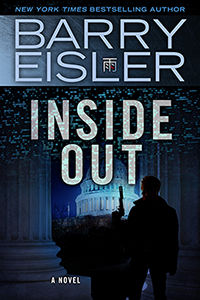
Watching the film, I remembered this exchange from my novel Inside Out, published in 2010:

Hort took another bite of steak and washed it down with some wine. “The most important thing is this. America is ruled by an oligarchy. If you want to understand America, you have to understand the oligarchy. And if you don’t understand the oligarchy, you can’t understand America.”

Ben thought of what Larison had said. “You’re talking about a conspiracy?”

“Not at all. Conspiracies are hidden…Most of the people who are part of the oligarchy don’t even recognize its existence. If they recognize it at all, they think of it as just a benevolent, informal establishment. They tell themselves it selflessly serves the country’s interests rather than selfishly serving its own…You see, when the oligarchy looks in the mirror and says, ‘The State is me,’ it’s not inaccurate. It’s not hubris. They’re just describing reality…”


“You’re saying it can’t be beaten?”

Hort laughed. “You can’t beat the oligarchy. You can’t beat it because the oligarchy has already won. The establishment is like a virus that’s taken over the organs of the host. Now it acts as a kind of life support system, and if you remove it, the patient it battens on will die. Remember the scene in that movie Alien? Where the creature attaches itself to John Hurt’s face, runs a tentacle down his throat, and puts him in a coma, but if they cut it off, it’ll kill him? That’s the oligarchy. The establishment is a creature whose first priority is ensuring that if you try to remove it, you’ll wind up killing the host.”

I hope Hort was wrong. If he was, the Panama Papers whistleblower, the courageous journalists who reported on the underlying documents, and Winter’s fine film will be instrumental in making it so.

Friday, November 30, 2018

The 2018 Bad Sex In Writing Nominees

“Empty my tanks,” I’d begged breathlessly, as once more she began drawing me deep inside her pleasure cave. Her vaginal ratchet moved in concertina-like waves, slowly chugging my organ as a boa constrictor swallows its prey. Soon I was locked in, balls deep, ready to be ground down by the enamelled pepper mill within her.

Okay, in fairness to the nominees, love scenes are inherently fraught. The nomenclature is emotionally loaded, one false move can invoke giggles or worse--but I think all of that is less a reason to automatically shy away and more a reason to do what you can to get it right. After all, sex is a universal and hugely important aspect of being human, so it would be a shame if novelists were afraid to depict it. 

For me, "getting it right" has more to do with building the foundation than the scene itself. If the characters are solid, if their attraction is real and interesting, if the setup works...then there's at least an opportunity for a satisfying payoff. My rule of thumb is, if what matters is that the characters had sex, you shouldn't show the sex. If what matters is how they had sex, you have to show the sex.

But to analogize to comedy...the funniest punchline in the world is useless if it follows a lame setup. Conversely, if the setup is good, the punchline is relatively easy.

All of this applies to dialogue, too. Probably to everything.

And now that I've shot off my mouth, I'll probably be included in the 2019 list... :D

Sunday, November 25, 2018

The Religion of Liberal Hegemony is Overdue For This Kind of Apostasy—and a Reformation, Too

I just finished listening to an outstanding book that I hope will be widely read: The Hell of Good Intentions: America’s Foreign Policy Elite and the Decline of U.S. Primacy. It’s a study of what the author, Harvard Kennedy School professor Stephen Walt, calls liberal hegemony, a foreign policy worldview Walt persuasively argues has been disastrous for America and for the world. As the jacket puts it: “Since the end of the Cold War, Republicans and Democrats alike have tried to use U.S. power to spread democracy, open markets, and other liberal values into every nook and cranny of the planet. This strategy was doomed to fail, but its proponents in the foreign policy elite were never held accountable and kept repeating the same mistakes."


As I listened to the book, I found myself thinking that liberal hegemony might be best understood as a kind of secular religion. It has its own priests (whose views often differ from those of lay people); its own orthodoxies (and apostates); its own catechisms. I’ve read studies of how, when a cult believes the world will end on X day and the event doesn’t happen, the cult doesn’t abandon its belief but instead rationalizes the inconsistency, and the psychology there is also reminiscent of liberal hegemony’s refusal to reconsider dogma and resistance to contrary evidence (and even common sense).

All of which is doubly interesting when you consider the way many Americans have been trained to cherry pick religiously inspired violence as the only violence worthy of condemnation. “They kill in the name of Islam, what other religion does that?”…that kind of thing. But the psychology of religion manifests itself more broadly than is immediately obvious, and certainly more people have been killed in the name of liberal hegemony than in the name of other, more obvious gods.


I couldn’t help smiling when in the acknowledgments Walt mentions the paradox of his own establishment credentials: researcher at the Center for Naval Analyses; member of the Council on Foreign Relations; guest scholar with the Carnegie Endowment for International Peace and the Brookings Institution; faculty member at Princeton's Woodrow Wilson School, the University of Chicago, and Harvard’s Kennedy School of Government…being a proponent of some of Noam Chomsky’s views on education, I thought, “My God, how can someone have a CV like that and still be so insightful?”

I’ve come across two reviews of the book that I think deserve mention.

First was this one, from the Guardian. Overall it was positive, but the writer seemed to be doing the thing where he was afraid of seeming too effusive, so he invented a couple of mild criticisms at the end that were neither warranted nor even coherent. First was chiding Walt for “discounting the possibility that Iran harbors ambitions as a regional hegemon.” Of course Iran would like to be a hegemon—who wouldn’t? I confess that given the opportunity, I myself would probably opt for some sort of personal neighborhood hegemony—it would be a great way to get people to obey the speed limit, talk more softly on their cellphones, and clean up after their dogs. The point of offshore balancing, Walt’s proposed alternative to liberal hegemony, is that it’s a response to the given of hegemonic ambitions. In other words, to paraphrase Madison on “If men were angels, no government would be necessary,” if countries (including Iran) didn’t seek hegemony, offshore balancing would be largely pointless. Discount hegemonic ambitions? On the contrary, the existence of those ambitions is what offshore balancing is built on.

The second quibble in the review was that in 2010, Walt looked at Libya as a U.S. policy success. Now, I don’t know anyone beyond John Bolton who would claim that Gaddafi giving up his quest for nuclear weapons as a result of diplomacy was a bad thing. And if it hadn’t been for the excesses of liberal hegemony and a spasm of “R2P" rationalizations, we might not have gone to war (oops, “intervened”) in Libya in 2011 and turned the country into the failed state it remains today. So criticizing anyone for praising the way the United States handled Gaddafi in 2010 is bizarre.

The other review was from the New York Times, by a writer named Jacob Heilbrunn. Overall it was another mostly positive review, but Heilbrunn said some unintentionally fascinating things, including a few that demonstrated liberal hegemony is more a faith-based belief system than it is a rational policy. Here are the parts I found most interesting—and telling:

Some of [Walt's] vexation is personal. He reports that the advertisement he signed [in 2002] attacking the invasion of Iraq has disappeared into the foreign policy memory hole: “In the 16-plus years since the ad was printed,” Walt observes, “none of its signatories have been asked to serve in government or advise a presidential campaign.”

The was an important substantive point—the people who have been consistently wrong have been promoted; the people who have been consistently right have been ignored. Is that even remotely disputable? And even if it were, Walt provides a mountain of evidence to back up his argument. The mention of that letter was only a small bit of it. Walt also had a lot to say about journalists and others who’ve been consistently wrong, and how they keep failing up. That’s a critical substantive point; to try to dismiss it as nothing but personal disappointment is just weird. Especially because even if it were motivated by personal disappointment—and again, it didn’t strike me that way at all—Walt's substantive point would still stand, and still be important.

Why would someone argue like this? My instant take is that Heilbrunn is projecting—that he’s the kind of guy for whom such a point would have been motivated by sour grapes, and he assumes everyone else must be like that, too. And while if Heilbrunn were here, he might argue, “Hey Barry, you’re doing the same thing I did, psychoanalyzing,” I would respond, “Fair enough, Jacob, but your attempt at psychoanalysis was illogical and incoherent and obscured an important substantive point, while I’m doing it to try to understand why someone would say something obviously illogical, incoherent, and obscuring.”

Which probably explains why I don’t get invited to any of the good parties. :D

More:

Walt’s own zest for intellectual combat, though, can lead him into rhetorical overkill. “Instead of being a disciplined body of professionals constrained by a well-informed public and forced by necessity to set priorities and hold themselves accountable,” Walt writes, “today’s foreign policy elite is a dysfunctional caste of privileged insiders who are frequently disdainful of alternative perspectives and insulated both professionally and personally from the consequences of the policies they promote.”

Wait, why is that rhetorical overkill? Walt provides a ton of evidence in support. If Heilbrunn disagrees, of course that’s fine, but he can’t just dismiss the argument without also addressing the evidence!

Walt points to the Council on Foreign Relations, the Atlantic Council and the Center for New American Security, among others, as constituting a kind of interlocking directorate that fosters groupthink and consists of mandarins intolerant of dissenting views. But Walt’s depiction of these organizations misses the mark. There’s plenty of debate in Washington; whether it amounts to much is another question.

That was for me the most fascinating paragraph in the review. It’s like the saying, “If we’re not supposed to eat animals, why are they made of meat?”

It’s as though Heilbrunn is so deep in a box that he can’t see, even when someone shows him what’s going on with a flashlight. Because sure, there’s plenty of debate. Just like there’s plenty of debate between the Democratic and Republican wings of the party on how much more we should spend on the military—should we spend a lot more, or a really lot more? But that’s a very narrow permissible band of meaningful debate. And the only way someone could miss that is by implicitly buying in to the notion of what’s permissible, and treating anything else as unworthy of consideration. Which is exactly Walt's point about groupthink and intolerance of dissent.

Or to put it another way: to go back to my view of liberal hegemony as a secular religion, sure, there’s plenty of debate among rabbis over the meaning of this or that portion of the Talmud, and within the Vatican about the proper understanding of the Holy Trinity or whatever. But wander into one of those debates and suggest that God doesn’t exist? You’ll get the same kind of intolerant reaction I expect you’d get showing up at, say, the Council on Foreign Relations and saying, “I think America and the world would be better off if America didn’t lead, if we stopped thinking of ourselves as exceptional, if we focused less on National Greatness and more on just being good, and if we cut the military (sorry, the “defense”) budget by 50% and invested the savings in domestic infrastructure.” If you were lucky, you’d simply be dismissed as unserious, which is Blob nomenclature for what formal religions prefer to call “heretical.”

Not that the offshore balancing Walt proposes in lieu of liberal hegemony goes remotely that far—but you get the idea.

In truth, any president who announced such a strategy would immediately initiate a free-for-all around the globe as local potentates tested Washington’s resolve.

But Walt address this assumption—and it is an assumption, or, as I think it’s better understood, a core tenet of the Liberal Hegemony faith. Again, it’s fine if Heilbrunn disagrees, but to do so meaningfully he needs to engage Walt's point that it *is* an assumption, with no empirical evidence behind it (and in fact lots of evidence of the contrary).

Walt also makes the easy assumption that America can remain a pre-eminent power, but the mounting national debt and Trump’s steady conversion of the country into what amounts to a rogue state could lead to a very different outcome. Soon Americans may discover that the only thing more vexing than exercising dominance is forfeiting it.

This was mostly incoherent, but it also wandered beyond incoherence into a weird realm of deafness to what Walt is actually arguing, which is the opposite. Liberal hegemony isn’t just unnecessary and counterproductive; it’s also ruinously expensive. Continuing to pursue it is what causes increased debt. Walt didn’t assume anything—he cautioned that if America wants to remain solvent, we need a way to get more realistic about what commitments are worth investing in and paying for.

Or to put it another way, of course "America can remain a pre-eminent power”—Walt provides a ton of examples and evidence of all our natural advantages (oceans east and west, friendly neighbors north and south, abundant natural resources, etc). We just have to stop doing the galactically stupid stuff, and we ought to be fine. It’s like a person of normal health can remain generally healthy—if he just stops the binge drinking and gets a little sleep. That’s not an assumption, it’s a description of reality—and sound advice from a good doctor.

But advice from all the good doctors in the world won’t make a bit of difference if the patient is determined not to hear. If the patient wants to get well, a good first step would be to heed the wisdom in this book.

Wednesday, November 14, 2018

Excited to Help Launch The Correspondent!

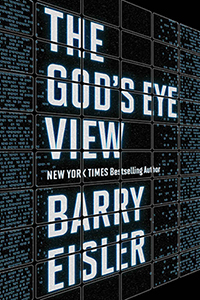
If you read my stories and periodic blog posts, you know I have an interest in the shortcomings and failures of establishment media. Around the time I wrote The God’s Eye View, that interest led to an online friendship with Jay Rosen, a media professor at NYU. I’ve been reading Jay’s blog PressThink for years, and he’s one of the most insightful people I know on how media works and why good journalism is struggling.


About a year ago, Jay asked if I’d be interested in helping get out the word on The Correspondent, a Dutch news organization expanding into the English-language market. As soon as I looked into it, I was hooked. I think the concept is exceptionally well-conceived, with as good a chance as I can imagine not just of serving readers, but of providing a healthier model for how to cover what’s newsworthy—a model other organizations might emulate.

Jay has a Boing Boing article today on the importance of “Unbreaking News” that lays out the overall approach. The whole post is well worth your time. For example:

The exciting part is the principles that make it go. These are different from any news site you can name. 
Start with no ads, the key move the Dutch founders made. Downstream from that original “no” are others, equally welcome. No click-baity headlines. No auto-play videos. No ugly promos sliding into view as you try to read the article. No “sponsored content.” (No sponsors at all.) No third party—the advertiser—in between you and the people trying to inform you. No need to track you around the internet, or collect data on your browsing habits. No selling of your attention to others. 
Also: no controversy-of-the-day coverage, which happens when editors from different newsrooms react to the same data showing clicks and taps going to a few “hot” stories. These are typically the stories that trigger outrage in the most people. The people at The Correspondent have a phrase for it. “Your antidote to the daily news grind.” If that's an idea you can get behind, then get behind The Correspondent. Join our club. 
Now for the next principle, equally basic. This is not an exclusive club. It’s extremely inclusive. Two reasons I can say that. Yes, you have to pay to be a member. But you pay what you feel you can afford. The Correspondent believes you are smart enough to figure this economy out. A paying membership is the other side of the coin that reads: no ads. And no ads, as we have seen, has all those welcome effects downstream.
The other reason I can say “extremely inclusive” is that The Correspondent is not selling digital subscriptions, as the Washington Post, the London Times, and most local newspapers nowadays do. Paid subscription is a product-consumer relationship: you pay your money and you get the product. If you don’t pay you don’t get it. Membership is different. You join the cause because you believe in the importance of the work. If you believe in the work, you want it to spread, including to non-members.
If The Correspondent’s membership campaign reaches its goal of raising $2.5 million by December 14, it will hire a staff and start publishing, in English, in 2019. When that happens, there will be no “meter” measuring how many articles you have read this month. No one will ever get that notice, “you have used four of your five free clicks.” Any link that comes to people in their social feeds will be clickable and shareable, without limit. In this way it is more like public radio in the U.S. Members who believe in the public radio mission support their NPR station, but everyone can listen.
The differences compared to the NPR system are important too: The Correspondent will have no corporate sponsors. No government funding. And thus no fear of that money getting cut off. Which in turns means no tendency toward false equivalence, no incentive system for “he said, she said” journalism. These are deeply-woven patterns for which I have often criticized NPR.

For more, here are their 10 Founding Principles. And here’s an article from De Correspondent’s founder, Rob Wijnberg—The Problem With Real News—And What We Can Do About It—about why the primary problem isn’t fake news, but rather real news.

Please consider joining this terrific news organization and please help me spread the word by sharing this post. Thanks.


Friday, November 09, 2018

If You Buy From Amazon, Do It At AmazonSmile

Updated Below, January 18, 2023

If you buy from Amazon, do it at AmazonSmile. AmazonSmile is the same Amazon you know—same products, same prices, same service. The difference is, when you log in at AmazonSmile, Amazon donates 0.5% of the price of your eligible AmazonSmile purchases to the charitable organization of your choice.

My choice is the Legislative Drafting Institute for Child Protection, an organization founded by novelist Andrew Vachss, a lifelong advocate for better laws to protect children from predators. The LDICP produces clear, scientifically grounded, and easily implementable laws designed to protect children. Let me tell you, Livia Lone would be a huge supporter—which is probably why the first acknowledgment of The Killer Collective (February 1) mentions the LDICP, and why the book is dedicated to Andrew and his wife Alice, a former sex-crimes prosecutor and author of the hair-raising and galvanizing memoir Sex Crimes: Then and Now: My Years on the Front Lines Prosecuting Rapists and Confronting Their Collaborators.

If you buy from Amazon, why not do it through AmazonSmile, and ensure that some of your shopping dollars go to organizations like the LDICP?

Update, January 18, 2023

Received this email from Amazon today:

Dear customer,

In 2013, we launched AmazonSmile to make it easier for customers to support their favorite charities. However, after almost a decade, the program has not grown to create the impact that we had originally hoped. With so many eligible organizations—more than 1 million globally—our ability to have an impact was often spread too thin. 

We are writing to let you know that we plan to wind down AmazonSmile by February 20, 2023. We will continue to pursue and invest in other areas where we’ve seen we can make meaningful change—from building affordable housing to providing access to computer science education for students in underserved communities to using our logistics infrastructure and technology to assist broad communities impacted by natural disasters.

To help charities that have been a part of the AmazonSmile program with this transition, we will be providing them with a one-time donation equivalent to three months of what they earned in 2022 through the program, and they will also be able to accrue additional donations until the program officially closes in February. Once AmazonSmile closes, charities will still be able to seek support from Amazon customers by creating their own wish lists.

As a company, we will continue supporting a wide range of other programs that help thousands of charities and communities across the U.S. For instance:
  • Housing Equity Fund: We’re investing $2 billion to build and preserve affordable housing in our hometown communities. In just two years, we’ve provided funding to create more than 14,000 affordable homes—and we expect to build at least 6,000 more in the coming months. These units will host more than 18,000 moderate- to low-income families, many of them with children. In one year alone, our investments have been able to increase the affordable housing stock in communities like Bellevue, Washington and Arlington, Virginia by at least 20%.
  • Amazon Future Engineer: We’ve funded computer science curriculum for more than 600,000 students across over 5,000 schools—all in underserved communities. We have plans to reach an additional 1 million students this year. We’ve also provided immediate assistance to 55,000 students in our hometown communities by giving them warm clothes for the winter, food, and school supplies.
  • Community Delivery Program: We’ve partnered with food banks in 35 U.S. cities to deliver more than 23 million meals, using our logistics infrastructure to help families in need access healthy food – and we plan to deliver 12 million more meals this year alone. In addition to our delivery services, we’ve also donated 30 million meals in communities across the country.
  • Amazon Disaster Relief: We’re using our logistics capabilities, inventory, and cloud technology to provide fast aid to communities affected by natural disasters. For example, we’ve created a Disaster Relief Hub in Atlanta with more than 1 million relief items ready for deployment, our Disaster Relief team has responded to more than 95 natural disasters, and we’ve donated more than 20 million relief products to nonprofits assisting communities on the ground.
  • Community Giving: We support hundreds of local nonprofits doing meaningful work in cities where our employees and their families live. For example, each year we donate hundreds of millions of dollars to organizations working to build stronger communities, from youth sport leagues, to local community colleges, to shelters for families experiencing homelessness.
We’ll continue working to make a difference in many ways, and our long-term commitment to our communities remains the same—we’re determined to do every day better for our customers, our employees, and the world at large.

Thank you for being an Amazon customer.

Sunday, June 10, 2018

Oh Lucy!

I recently stumbled across Oh Lucy!, a movie that bounces back and forth between Tokyo and southern California, which sounded familiar...and I loved it.


I had no idea what to expect beyond what I saw in the trailer and beyond my love of Japan and Japanese culture. The story is fresh, surprising, poignant...just lovely, beautifully written by first time feature writer/director Atsuko Harayanagi. Josh Harnett is terrific, and Shinobu Terajima and Kaho Minami should win awards for their sometimes hilarious, sometimes heart rending portrayal of estranged sisters. Koji Yakusho (remember Tampopo? That's him) is always a pleasure, even in a small role, and relative newcomer Shioli Kutsuna (now in Dead Pool 2) is going to be a star. You don't have to love Japan to love this movie (though it won't hurt, either)--it's just a beautiful human story for anyone. Highly recommended.

Being an easy sell for stories involving Japan, I also recently watched The Outsider, with Jared Leto playing an American inducted into a yakuza family in post-war Japan. This one I can't recommend. Despite some solid performances that rose above the material (Tadanobu Asanobu, who you might know from the various Thor movies, and Shioli Kutsuna again) and good cinematography, the story was cliched, contradictory, and incoherent; the protagonist a dull cipher. Too bad, too, because Jared Leto is a talented actor, and could have done a lot had this smart premise been better written.